
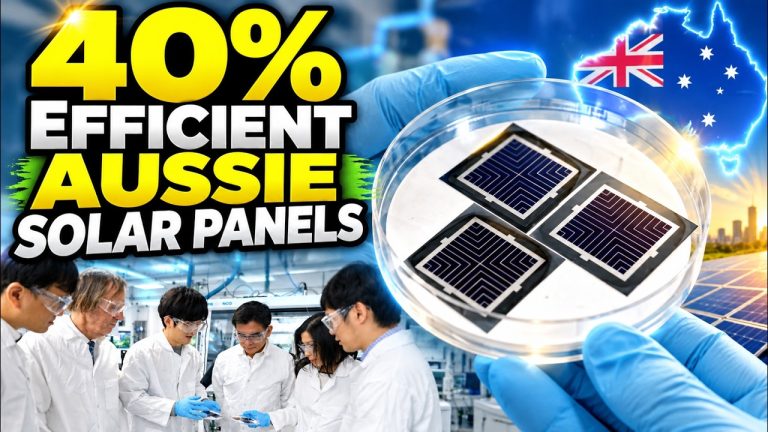
Australia has made a significant investment in renewable energy technology, with a funding allocation of $2 million directed towards a project at the University of Sydney. This initiative aims to develop perovskite-silicon tandem solar panel technology, which has the potential to achieve an impressive efficiency rate of around 40%. The project is set to collaborate with Australian manufacturer Unison Solar Energy to transition this innovative technology into commercial production, marking a pivotal step forward for the country’s solar industry.

Investment Details and Project Goals
The $2 million funding is part of a broader commitment to advancing solar energy solutions in Australia. The partnership between the University of Sydney and Unison Solar Energy is expected to leverage the latest advancements in solar technology to create highly efficient panels that can significantly outperform traditional solar panels. Current commercial solar panels typically achieve efficiencies around 20-22%, making the target of 40% a groundbreaking milestone for renewable energy.
Get the latest EV news first. Follow us on:
Perovskite-Silicon Tandem Technology
Perovskite-silicon tandem technology represents a leap forward in solar panel efficiency. The use of perovskite materials, known for their unique light-absorbing properties, combined with traditional silicon technologies, allows for the capture of a broader spectrum of sunlight. This innovative approach not only enhances energy conversion rates but also offers the potential for lower production costs and increased accessibility to solar power.
Collaboration with Unison Solar Energy
Unison Solar Energy, an Australian manufacturer, will play a crucial role in bringing this advanced technology to market. The collaboration aims to streamline the process from research and development to commercial viability, ensuring that the benefits of this high-efficiency solar technology can be realized across Australia. By fostering domestic manufacturing, the project also seeks to bolster local economies and create job opportunities within the renewable energy sector.
Implications for the Solar Industry
The introduction of 40% efficient solar panels could revolutionize the solar industry, not only in Australia but globally. Higher efficiency rates mean that fewer panels are needed to generate the same amount of electricity, thereby reducing space requirements and installation costs. This advancement could accelerate the adoption of solar energy, contributing to Australia’s goals of reducing carbon emissions and transitioning to a more sustainable energy future.
Future Outlook
The success of this project hinges on continued research and development, as well as the ability to manufacture these panels at scale. If successful, this initiative could position Australia as a leader in solar technology innovation, enhancing its reputation on the global stage for renewable energy solutions. Stakeholders in the energy sector and environmental advocates alike are keenly watching the progress of this project, looking forward to the potential benefits it could bring to the market.
As the world increasingly turns to renewable energy sources, Australia’s investment in this cutting-edge solar technology is a promising step toward a cleaner, more sustainable future. The collaboration between academia and industry exemplifies how innovative partnerships can drive advancements in technology and contribute to global energy needs.
Watch the full video on YouTube: Australia Just Funded 40% Efficient Solar Panels — An Aussie Factory Will Build Them
