
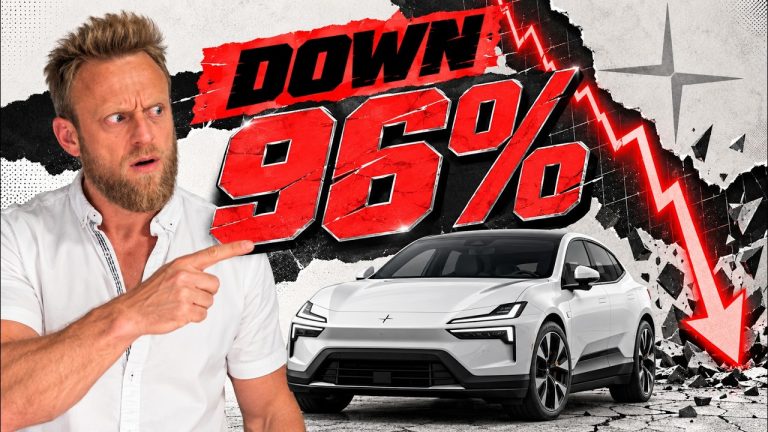
Polestar, the Swedish electric vehicle manufacturer, has seen its stock plummet by an astonishing 96% from its peak, following a series of financial setbacks and an impending regulatory ban in the United States. With a staggering loss of $840 million reported for the first half of 2026 and a significant reduction in growth targets, the company is now facing a daunting challenge in the competitive electric vehicle market.
Polestar’s financial struggles are highlighted by its recent announcement of an $840 million loss for the first half of 2026. This alarming figure has raised concerns among investors and analysts alike, pointing to a troubling trend of ongoing losses that have plagued the company for years. The significant downturn in stock value, dropping from highs reached in previous years, has left many questioning the future viability of Polestar in an increasingly crowded electric vehicle landscape.
Get the latest EV news first. Follow us on:
Adding to the challenges facing Polestar is a forthcoming ban under the Connected Vehicle Rule, set to take effect in 2027 in the United States. This regulation requires that vehicles be equipped with advanced connectivity features, raising compliance costs and complicating the company’s operations in one of its key markets. In response to these hurdles, Polestar has announced a shift in strategy, reducing its presence in the U.S. market to a service-only model, which could limit potential revenue streams and market growth.
Revised Growth Targets and Strategic Shifts
As part of its efforts to navigate this turbulent period, Polestar has slashed its growth targets. Investors are keenly observing how the company plans to reposition itself and regain traction in both the U.S. and international markets. The company has expressed optimism about its upcoming models, particularly the Polestar 4 and Polestar 5, which are expected to play pivotal roles in its recovery strategy. These models are anticipated to bolster sales in key regions such as Europe and China, where demand for electric vehicles continues to rise.
The Polestar 4, a mid-sized SUV, is expected to attract consumers with its blend of performance and sustainability, while the Polestar 5 aims to offer a luxury experience that aligns with the evolving preferences of electric vehicle buyers. The company hopes that these models will not only help recover lost value but also restore investor confidence in its growth potential.
Looking Ahead: Challenges and Opportunities
Despite the challenges ahead, there remains a glimmer of hope for Polestar as it seeks to adapt to the changing landscape of the automotive industry. The company is exploring partnerships and technological innovations that may enhance its product offerings and operational efficiencies. However, the road to recovery will require not only successful new model launches but also a strategic reevaluation of its business model in light of regulatory pressures and competitive dynamics.
In conclusion, Polestar’s dramatic stock decline and significant financial losses have raised critical questions about its future in the electric vehicle market. With a ban looming in the U.S. and revised growth targets, the company must execute a well-crafted strategy to pivot effectively. The success of the Polestar 4 and 5 will be vital as the company works to regain its footing in a highly competitive industry that is rapidly evolving.
Watch the full video on YouTube: Why Polestar Lost 96% of Its Value (And What Happens Next)
