
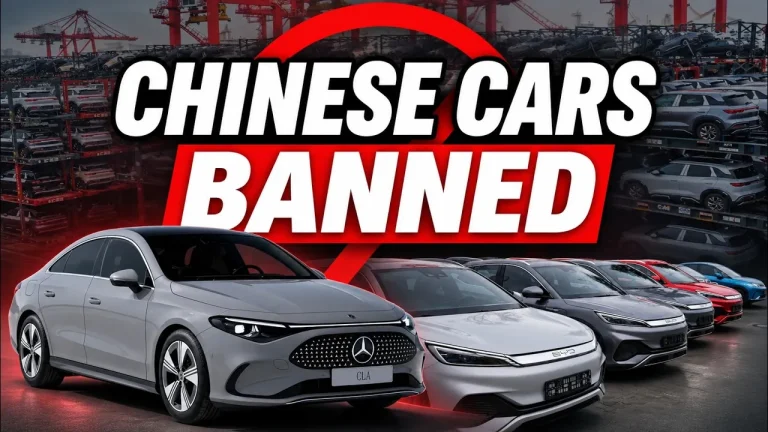
US politicians are nearing a deal to permanently ban Chinese car brands from the American market by law. The move comes as current restrictions, including a 100% tariff on Chinese-built electric cars and upcoming bans on Chinese software and hardware in vehicles, can be changed by future presidents. Lawmakers want to make the ban harder to reverse, but the first draft of the bill would have also excluded Mercedes-Benz due to its Chinese shareholders.
Current Restrictions and Push for Legislation
At present, Chinese cars are kept out of the US by a 100% tariff on Chinese-built electric vehicles and rules banning Chinese software in connected cars from 2027 models, with hardware bans starting in 2030. These are regulatory measures that any president could change. In September, President Trump said he might allow Chinese companies to build cars in the US, which alarmed automakers and prompted bipartisan action in Congress.
Senators from both parties, led by Republican Bernie Moreno, are working to turn the ban into official law. Their aim is to get the bill to the president’s desk before the end of the year and encourage him to sign it.
Get the latest EV news first. Follow us on:
The Mercedes-Benz Complication
The original bill would have barred any carmaker with more than 15% Chinese ownership. Mercedes-Benz, Germany’s most famous car brand, has two major Chinese shareholders: state-owned BAIC and Li Shufu, founder of Geely, each holding nearly 10%. Combined, this puts Mercedes over the 15% threshold, which would have banned the brand from the US market.
To address this, lawmakers are negotiating an exception. The revised bill would treat shareholders with no management control more leniently. However, Sam Evans questions whether a major shareholder like Li Shufu, who owns 10%, truly has no influence on company decisions.
Security, Jobs, and the Global Market
Supporters of the ban cite security concerns, noting that modern cars are equipped with cameras, microphones, and location data, raising fears about sensitive information flowing to Beijing. Protecting American factory jobs is another key reason behind the legislation.
Sam points out that other countries are taking a different approach. Canada has agreed to allow 50,000 Chinese electric cars per year at a low tariff, with numbers set to rise annually. Britain, Europe, and Australia already have Chinese EVs in showrooms, leading to falling prices and increased competition among brands.
What This Means for Americans
He says American carmakers will miss out on competing with the same rivals they face in other markets. As Sam puts it, “A wall keeps competitors out for a while, but it doesn’t make you faster. It makes you slower. Protection or a mistake?”
