
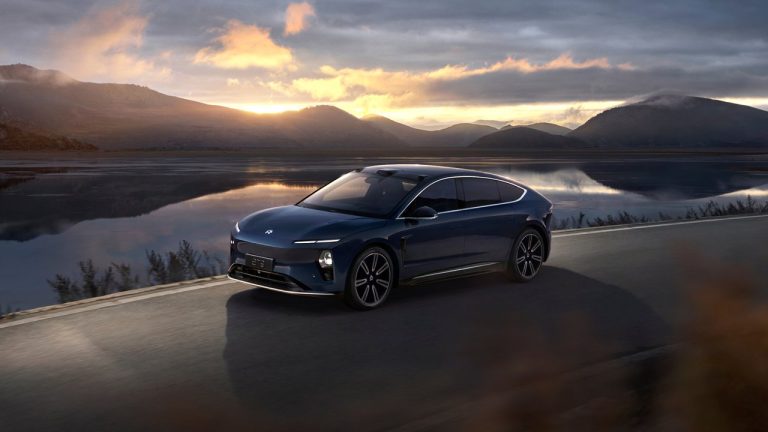
Nio launched new driving and in-car AI systems on November 25. The updates cover how its cars drive and handle owners’ requests.
AI across the business
The launches marked Nio’s 12th anniversary at its third Nio IN technology day in Guangzhou. For automakers, becoming AI-native organisations means integrating the technology across all operations, said William Li, Nio founder, chairman and CEO.
In Li’s assessment, no form of physical AI is more valuable than smart EVs, while automotive offers the largest industry for AI applications.
Get the latest EV news first. Follow us on:
The worldwide automotive industry chain is worth approximately $7 trillion to $9 trillion. AI would generate more than $1.2 trillion in additional value if it added 15% across the industry.
Nio’s approach extends beyond vehicle features to how it organises and runs its businesses. Its AI-native operating structure has six layers built around basic business units.
Beginning in 2023, Nio’s reorganisation has centred on about 12 categories of these units, encompassing charging and swapping stations, batteries, components, research and development projects, vehicles, and users.
Cumulative task executions by the more than 7,500 AI agents deployed by Nio have exceeded 2.9 million.
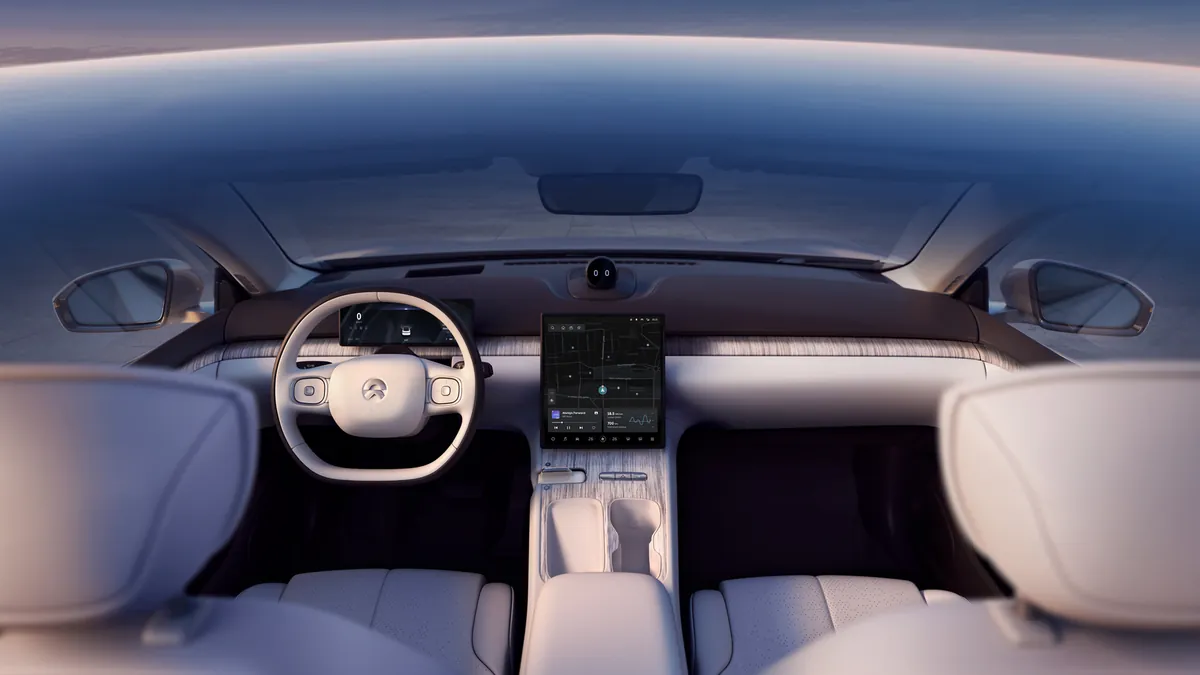
NWM 3.0 cuts driver interventions and response times
Nio launched NWM 3.0, its latest model for scaling physical intelligence in smart driving. This is the third major version of NWM, which first appeared in July 2024.
The new version reduces driver interventions by over 40% compared with the previous generation. Overall vehicle control response time falls by 54%, while chassis control response time drops by 78%.
Training efficiency improves fivefold over the previous generation through two feedback loops that help the system learn from results. Data volume increases sevenfold compared with NWM 2.5, while users’ sense of reassurance rises by about 60%.
Compressing information across space and time reduces the computing resources needed for the model’s attention processing by a factor of 36. A reward model providing dynamic assessments of real-world road conditions is another addition in NWM 3.0.
Nio plans to begin regulatory filings in December for vehicles using its Banyan, Cedar, Cedar S and Coconut+ software systems.
NOMI gains autonomous task planning
Nio also launched NOMI Intelligence 4.0. NOMI has developed through three generations over 12 years.
Nio describes the new version as an emotional intelligence system for driving and cabin use.
NOMI Intelligence 4.0 can perceive conditions inside and outside the vehicle, access tools throughout the car, understand user goals, make plans and execute tasks autonomously.
The first release is planned for the Cedar 2.0.0 software update. Nio expects to submit it for approval in early December, with distribution to follow approval.
The update is expected to reach vehicles using Cedar S and Banyan during the second quarter of 2027. Coconut and Coconut+ systems are scheduled to follow later.
Nio Power sets 2030 targets
Nio Power, led by Nio chief financial officer Stanley Qu, was among the first businesses to adopt the basic-business-unit approach. It uses multiple AI agents to manage batteries and swap stations.
Its 2030 targets include more than 200 million charging and swapping services a year, delivering over 10 billion kWh of energy annually.
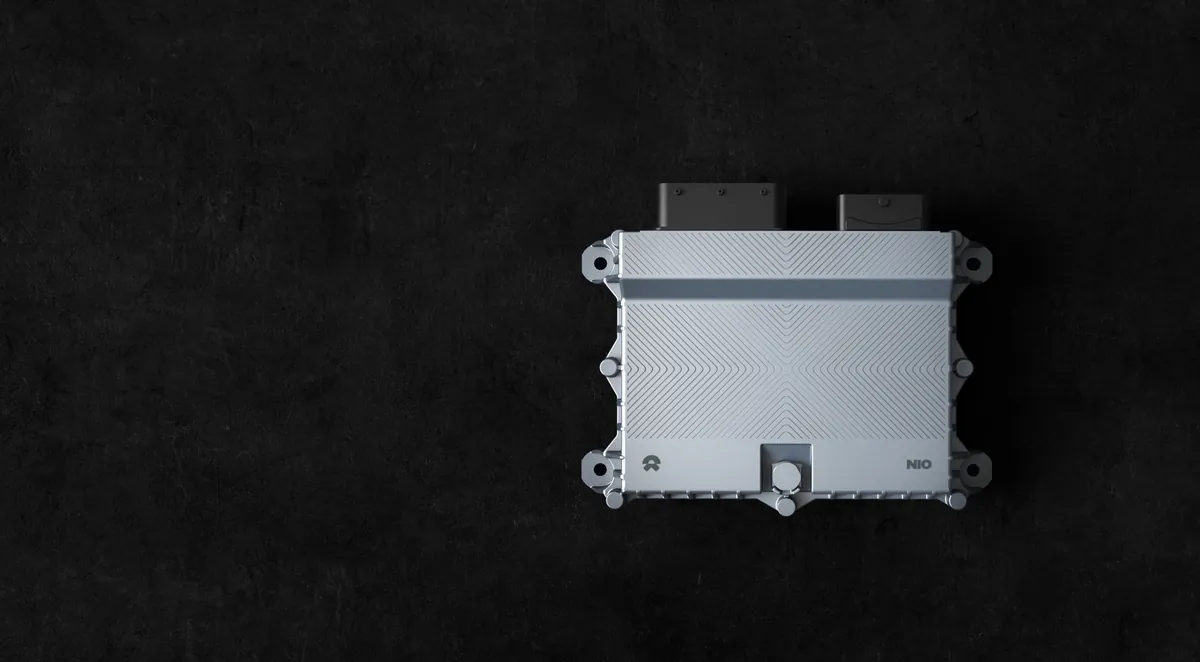
Why it matters
For owners, the updates mean fewer driver interventions and an assistant that can plan and carry out tasks. Access will depend on the vehicle’s software system and the planned approval and update schedule. Nio’s wider AI push also reaches the battery and swapping operations that support its vehicles.
Key Specs
- AI agents deployed: More than 7,500
- NWM 3.0 driver interventions: Over 40% reduction versus the previous generation
- NWM 3.0 vehicle control latency: 54% reduction
- 2030 battery swap station target: More than 10,000
✎ Images and news sourced from: nio.com, gasgoo.com, qbitai.com, cnevpost.com, anhuinews.com, guandian.hk, autohome.com.cn.
