
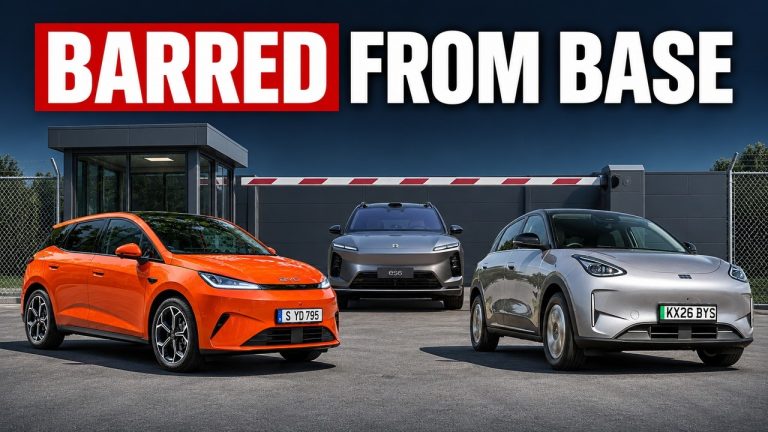
Germany’s armed forces are turning away certain Chinese electric cars, including models from BYD, Geely and Nio, at the gates of military sites. Drivers of these vehicles are being told to park outside secure areas and walk in, according to a report this week from German magazine Der Spiegel. Lists of barred models are reportedly circulating within the military, but there is not a nationwide ban.
No Blanket Ban, But Security Officers Decide
The German Defence Ministry has clarified that there is no blanket ban on any carmaker or country. Instead, each site’s security officer makes the decision about which vehicles are allowed inside secure areas. The main concern is not the batteries or motors, but the sensors built into modern cars. These vehicles are equipped with multiple cameras, microphones, radar, and a permanent internet connection. The worry is that if one of these cars is parked next to something secret, it could, in theory, record sensitive information.
Concerns Over Data, Not Just Chinese Cars
From my perspective, I think that they do do this. Sorry, but I think considering what we know about how many people have been caught over the last 10 years being spies from different countries, I think this does happen. However, German media have reported that there is no public evidence so far that data from these cars has actually reached Chinese intelligence. This move is a precaution, not a response to any confirmed incident.
Get the latest EV news first. Follow us on:
Other Countries Taking Similar Steps
Germany is not the only country taking action. The US military barred BYD cars from an airbase in Japan last month. In February, Poland restricted Chinese-made vehicles at its military sites. But it’s important to remember that China did the same thing to Tesla in 2021. Teslas were barred from some Chinese military and government sites due to concerns over their cameras, even though Tesla cannot be ordered by the US government to steal data from China. That restriction was only lifted in 2024 after Tesla passed a data security review by the Chinese government, proving that no data from Tesla cars would ever leave China.
Data Security Is the Real Issue
This situation is not really about where a car is built or what powers it. The core issue is data security. Any connected car, from any country, raises the same question: who can see what it sees? Despite these concerns, ordinary Germans do not seem worried. BYD registered more than 5,000 cars in Germany in October, an increase of over 50% compared to a year ago. So far this year, BYD’s German sales have more than tripled, although they started from a small base.
What This Means for the Industry
My view is that the answer is not necessarily to ban brands, but to have clear rules on where car data is stored and who can access it, applied equally to every carmaker. Tesla showed in China that a company able to meet those standards can be approved. In theory, there is no reason BYD cannot do the same in Europe.
