
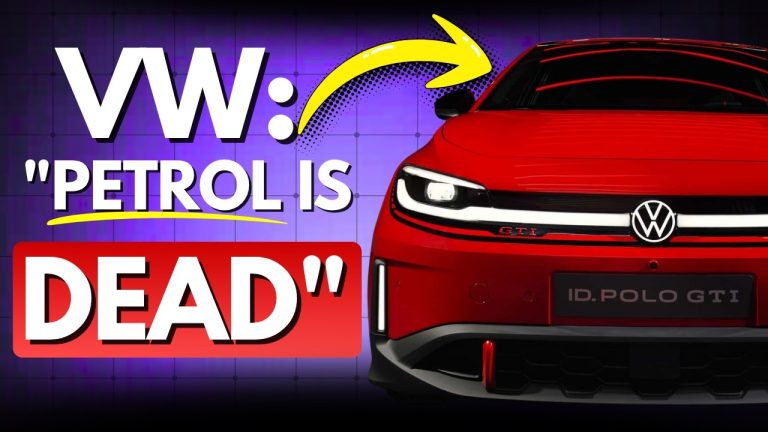
Volkswagen’s board member for sales and marketing, Martin Sander, has compared the combustion car to the horse, telling Auto Express that petrol cars won’t need to be banned because buyers will simply realise electric cars are better. He reckons that by 2035, maybe three, four, or 5% of buyers at most will want a combustion car.
“When Was It Forbidden to Buy a Horse?”
Sander asked when horses were banned. They never were. It has never been forbidden to buy a horse, and you can still buy one now. But people worked out that a car gets you from A to B far more easily, and the horse lost without being legislated out of existence. Sander says the same thing will happen to the combustion engine. It won’t be because governments ban it, although some have. It will be because people realise the electric car is better.
He also told the industry to stop obsessing over ban deadlines. In his words, “Take all the barriers away. Stop arguing about 2035.” He says the industry should instead fix what actually matters:
Get the latest EV news first. Follow us on:
better charging infrastructure, talking up the real advantages of EVs, and doing something about electricity prices. Do that, he argues, and customers will convince themselves. Sander believes the few buyers who still want combustion cars by 2035 will treat them the way some people keep horses today, as a hobby.
Sam Evans says this is a real truth bomb, given that around 75% of the cars Volkswagen sells are the very cars being mocked, and they make the company huge amounts of money. He likens it to Kodak saying digital cameras are pointless because people will use their iPhones. Sam agrees with the hobby comparison and points to people who might want to keep an old Mazda Miata. He says he has been saying this for quite a few years, and that it feels like he is in an echo chamber.
Not a New Idea, but a New Messenger
Sam notes that Rivian CEO RJ Scaringe said something similar a few years ago: buying a petrol car today is like building a horse barn in 1910. Sam says it hits differently coming from Volkswagen, the company that built and still makes the Golf GTI, one of the most iconic combustion cars ever made. When a legacy giant like that openly says petrol is finished, Sam says, it’s probably time to pay attention.
Volkswagen Is Hedging Its Bets
Sam says Volkswagen’s actions don’t fully match the rhetoric. Despite Sander’s confidence, the company is clearly hedging its bets. In Europe it plans a mix of combustion, mild hybrid, full hybrid, plug-in hybrid and fully electric models. Sam calls that a bit of a mess. He says it is not how a company behaves when it truly believes the horse is dead. It is a company buying insurance, at least in the short term, or one that thinks it is. Sam believes this will actually damage Volkswagen immensely.
Sam says part of the reason is that Europe blinked. The EU originally planned to ban new combustion car sales from 2035, but that has been watered down. Instead of a full ban, automakers will have to cut CO2 by 90% compared with 2021 levels. That leaves the door open for a small number of petrol models to survive, maybe just as hybrids. The pressure that forced legacy makers to commit has eased, and Sam says you can see it in Volkswagen’s hedging.
Sander also confirmed that Volkswagen won’t bring its range extender EV technology to Europe. He sees a market for it in China, but said that in Europe “at the moment, I don’t really see that opportunity.” Sam says he’s not sure why that is the case.
The Technology Keeps Improving
Sam says the technology keeps making Sander’s point for him. BMW’s new i3 sedan claims up to 559 miles (around 900 km) of range. Apparently, it can add 250 miles of range in less than 10 minutes. The Mercedes CLA beat its EPA rating in independent real-world testing, covering 385 miles (about 620 km).
The Pushback in America
Sam acknowledges that the pushback is real. JD Power found that only 26% of new car buyers in the United States are very likely to consider an EV, and American EV sales growth has slowed. He lists the factors weighing on sales:
charging worries, price, fears about battery replacement, the Trump administration’s power and rhetoric, and the loss of tax incentives. Sam also says the American market is very isolationist and is blocking hundreds of great models.
Sam’s Verdict
Is Volkswagen right? Sam says absolutely, and that the answer is dead obvious: the horse didn’t need a barn, and neither does petrol. But he warns that the companies keeping one foot in the combustion past are the ones most at risk of being left behind when buyers finally switch completely to electric. Sam is certain they will.
