
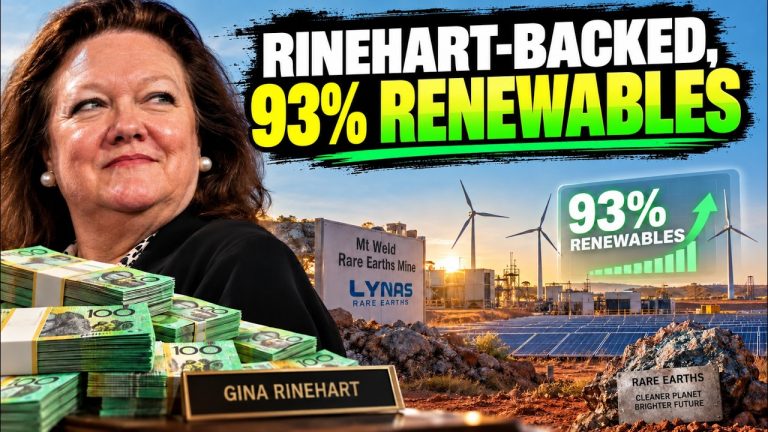
Gina Rinehart, a prominent Australian mining magnate and vocal critic of renewable energy initiatives, finds herself in the spotlight as two mines Hancock Prospecting is a major shareholder in are reported to be heavily reliant on renewable energy sources. Rinehart’s mining interests, specifically the Liontown’s Kathleen Valley lithium mine and Lynas Rare Earths, have achieved remarkable sustainability milestones, operating with over 80% and 95% of their power derived from renewable resources, respectively. This situation raises questions about the dichotomy between Rinehart’s public stance against renewables and the operational practices of these ventures.
Renewable Energy at Rinehart-Backed Mines
According to the companies’ own annual reports and recent operational updates, Liontown’s Kathleen Valley lithium mine has consistently utilized between 80% to 81% renewable energy. This impressive statistic highlights a significant commitment to sustainable practices within an industry often criticized for its environmental impact. Similarly, Lynas Rare Earths has distinguished itself by sourcing over 95% of its energy needs from renewable technologies, showcasing a shift towards greener mining operations.
Get the latest EV news first. Follow us on:
Rinehart’s Opposition to Renewables
Despite the apparent success of these operations in employing renewable energy, Rinehart remains a staunch opponent of net-zero emissions and renewable energy initiatives. She has previously described solar panels as an “eyesore,” reflecting her critical viewpoint towards the very technologies that power these Rinehart-backed operations. This contradiction raises eyebrows, especially as the same money that’s a major shareholder in two high-renewable mines continues to finance campaigns against renewable energy, including public rallies that have involved burning effigies of wind and solar infrastructure.
Funding Anti-Renewables Campaigns
Rinehart’s financial backing of anti-renewable campaigns has sparked controversy. Critics argue that her actions undermine the progress being made in the renewable sector, particularly in light of these Rinehart-backed operations that rely heavily on such energy sources. The juxtaposition of her advocacy against renewables and the operational realities of these investments illustrates a complex relationship with the energy transition currently unfolding in Australia and globally.
Broader Implications for the Mining Industry
The success of these Rinehart-backed operations using renewable energy sources could potentially serve as a model for the broader mining industry. As the sector grapples with increasing pressure to adopt sustainable practices, these facilities demonstrate that integrating renewable energy into traditional mining operations is not only feasible but can also lead to significant operational efficiencies. This raises an important question about the future direction of energy consumption in mining and other heavy industries.
The situation surrounding Gina Rinehart presents a complex narrative of contradiction and opportunity within the mining sector. While she publicly opposes renewable energy, the operational success of these ventures in utilizing these very resources indicates a broader commercial reality that may reshape the industry. As Australia continues to navigate its energy transition, Rinehart’s public advocacy and the performance of these Rinehart-backed facilities will likely remain a focal point in discussions about the future of mining and renewable energy in the country.
Update, 7 September, 2026: Hancock Prospecting has responded to this article. It is a minority shareholder in Lynas and Liontown, not their owner or operator, and we have corrected the wording above. Hancock’s response is published in full below.
Watch the full video on YouTube: Two Rinehart-Backed Mines Run On Wind And Solar. She’s Still Funding The Fight Against Them
