
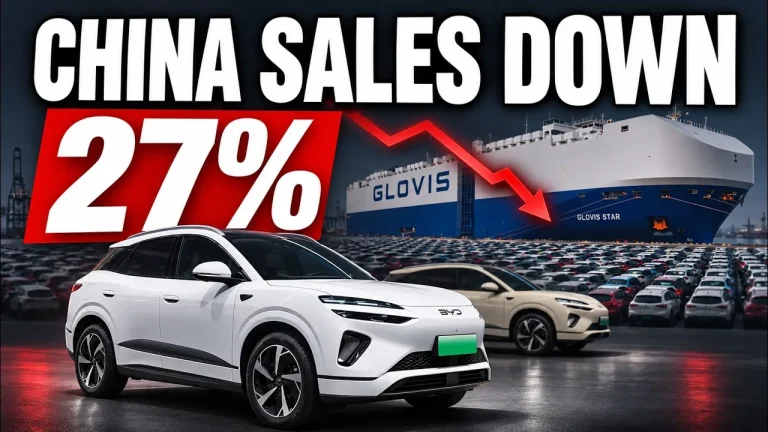
China’s car market is facing a significant downturn, with new car sales in October dropping by 27% compared to the same month last year. This sharp decline comes as the country’s property market also struggles, and economic uncertainty leads many buyers to hold off on major purchases. Despite the slump in domestic demand, Chinese automakers are keeping their factories running by dramatically increasing exports, particularly of electric vehicles (EVs) and plug-in hybrids.
Why Car Sales Are Falling in China
Several factors are contributing to the decline in China’s car sales. Last year, most electric car buyers in China enjoyed a full purchase tax exemption, but this year the tax break was cut in half, making new cars more expensive overnight. Combined with ongoing concerns about the economy and significant losses in the property market, many potential buyers are choosing to save money rather than invest in a new vehicle.
Petrol Cars Suffer the Most
Sam Evans points out that the current downturn is not an electric car problem. Petrol car sales in China plummeted by 44%, meaning nearly half of the petrol market disappeared in a single year. In contrast, fully electric car sales dropped by only 5%. In October, Chinese buyers purchased 770,000 fully electric cars, compared to just 534,000 petrol cars. When plug-in hybrids are included, two out of every three new cars sold in China now comes with a plug. Sam notes that this is a record.
Get the latest EV news first. Follow us on:
Chinese Factories Focus on Exports
Despite the shrinking home market, Chinese car factories remain active by sending more vehicles overseas. Exports jumped 68% in October, with more than 900,000 cars shipped abroad in a single month. Exports of electric and plug-in cars more than doubled compared to last year. Previously, about one in five cars sold by Chinese carmakers went overseas; now, it is more than one in three.
Even Tesla is following this trend. While Tesla’s sales inside China fell by two thirds in October, the Shanghai factory shipped 59,000 cars to other countries, resulting in a 10% increase in total output from that facility. Sam highlights that major Chinese brands like BYD, Geely, and Chery have large factories that need to keep operating, but with little room left for growth at home, their focus is shifting to international markets.
What This Means for Global Markets
Sam Evans explains that the only path to growth for Chinese automakers is to sell more cars abroad. This shift will result in more Chinese brands, more models, and sharper prices in markets such as Australia, Britain, and Europe, as these companies compete for buyers. For North America, Sam notes that this is the competition domestic carmakers like Ford, General Motors, and Stellantis now face in every other market around the world.
However, there is a caution. The head of China’s passenger car association warns that export growth could slow to about 10% next year as more countries introduce trade barriers to protect their auto industries. Some of this year’s export surge was also driven by shipments rushed out before changes to export tax rules. Nevertheless, Sam says the direction is clear: with China’s home market on track for its weakest year in over a decade, the best value electric cars that once stayed in China now need to find buyers overseas.
