
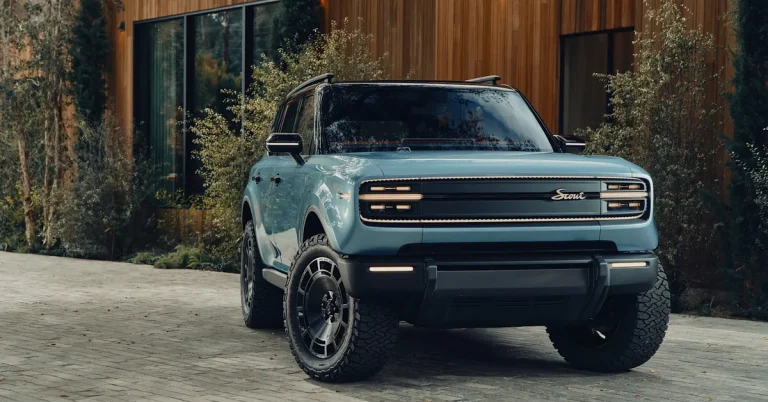
Scout Motors has started building validation vehicles at its factory in Blythewood, South Carolina. Customer deliveries are expected in 2028, after further testing and a planned production ramp-up.
Testing comes before customer production
Scout announced the start of validation production on November 12, 2.5 years after breaking ground on the factory. These vehicles are for development and testing, not for sale.
Scout plans to continue developing its validation builds into 2027, followed by pre-production vehicles. Production of vehicles for sale is expected to start that year.
Get the latest EV news first. Follow us on:
The validation vehicles allow real-world testing and let Scout check engineering, ease of assembly, parts readiness and manufacturing equipment before customer production.
Construction has now entered its final phase, with the plant approximately 85% complete. Hiring is accelerating as startup gets underway for most of the manufacturing equipment, which has already been installed.
The company expects more than 4,000 permanent jobs and plans annual production capacity of up to 200,000 vehicles, with a volume milestone of 100,000 units.
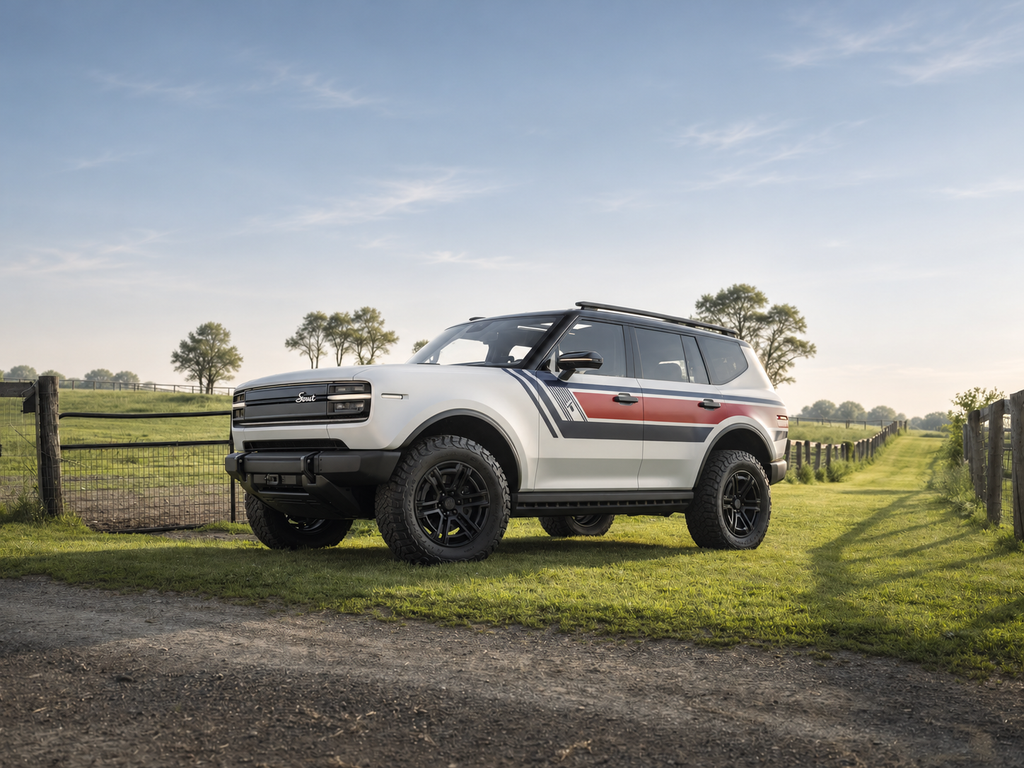
Factory equipment gets its first tests
This month, the Body Shop completed its first testing of a welded Traveler body. The Body Shop houses more than 750 robots and is designed to handle approximately 40 vehicles an hour at full capacity.
Each body contains approximately 160 parts and around 5,000 weld points. The work undergoes checks using advanced measurement systems and AI-supported weld monitoring. Sample bodies are measured against engineering specifications before painting and assembly.
The Paint Shop is electrified and was designed to reduce carbon dioxide emissions. The Assembly Shop brings painted bodies and chassis together and installs components.
Parts, batteries and accessories are intended to have a central hub for logistics and production in a Supplier Park. An additional $300M (~AUD 436.5M) investment was announced in 2025, with a further $368M (~AUD 535.4M) in supplier investment and approximately 1,000 supplier jobs expected.
The vehicles use a newly developed body-on-frame platform. The Volkswagen-Rivian joint venture provides Scout with software and architecture. Excellent software and lower production costs are among the expected benefits.
Harvester models are planned to arrive first
Scout plans to launch its Harvester extended-range electric models before battery-electric versions. The planned sequence puts the Traveler full-size SUV ahead of the Terra full-size pickup, starting with mid-level versions.
Harvester uses a gasoline engine as a generator to extend driving range, with a target of up to 500 miles. Scout estimates 350 miles of range for its battery-electric vehicles.
About 87% of reservations are for Harvester, exceeding Scout’s expectations for that version. The Traveler accounts for approximately 75% of reservations.
Scout’s reported reservation total is approximately 212,000 across the two vehicles. Scout Motors CEO Scott Keogh expects reservations could roughly double to around 400,000 by production start. The company aims to have 12–18 months of production presold.
Reserving requires a fully refundable $100 (~AUD 145) fee, but a reservation does not guarantee a purchase.
Owned by Volkswagen Group, Scout Motors is bringing back a name that International Harvester originally produced from 1961–1980. Scout initially expected to offer only battery-electric vehicles but added extended-range versions because of slower EV adoption and costs. It revealed Traveler and Terra in October 2024, the same month reservations opened.
Why it matters
The planned rollout puts buyers seeking a range extender ahead of those waiting for a battery-only vehicle in Scout’s launch sequence. Buyers can register interest without making a non-refundable commitment while Scout works through testing and production.
Key Specs
- Expected customer deliveries: 2028
- Expected start of sellable production: 2027
- Planned annual production capacity: Up to 200,000 vehicles
- Harvester target range: Up to 500 miles
- Battery-electric estimated range: 350 miles
- Plant completion: Approximately 85%
✎ Images and news sourced from: scoutmotors.com, cnbc.com, insideevs.com, thedrive.com, motortrend.com, autoguide.com, auto-motor-und-sport.de, qz.com.
