
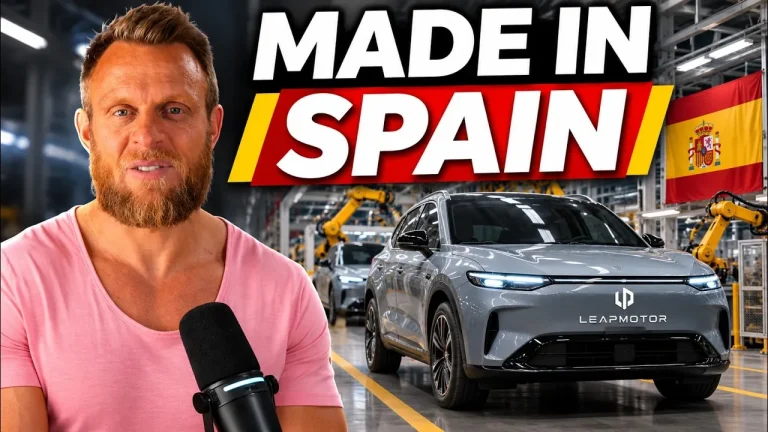
Leapmotor, a Chinese electric vehicle manufacturer, has started building its B10 compact electric SUV in Europe, with production underway at the Stellantis factory in Zaragoza, Spain. This move allows Leapmotor to avoid the significant tariffs imposed on Chinese-built EV imports, a challenge faced by other automakers such as BMW and Geely.
Leapmotor B10 Production in Spain
The Leapmotor B10, already available in Britain and Australia, is now rolling off the production line in Spain. According to Automotive News, Leapmotor is the first Chinese carmaker to build both its vehicles and their batteries in Europe. Sam Evans notes that this strategy lets Leapmotor completely sidestep tariffs that can reach around 30% for other brands importing from China.
Stellantis Partnership and Factory Utilization
The Zaragoza factory is not owned by Leapmotor but by Stellantis, the group behind brands like Peugeot, Opel, Fiat, and Jeep. The same Spanish plant also produces the Peugeot 208 and Opel Corsa. Sam Evans highlights that Stellantis invited Leapmotor in for two main reasons: first, Stellantis owns about 20% of Leapmotor, having paid approximately $1.7 billion (~AUD 2.55 billion) for the stake. Stellantis also controls Leapmotor’s sales outside China.
Get the latest EV news first. Follow us on:
Sam believes this investment is probably the best move Stellantis has made in the past decade, describing it as a very smart decision compared to other actions by the group. The partnership also helps address underutilization in Stellantis’ European factories, which the company said were running at only 60% capacity.
Leapmotor’s Rapid Growth and Tariff Avoidance
For Leapmotor, building in Spain solves its biggest challenge: avoiding the heavy tariffs Europe places on electric cars shipped from China. Sam points out that a car built in Spain is exempt from these tariffs. He notes that Leapmotor has grown its EV sales faster than any other car company in the world this year and is now the sixth largest EV maker globally.
What This Means for the Industry
Sam describes the European production strategy as a “Trojan horse” approach—Chinese EVs now enter the market from within, assembled or possibly built by European workers. He questions whether these vehicles are fully built or just assembled in Spain, noting that the specifics remain unclear. Sam sees this as a simple but effective answer to Europe’s attempt to keep out Chinese electric cars: produce them locally instead.
