
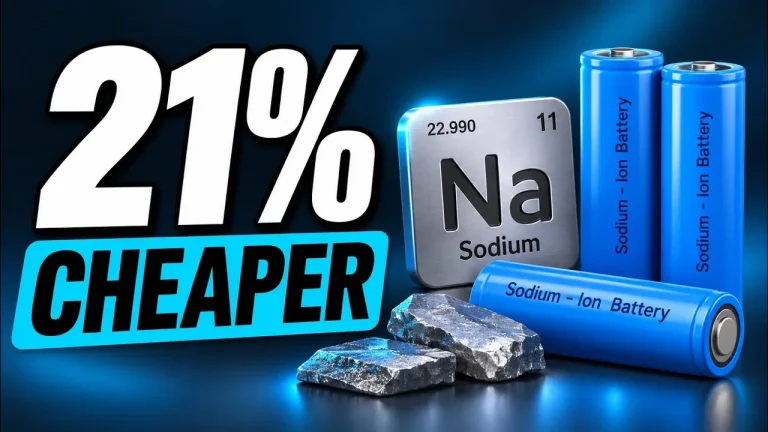
Sodium-ion batteries have long been seen as the affordable battery of the future, and according to a major new report from Wood Mackenzie, that future is almost here. Their analysts have found that although sodium-ion battery systems for the grid currently cost about 15% more upfront than lithium iron phosphate (LFP) batteries, buyers have already committed to more than 70 gigawatt hours of sodium-ion batteries. That’s enough to fill around 5 million Tesla Powerwalls.
Why Grid Buyers Are Choosing Sodium-Ion
The main reason for this surge in demand is the long-term cost advantage. Over a 20-year period, the total bill for a sodium-ion battery system comes out 21% lower than for an LFP system, on average. You don’t need to add extra batteries later to compensate for capacity fading, and sodium-ion systems cost less to operate over time. This long-term saving is a big factor for grid-scale buyers.
Price Parity Is Coming Soon
The gap in upfront cost is closing quickly. By the end of this year, the leading manufacturers are expected to be producing sodium-ion cells for the same money as LFP cells. That’s what they’ve promised. BYD alone has factory plans totaling 30 gigawatt hours for sodium-ion production.
Get the latest EV news first. Follow us on:
Energy Density and Material Advantages
The main trade-off with sodium-ion is energy density. CATL’s sodium-ion cells deliver 175 Wh/kg, which is a bit less than LFP, but not by a huge margin. For stationary grid storage, where batteries just sit in a field, this lower energy density isn’t a real issue. Plus, sodium is abundant and not controlled by any single country, making it a more secure and accessible resource.
Home Storage: Not the Best Choice in Australia Right Now
I get asked if people should install sodium-ion batteries at home. Here in Australia, I don’t think it makes sense right now. Sodium-ion batteries don’t qualify for the battery incentives available here, so they miss out on significant subsidies. Personally, I’d go for Anker’s Solix XE battery, which offers 10,000 cycles and is, I think, slightly cheaper than the previous generation I own. That battery is likely to outlast most owners.
What This Means for the Industry
For large-scale, industrial battery projects, the return on investment over decades is what matters most, and sodium-ion’s lower lifetime costs make it a compelling option. While it’s not the right fit for Australian home storage at the moment, for grid-scale storage, sodium-ion is becoming the battery to watch.
