
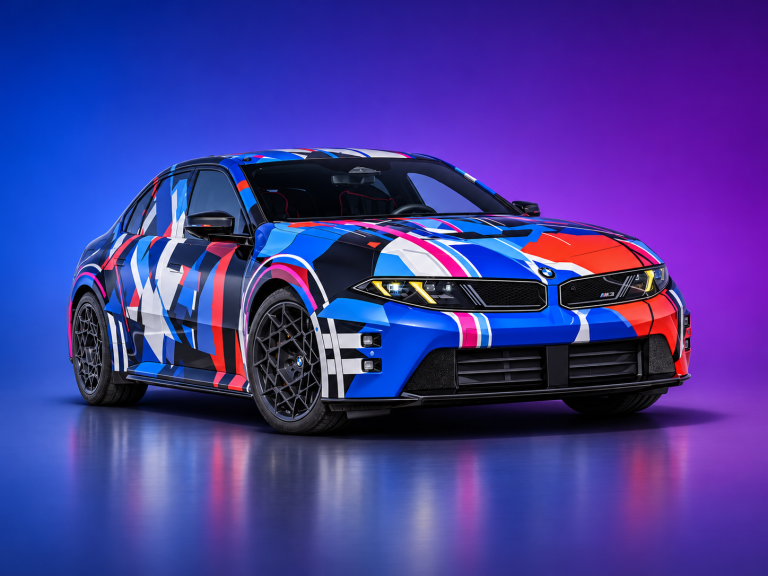
The BMW M3 Electric delivers 838 hp and over 400 miles (650 km WLTP) of range. For longer trips, fast charging adds about 350 km of range in 10 minutes.
Four motors with rear-biased power
The M3 Electric has one motor driving each wheel, with total torque reaching 885 lb-ft (1,200 Nm). BMW calls the system M eDrive, the next step beyond M xDrive. Three-level inverters are used in the drive units, and a separate single-speed transmission serves each motor.
The front motors have a combined output of 644 hp and 398 lb-ft. At the rear, the combined figures are 751 hp and 738 lb-ft. Power distribution favours the rear wheels, and the car can drift.
Get the latest EV news first. Follow us on:
BMW’s M Dynamic Performance Control manages torque distribution between the wheels through the central Heart of Joy controller. In Comfort mode, the front axle can be disconnected to improve efficiency.
The chassis has bespoke dampers, and the battery housing forms part of its structure. Stiffening plates link the housing to the axles, while additional struts carry loads from the front suspension towers to the pillars beside the windscreen.
Battery larger than 100 kWh and 420 kW charging
The electric M3 uses an M-specific version of BMW’s sixth-generation battery technology, with a battery larger than 100 kWh and an 800 V electrical system. DC fast-charging power reaches up to 420 kW.
Its EPA range is about 300 miles, measured under a different testing standard from the WLTP figure.
The battery cells differ from those in the BMW i3. The M-specific cells have a larger electrode surface, thinner electrodes and more electrolyte. Cooling is provided on either side of each cell row.
Regenerative braking reaches a maximum of 540 kW. Braking torque is continuously shared between the electric motors and hydraulic friction brakes, rather than using a fixed split.
The anti-lock braking system uses the motors to make rapid adjustments, with the friction brakes providing the baseline braking action.
Six simulated shift stages
The M3 Electric has a six-stage simulated shifting system, operated through steering-wheel paddles and accompanied by shift lights. When simulated shifts are enabled, peak power arrives at the top of each stage.
Settings include a six-stage automatic mode, a paddle-operated mode, an M eDrive Off setting and a preset track mode. The selected mode determines how the pedal progresses, how the drive responds, which shift strategy is used and how regenerative braking operates.
Artificial sound also changes with the driving mode. BMW calls it M eSound, and its soundtrack takes inspiration from combustion engines.
Full unveiling planned for January 2027
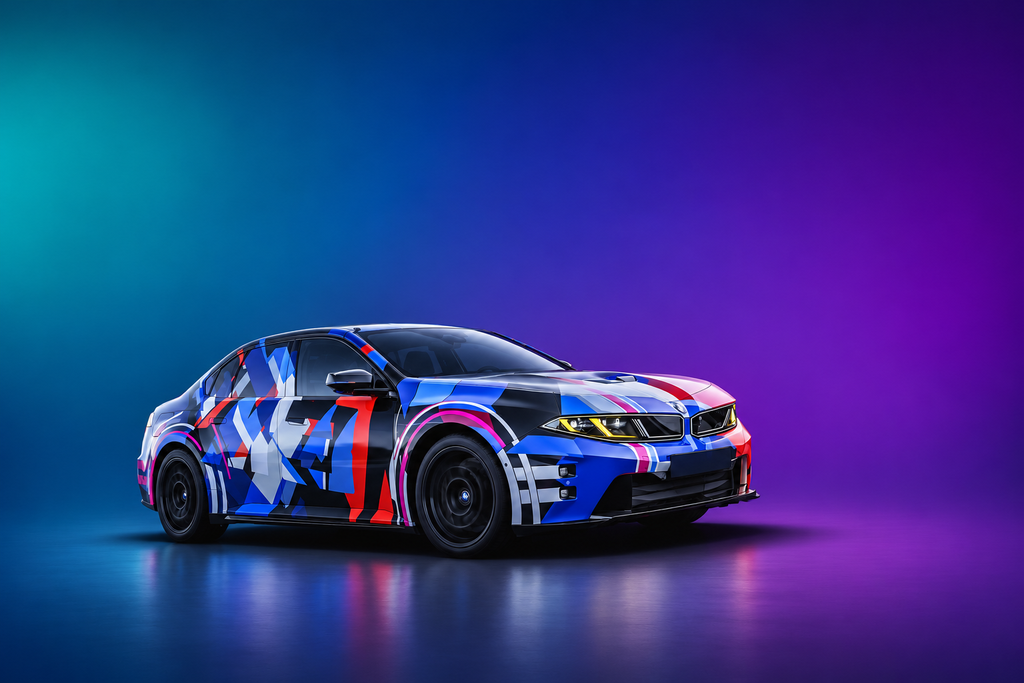
BMW plans to unveil the M3 Electric fully in January 2027. The prototype remains camouflaged and runs on Michelin Pilot Sport S 6 tyres.
The electric version is planned to appear before a combustion-powered M3 alternative. BMW plans to sell both versions alongside each other, with the combustion model set to use its S58 engine and a hybrid system.
Why it matters
The electric M3 pairs high performance with driving range and rapid charging suited to longer trips. Buyers are also set to retain a choice of powertrains, while the electric version offers wheel-by-wheel motor control and adjustable simulated shifting.
Key Specs
- Total power: 838 hp
- Total torque: 885 lb-ft (1,200 Nm)
- WLTP range: Over 400 miles (650 km)
- EPA range: About 300 miles
- Battery capacity: More than 100 kWh
- Electrical system: 800 V
- DC fast charging: Up to 420 kW
- Range added by fast charging: About 350 km in 10 minutes
- Maximum regenerative braking: 540 kW
✎ Images and news sourced from: bmwgroup.com, forococheselectricos.com, autoexpress.co.uk, caranddriver.com, carscoops.com, bmwblog.com, bmw-me.com.
