
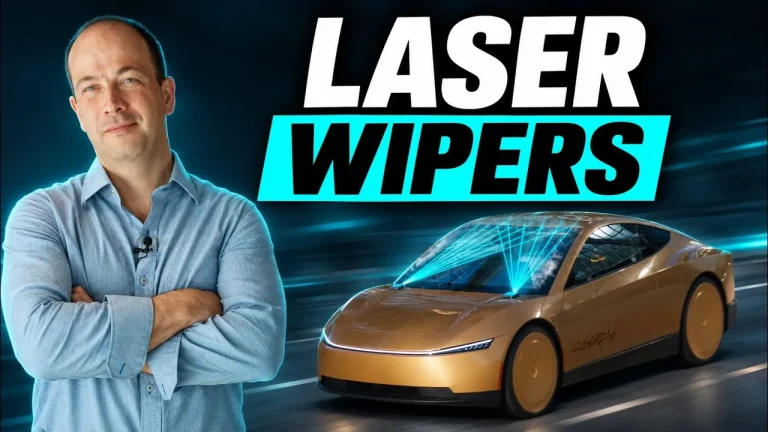
Tesla is exploring the use of lasers to clean glass surfaces on its upcoming robotaxi vehicles, aiming to keep camera patches spotless rather than replacing traditional windscreen wipers. The concept was discussed by Tesla’s head of vehicle engineering, Lars Moravy, during an appearance on Jay Leno’s Garage, where he confirmed that Tesla holds a patent for this technology. An updated patent was granted in March of this year, signaling Tesla’s ongoing interest in the idea, though there is no confirmation yet that it will enter production.
How Tesla’s Laser Glass Cleaning System Works
The proposed system uses a camera to detect dirt, such as bugs, mud, or bird droppings, on the relevant glass surface. Software then analyzes the type of debris, and a laser fires short pulses to burn it away. The laser beam is specifically tuned so it cannot pass through the glass, ensuring the safety of passengers inside the vehicle.
Sam Evans jokes that there is a ‘secret button’ in the car to redirect the laser at other vehicles in the way, but he clarifies that this is not a real feature and is only meant in jest.
Get the latest EV news first. Follow us on:
Limitations for Windscreen Cleaning
Lars Moravy acknowledged that cleaning an entire windscreen with lasers would be impractical, as it would require too many lasers. As a result, traditional wipers will remain on future Tesla vehicles for now. However, Sam points out that robotaxis are different: since nobody is looking through the windscreen, only the small glass patches in front of each camera need to be kept clear.
Advantages for Robotaxi Applications
For robotaxis, keeping camera lenses clean is critical, especially since there is no human on board to maintain the vehicle. If a wiper blade wears out, the car could lose its ability to see and therefore stop earning money. In contrast, a laser-based system would have no moving parts, nothing to refill, and nothing to replace, reducing maintenance needs and downtime.
Background and Patent Progress
Tesla first discussed the laser cleaning concept in 2021 during the design phase of the Cybertruck but ultimately installed a single large wiper instead.
What This Means for the Industry
Sam Evans notes that while nothing is confirmed for production, the rise of driverless cars increases the appeal of laser cleaning systems over traditional rubber blades, at least for keeping cameras clear. Sam describes the idea as ‘wild and a little bit insane,’ but acknowledges that it might eventually become a reality for Tesla’s robotaxi fleet.
