
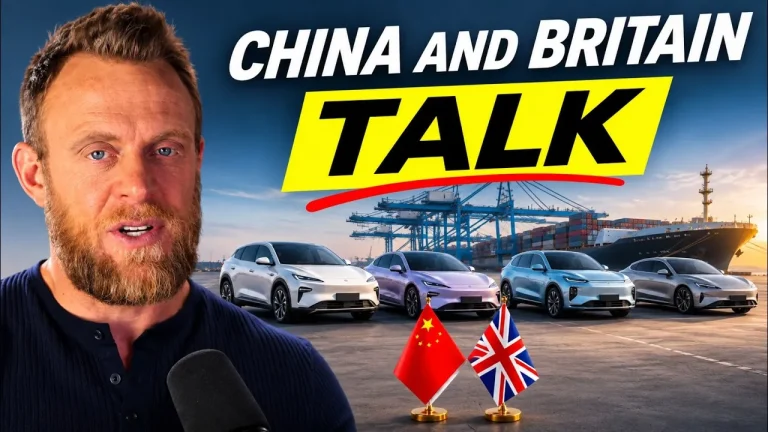
Britain and China have finally spoken about electric vehicle tariffs, following a warning from Beijing last month. On November 11th, the UK’s trade secretary and China’s commerce minister held a video call to discuss the issue, but no details, deals, or next steps were announced. What happens next could have a big impact on the price British drivers pay for electric cars.
Background: The Tariff Gap Between Britain and the EU
Britain stands out among major car markets for not imposing extra tariffs on Chinese electric vehicles. Even so, cars remain expensive in the UK. Meanwhile, since 2024, the European Union has charged Chinese EVs high tariffs—up to 35% for some brands, plus a 10% import tariff, totaling a 45% tariff for certain models. MG is one of the brands affected.
This has made Britain an open door for Chinese car brands, which have taken advantage of the situation. Geely recently signed its 100th dealer in the UK. Chery is launching yet another brand there early next year. The pressure for Britain to close this open door is increasing, especially as the EU reportedly wants the UK to match its tariffs.
Get the latest EV news first. Follow us on:
Growing Political Pressure and Beijing’s Warning
Reports suggest a British trade minister has said that Britain and Europe need to act together regarding China’s growing dominance in the automotive sector. This led to China issuing a warning—or a threat—on October 19th: if Britain copies Europe’s tariff approach, China will take firm countermeasures.
The recent video call between the two governments was initiated by Britain, and China confirmed that electric vehicles were discussed. However, no further information has been released, leaving the situation unresolved for now.
What’s at Stake for Both Sides
Both the UK and China have significant interests at risk. China exported about 600,000 electric and plug-in cars in October alone, and Britain is one of its big markets. In return, Britain sells luxury cars and whiskey to China, though not many UK-made luxury cars are sold there anymore. Whiskey, however, could easily become a target if a trade fight breaks out.
My View: Why Open Competition Matters
I believe that tariffs on electric cars are essentially a tax on people trying to do the right thing. They make clean vehicles more expensive and protect carmakers that have been slow to adapt. It’s competition that brings prices down, and British buyers have benefited from more of it than almost anyone else. Talking is far better than a trade war, and I hope the door to competition stays open.
What This Means Going Forward
Ultimately, I can understand why Europe is concerned—China is rapidly taking over the global automotive industry, and imports are at record highs. For now, all eyes are on what Britain decides to do next.
