
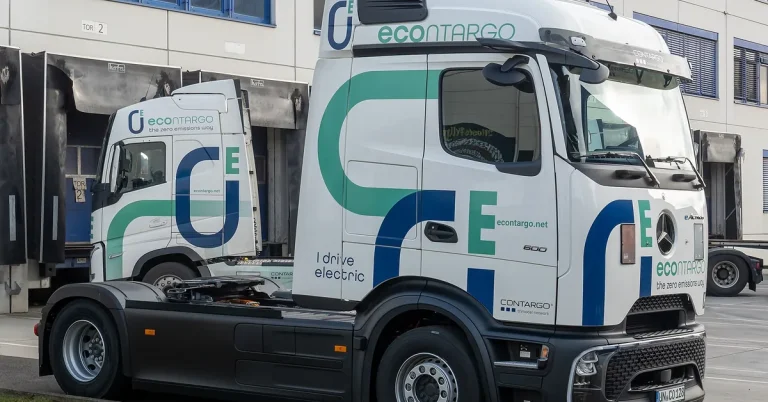
The share of Germany’s new heavy truck sales expected to go to zero-emission trucks in 2030 is now around 30%—less than half the level forecast in 2024. Fleet buyers face a slower expected transition, with slow charger construction and a lack of financial incentives blamed.
Manufacturers cut their sales forecasts
The 2024 survey forecast a 68% zero-emission share of Germany’s new heavy truck sales in 2030. Battery-electric trucks were expected to account for 48.2% of sales.
The expected expansion of zero-emission truck sales has been pushed back by up to five years compared with those earlier forecasts. Most manufacturers lowered their projections to align with the sales needed to meet the EU’s emissions standards for 2030.
Get the latest EV news first. Follow us on:
Customers are also taking longer than expected to convert their fleets. Before committing to larger orders, operators are putting a few electric trucks through trials.
The sales forecast excluded Chinese manufacturers entering Europe with battery-powered trucks. Their arrival could accelerate the transition beyond the pace currently expected.
Motorway truck charging network takes shape
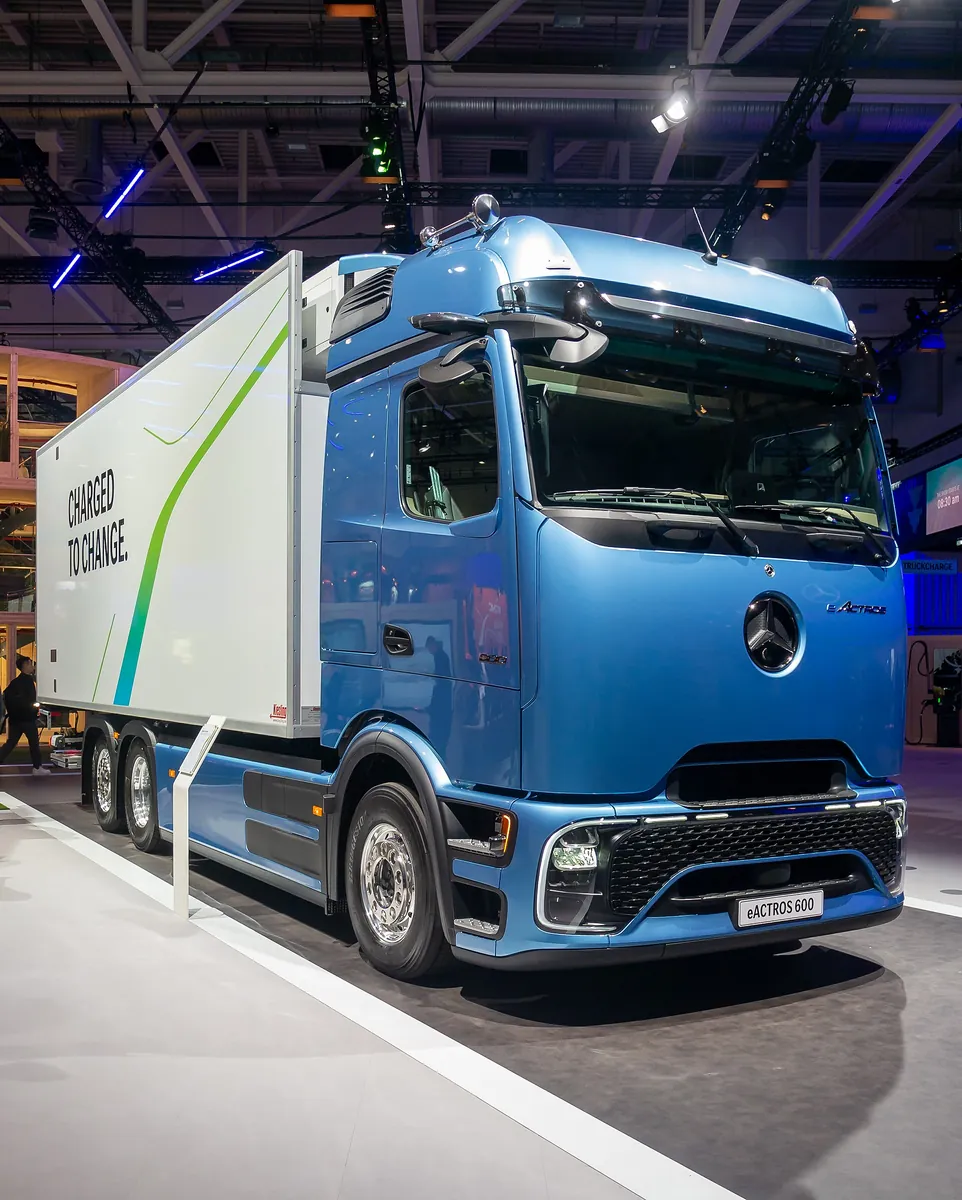
A tender launched by Autobahn GmbH, Germany’s motorway operator, calls for fast chargers for trucks to be built and operated at 227 staffed motorway service areas. Contracts covering another 124 unstaffed rest areas were awarded during the summer.
The planned truck charging network would provide around 4,200 charging points across roughly 350 locations. The slow rollout of charging infrastructure remains one reason manufacturers reduced their sales expectations.
European manufacturers asked in September for a three-year delay to the EU’s emissions standards, citing insufficient charging stations and high energy costs. The request followed changes made by EU lawmakers in spring that gave manufacturers more flexibility in meeting the standards.
Battery-electric trucks remain the preferred option
All manufacturers regard battery-electric trucks as the most important zero-emission drive technology. The main technical challenges facing battery-powered trucks have largely been overcome.
Most manufacturers expect battery trucks to match diesel models on total ownership costs across all uses by 2030. That comparison covers the full cost of buying and operating a truck, not just its purchase price.
Germany had registered 4,000 zero-emission trucks weighing more than 12 tonnes by the middle of this year. Battery-electric trucks are expected to overtake diesel as Germany’s dominant truck technology in 2035, although replacing vehicles already on the road will take longer.
Diesel’s share of the heavy truck fleet is expected to decline from 97% in 2026 to 63% in 2035, when battery-electric trucks are forecast to represent about 27% of the fleet.
Manufacturers remain divided over whether hydrogen technology can ever compete with batteries. Hydrogen-powered trucks will not enter series production until 2029 or later following a postponement.
Emissions rules and overseas competition
EU standards require average emissions from new heavy-duty vehicles to fall by 43% by 2030 compared with 2019. In a separate development, the launch of ETS II—which expands EU carbon trading to transport fuels—was postponed until 2028.
European manufacturers would fall behind their Chinese and US rivals, and investment certainty would suffer, T&E warned, if emissions limits were weakened. It expects those competitors to capture more than a quarter of Europe’s electric truck market by 2030.
Why it matters
For fleet buyers, charging access remains a barrier to switching to electric trucks, even as the technology improves. The slower transition also puts European manufacturers’ investment and their ability to compete with Chinese and US rivals in focus.
Key Specs
- Forecast zero-emission share of German new heavy truck sales in 2030: Around 30%
- Previous forecast for the same sales share: 68%
- Planned truck charging network: Around 4,200 charging points at roughly 350 locations
- Expected battery truck total-cost parity across all uses: 2030
✎ Images and news sourced from: cleanenergywire.org, thedriven.io, electrive.net, goingelectric.de, verkehrsrundschau.de, transportenvironment.org, bmv.de, dieselnet.com, wikimedia.org, peterbilt.com. Featured photo: Matti Blume, CC BY-SA 4.0, via Wikimedia Commons.
