
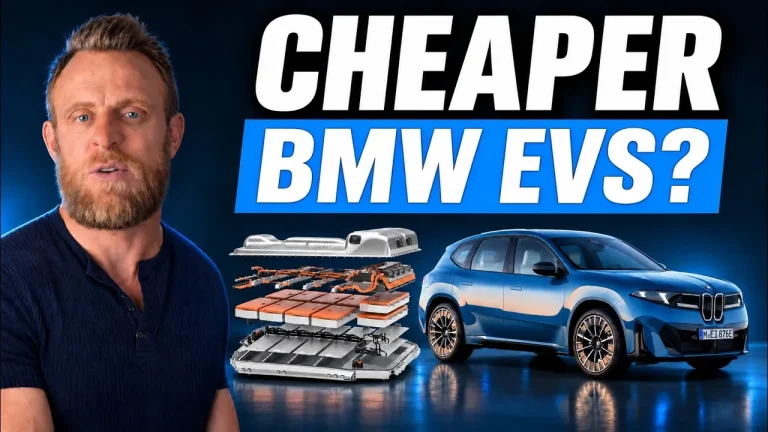
BMW has confirmed it will expand the use of cheaper lithium iron phosphate (LFP) batteries in its newest generation of electric cars. However, BMW has not committed to passing these savings on to customers, leaving the question of lower prices unresolved.
What Are LFP Batteries and Why Use Them?
Most premium electric cars still use nickel-based batteries, which offer the highest range for their size. LFP batteries, on the other hand, store about 20-30% less energy and are a bit heavier. The trade-off is that LFP batteries are cheaper to produce, last a long time, and do not require nickel or cobalt. This makes them a popular choice in China, where most EVs now use LFP batteries.
To put some numbers to it, a typical LFP cell holds around 180 Wh per kilo, while nickel cells manage 250 or even up to 300 with Mercedes-Benz’s new batteries. BMW hasn’t shared the exact figures for its own batteries, but I estimate their NMC cells are around 280 Wh per kilogram, and the LFP ones will probably be around 190 Wh per kilo.
Get the latest EV news first. Follow us on:
BMW’s LFP Plans in China and Beyond
BMW is already using LFP batteries in China. The entry-level iX3 sold there comes with a 77 kWh LFP battery pack. Outside China, BMW’s CEO has only confirmed that LFP is coming to more models, but did not specify which ones.
Will LFP Mean Cheaper BMW EVs?
While a cheaper battery could mean a lower-priced car, BMW’s CEO did not promise price cuts. It’s possible the company could use the savings to boost its own margins, especially since legacy automakers have seen their profits shrink in recent years. Whether BMW passes the savings on to buyers or not remains to be seen.
What This Means for the Market
I think BMW’s move makes sense. Not everyone needs 700 or 800 kilometers of range, and not everyone can afford to pay for it. Mercedes already offers a similar approach with its electric CLA, giving buyers a choice between a big nickel battery and a smaller LFP pack. When premium brands start offering the cheaper, tougher battery, it stops being just a budget option and starts to look like the sensible one.
