
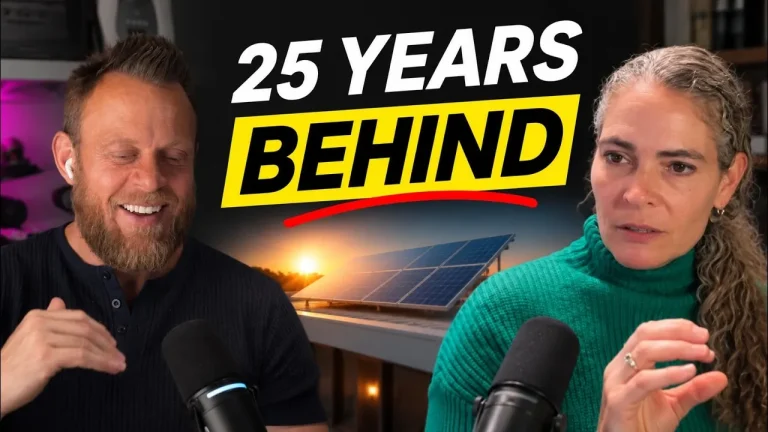
The state needs to add eight gigawatts of new electricity generation per year to meet its 2045 target, but most years see only around three gigawatts built. Meanwhile, the rooftop solar market has collapsed, dropping 60% from what it was just a few years ago.
EWG’s Mission and Focus on Consumer Energy
Bernadette Del Chiaro, senior vice president at the Environmental Working Group, explains that EWG is a national nonprofit focused on putting consumers at the center of environmental solutions. The group works to ensure clean air, water, and safe products, with a significant focus on clean energy and distributed, behind-the-meter solutions such as rooftop solar.
Del Chiaro’s work is based in Sacramento, California’s capital, where she aims to clear policy obstacles so engineers and innovators can advance consumer-driven clean energy. EWG’s approach emphasizes empowering consumers with information, tools, and research to lead healthier, safer, and cleaner lives.
Get the latest EV news first. Follow us on:
California’s Clean Energy Shortfall: The Numbers
This projection accounts for population growth and increased use of electric appliances and vehicles, but does not include potential surges from AI-related demand, which remains an unknown factor.
California’s longstanding policy is to reach 100% clean electricity by 2045. To meet that target, the state needs to build eight gigawatts of new generation each year. However, Del Chiaro notes that the highest annual build rate has only reached about half that amount, and most years see just three gigawatts added. As a result, California is not on pace to meet its clean energy deadline.
Shift Away from Rooftop Solar
Del Chiaro describes a dramatic reversal in California’s rooftop solar market. For about a decade, consistent policies made the state a global leader in rooftop solar adoption. However, utilities launched campaigns against rooftop solar while promoting utility-scale projects, and found support from a governor favorable to their interests.
As a result, the rooftop solar market has plummeted by 60% from what it was a few years ago. Del Chiaro says the market is now flatlining, and further threats loom, including arguments over high fixed utility charges and new property taxes being rolled out on rooftop solar panels, taxing them for the first time in history.
While there are some positive developments, such as the passage of a balcony solar bill, Del Chiaro believes the overall trend is negative for consumer-deployed solar.
Utility Interests and the Structure of California’s Energy Market
Del Chiaro explains that California’s electricity market is dominated by three investor-owned utilities controlling 80% of the state. These companies no longer build their own power plants, but instead focus on constructing and expanding poles and wires—the transmission infrastructure—because this is where they earn guaranteed profits.
She likens these utilities to construction companies eager to build or expand roads, as every new infrastructure project increases their earnings. They receive a guaranteed rate of return on investments in transmission lines, including costly undergrounding and upgrades, regardless of whether these projects improve reliability.
Anything that reduces consumer demand on the grid, such as energy efficiency or rooftop solar, threatens utility profits. Del Chiaro notes that California has begun to backslide on both fronts, even as affordability becomes a crisis for consumers.
Rising Grid Costs and Utility Spending
Utilities often argue that rooftop solar shifts costs onto other customers, but Del Chiaro points out that utility expenditures on the electric grid have doubled over the past 20 years, even though statewide demand has remained flat. She argues that this increase in spending cannot be explained by wildfire hardening alone, as utilities often claim.
Behind the meter, electricity usage has actually doubled, but this load growth has been met with rooftop solar, keeping overall grid demand flat and reducing strain. Del Chiaro says that regulators have not been strong enough to limit unnecessary utility spending, and that the utilities are among California’s most profitable companies, spending heavily on political influence.
Political Influence and Regulatory Capture
Del Chiaro says that utilities have significant sway over both regulators and politicians in California. She describes the regulatory environment as “captured,” with little effective resistance to utility interests. While there are some signs of hope from rank-and-file politicians seeking to represent consumers, Del Chiaro believes utilities have largely controlled the conversation and policy direction in recent years.
She notes that the lack of a strong advocate for consumers has allowed utilities to maintain their profit-driven approach, even as California falls further behind on clean energy goals and affordability suffers.
What This Means for California’s Clean Energy Future
Del Chiaro’s analysis highlights the urgent need for California to rethink its approach to clean energy. She points to Australia’s success with rooftop solar as a potential model and calls for policies that support consumer-driven solutions rather than favoring utility-scale projects and utility profits.
