
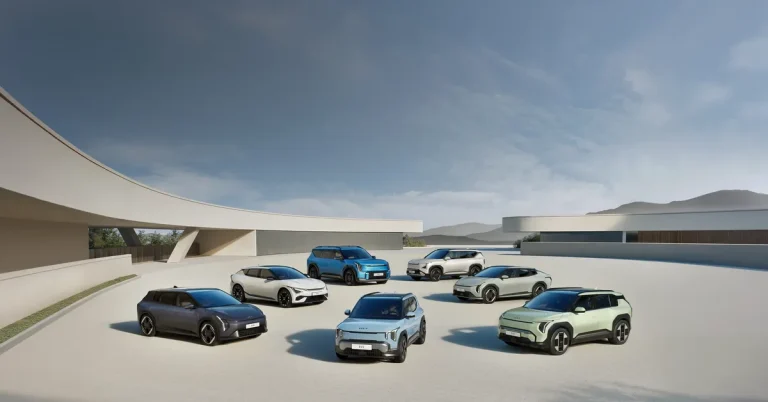
Kia’s first electric vehicle, the Besta EV, turns 40. Its journey from an experimental van to today’s electric range shows how much the choice for buyers has grown.
An electric van built to follow runners
Built in 1986, the Besta EV carried marathon broadcast equipment at the Asian Games and was used again at the 1988 Seoul Olympics. It had to keep pace with runners, carry timekeeping and camera equipment, and avoid exhaust fumes.
It was Korea’s first electric vehicle and the world’s third. Never offered for public sale, the experimental Besta EV demonstrated what cleaner vehicles could offer before they became a global issue.
Get the latest EV news first. Follow us on:
The original Besta van launched in 1986 as the Bongo’s successor. Kia’s Central Research Institute developed it using the company’s own technology. For the electric version, a motor and a 35 kWh battery pack replaced the Besta’s 2.0-liter diesel engine.
The Besta EV had rear-wheel drive and a top speed of 56 miles per hour. It measured 4,670 mm (~183.9 inches) long, 1,690 mm (~66.5 inches) wide and 1,920 mm (~75.6 inches) tall.
Kia put the Besta EV’s distance per charge at more than 42 km (26 miles), while Hyundai gave it a range of about 75 miles.
From experiments to production cars
Seven years after the Besta EV, Kia introduced the Pride EV and Sephia EV at the 1993 Daejeon Expo. The Pride EV became Korea’s first electric vehicle certified for commercial sale, although it did not enter full production.
The Pride EV had an estimated battery capacity of 17.4 kWh. Its solar panels added about 10 miles of range, according to Kia. Its petrol counterpart was the Ford Festiva. The Sephia EV took electric performance further using domestic technology.
An eighteen-year gap separated the Sephia EV from the Ray EV’s launch in 2011. The Ray EV had a 16.4 kWh battery and an 86-mile range.
Kia’s first global EV, the Soul EV, followed in 2014, taking its electric cars to Europe, the UK and the US. The original Soul EV offered 93 miles of range and arrived 28 years after the Besta EV.
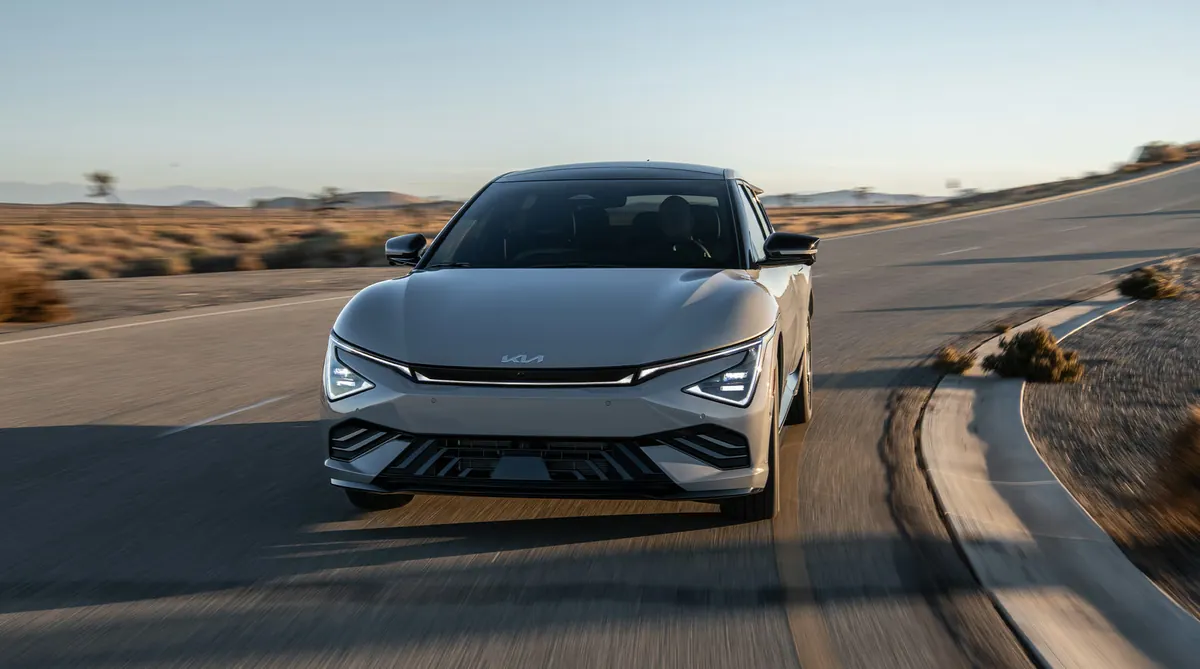
The Niro EV later gave Kia a practical electric family SUV, with a 238-mile range and generous space. A repositioning in 2021 saw Kia become a sustainable mobility solutions provider. The EV6 became its first dedicated EV built on the platform known as E-GMP.
A wider range for families and businesses
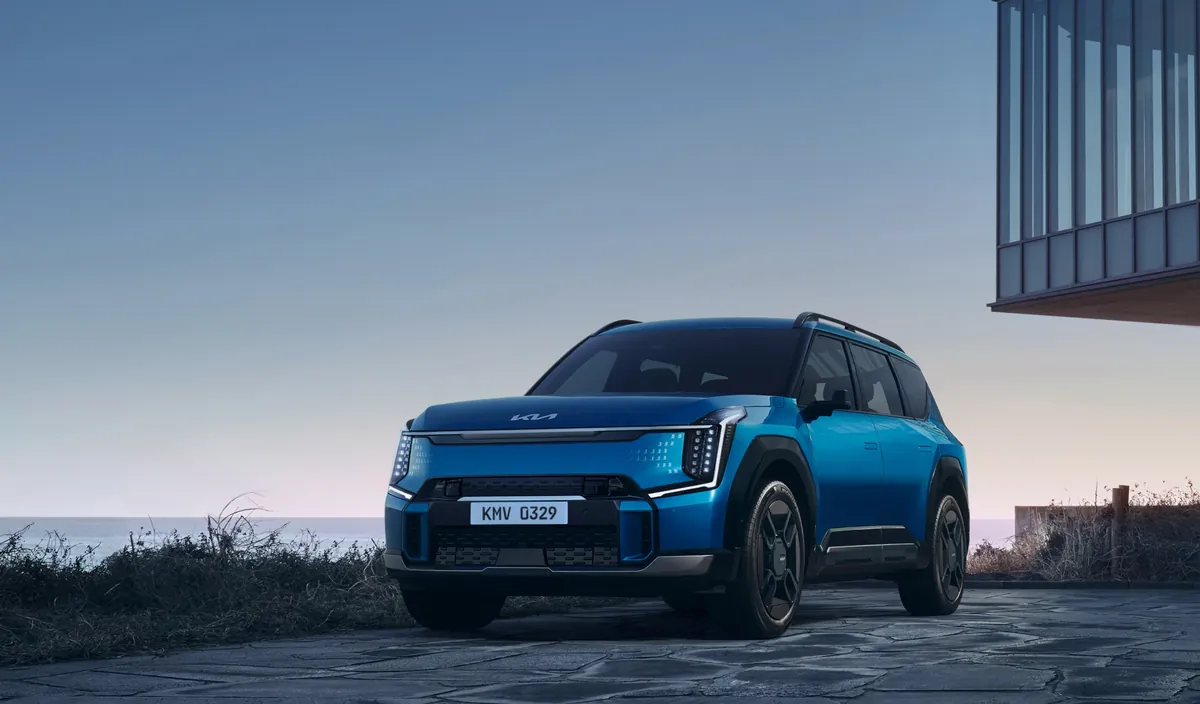
Kia’s current electric range includes the EV2, EV3, EV4, EV5, EV6, EV9 and PV5 Passenger, although some are not available in the US. Kia’s Platform Beyond Vehicle commercial range begins with the PV5.
The PV5 went on sale globally in 2025. It offers a 51.5 kWh battery with 184 miles of WLTP range, or a 71.2 kWh battery with 258 miles of WLTP range. Kia said the PV5 sold about 57,000 units globally in its first 14 months.
After recording its 100,000th UK EV sale in March, Kia’s electric vehicle sales there have now exceeded 135,000. Fully electric vehicles accounted for more than 37% of Kia’s UK sales so far this year.
Why it matters
For buyers, Kia’s electric range now covers family cars and commercial transport rather than a single specialised task. The contrast with the Besta EV shows how electric vehicles have moved from experiments to everyday choices.
Key Specs
- First Kia EV: Besta EV, 1986
- Besta EV battery: 35 kWh
- Besta EV top speed: 56 miles per hour
- PV5 battery options: 51.5 kWh and 71.2 kWh
- PV5 WLTP range options: 184 miles and 258 miles
- Kia UK electric vehicle sales: More than 135,000
✎ Images and news sourced from: kia.com, electrichybridvehicletechnology.com, motoringresearch.com, insideevs.com, theevreport.com, whichev.net, motor.es.
