
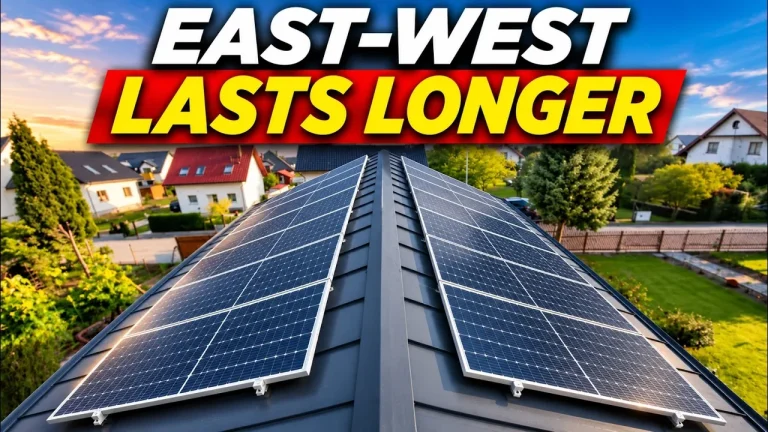
Most solar installers will tell you to point your panels north in Australia, or south if you’re in the US, UK, or Canada, to get the most electricity from each panel. I’ve heard this advice everywhere, but my own panels aren’t north-facing at all. Now, new research from UNSW suggests that chasing maximum sunlight might not be the best approach for long-term panel health.
Comparing East-West and Sun-Tracking Solar Panels
The UNSW researchers tested two common ways of mounting solar panels on the ground, which is basically the same as what you’d do on a roof. One setup used trackers that tilt to follow the sun all day, while the other had fixed panels—half facing east, half facing west. The trackers did produce more electricity per panel, but the east-west fixed panels wore out more slowly.
Degradation Rates: Up to 40% Lower for East-West Panels
For some types of damage, the east-west panels degraded up to 40% less than the sun-tracking ones. The reason is simple: panels that follow the sun get more light, so they run hotter and soak up more UV. Heat and UV are the main things that slowly cook a solar panel over time. East-west panels get a gentler, cooler exposure, so they last longer. The difference was most noticeable in summer.
Get the latest EV news first. Follow us on:
Earlier Findings and Real-World Implications
This isn’t the first time UNSW has found this. An earlier study showed that sun-tracking panels can degrade nearly twice as fast as east-west fixed panels. While the latest study focused on big ground-mounted arrays, the same physics applies to rooftop solar.
What This Means for Homeowners
East-west facing panels already give you more power in the morning and evening, which is when most people are home to use it. Now there’s another reason to consider them: your panels may simply last longer. So if your roof faces east and west, it’s not a compromise anymore—it might actually be the better choice.
