
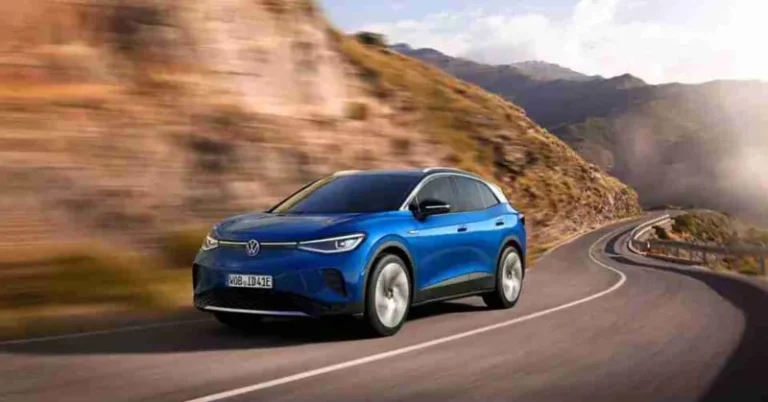
Volkswagen Group plans to export 300,000 vehicles a year from China by 2030. The push would take China-developed platforms and electronics, including technology developed with Xpeng, into more international markets.
Exports to help offset weaker China business
Describing the annual export target as conservative, Arno Antlitz, chief financial officer of Volkswagen Group, said weaker prospects in China would be partly offset by overseas shipments. The strategy is shifting from “In China, for China” to “In China, Beyond China”.
Volkswagen and Jetta already export China-built vehicles to the Middle East, Uzbekistan, Kazakhstan and Sub-Saharan Africa. The scheduled additions by the end of this year are Mexico, Egypt and Vietnam. Further expansion is planned across Southeast Asia, South America and Africa.
Get the latest EV news first. Follow us on:
Initial shipments include the Jetta VA3, VS5 and VS7 combustion-engine models from FAW-Volkswagen. Although Antlitz named Australia as a potential destination, he said shipping from China was difficult because of right-hand-drive requirements. Volkswagen has not announced a comparable China-built model rollout for Australia, the UK or Canada.
In the first nine months of this year, vehicle sales at Volkswagen’s China joint ventures totaled 1.224 million, a decline of 35% from a year earlier. Their operating result fell to a $124.1M (~AUD 186M) loss from a $816.9M (~AUD 1.2B) profit.

Xpeng-backed electronics support the expansion
Volkswagen developed its CEA electronic architecture with Xpeng, Volkswagen China Technology Company and CARIAD China. The system puts software at the centre of the vehicle, using central computers and regional controllers. With it, development cycles are shortened by up to 30%, while the number of electronic control units falls by about 30%.
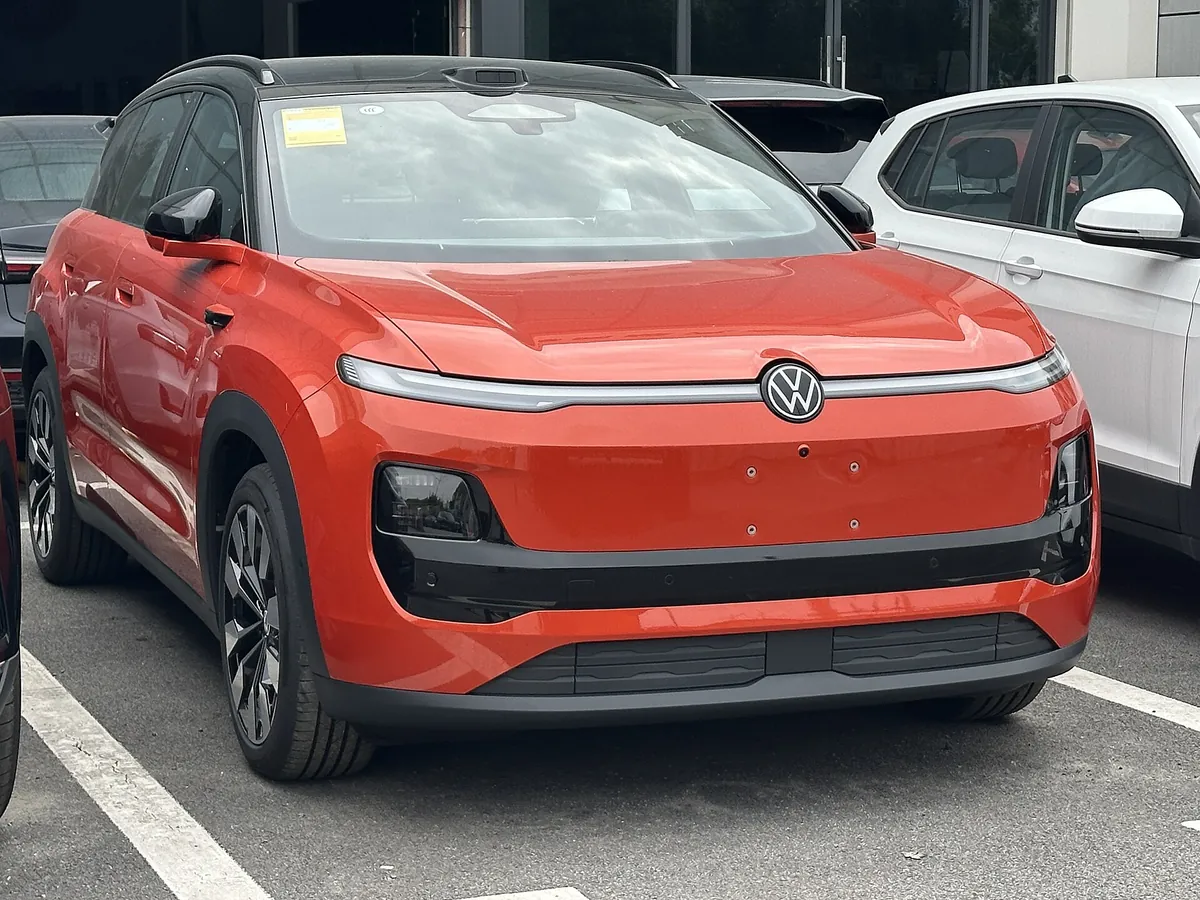
This year saw CEA deployed in five electric models produced in China: ID. UNYX 06, ID. UNYX 07, ID. ERA 5X, ID. AURA T6 and ID. AURA L5. The SAIC-Volkswagen ID. ERA 5X launched on November 12 as the first production model combining CEA with Volkswagen’s Compact Main Platform.
Volkswagen plans to extend its use to plug-in hybrids and combustion-engine models in 2027.
Major software updates follow a three-month cycle, with full architecture upgrades every two years. AI assistants began rolling out across CEA-equipped models in the third quarter, supporting natural voice interaction, trip planning, entertainment and privacy protection.
China-developed platforms head overseas
Volkswagen plans to localise the Compact Main Platform and CEA in Global South markets, starting with South America. The platform supports small battery-electric cars and plug-in hybrids and was designed around software-controlled vehicles.
The stated figures put CLTC range at more than 600 km and consumption at around 11 kWh per 100 km; charging takes 25 minutes from 30% to 80%. Multi-link rear suspension is also combined with a front-to-rear weight distribution of 54:46.
The larger China Scalable Platform supports full-size and flagship battery-electric and extended-range vehicles. Volkswagen targets more than 800 km of battery-electric range at under 13 kWh per 100 km. Its extended-range figure exceeds 1,500 km.
The larger platform supports 10–80% charging in 13 minutes through an electrical architecture exceeding 850 volts. Its performance figures include a turning radius below 5.5 metres and acceleration from zero to 100 km per hour in 4.1 seconds.
Software and driver assistance develop alongside the cars
Both platforms, CEA and the Hyper Sense 8 driver-assistance system form VEGA, Volkswagen’s China-developed technology package unveiled on October 28. Among international carmakers in China, Volkswagen alone has an in-house technology package of this kind developed locally.
Hyper Sense 8 was developed by Carizon, Volkswagen’s Chinese intelligent-driving operation with Horizon. It supports urban and highway navigation-assisted driving and parking.
Volkswagen’s GAIA 2.0 AI simulation model processes the equivalent of 5 million km of driving daily, drawing on up to 30 million scenario clips. Its C-Brain engineering tools cut software-feature testing from up to three days to two–three hours. They also cut issue diagnosis from about two weeks to 20 minutes.
Volkswagen secured a Level 3 automated-driving road-test permit in Hefei and targets technology readiness in 2027. Planned CEA upgrades include centralised cockpit and driver-assistance computing that year, followed by an AI-led architecture and Level 4 driving capability in 2029.
Why it matters
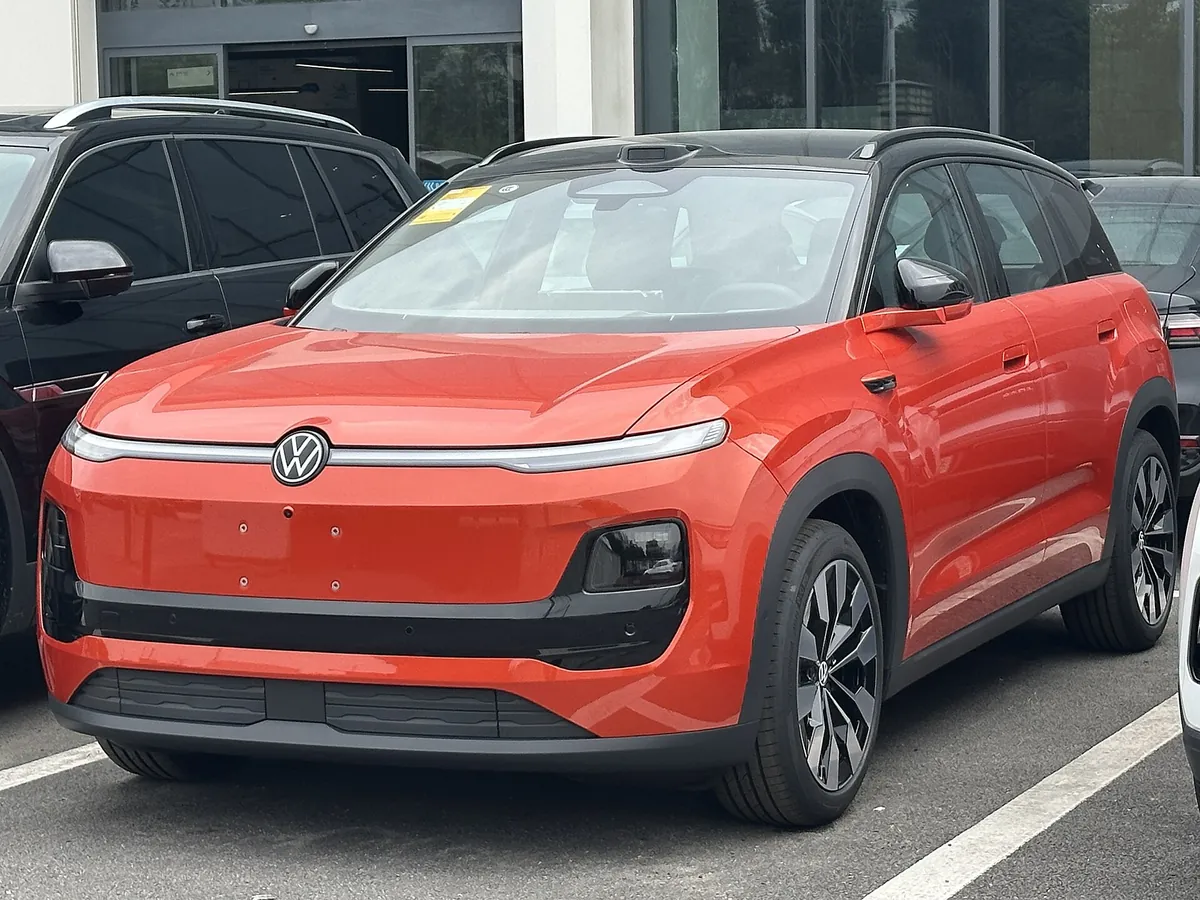
Volkswagen’s plan would bring its China-developed EV technology to more markets, through both vehicle exports and local production. For Australian buyers, that opportunity remains a potential one rather than an announced rollout.
Key Specs
- China annual vehicle export target: 300,000 by 2030
- Development-cycle reduction: Up to 30%
- Compact Main Platform range: More than 600 km CLTC
- China Scalable Platform battery-electric range target: More than 800 km
✎ Images and news sourced from: volkswagengroupchina.com.cn, volkswagen-group.com, stockanalysis.com, chinadaily.com.cn, carnewschina.com, bloomberg.com, borneobulletin.com.bn, dealroom.co, vw.com, porsche.com, wikimedia.org.
