
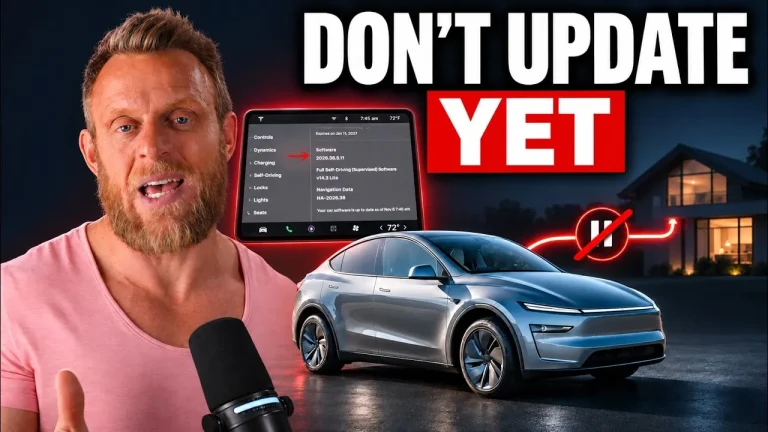
Tesla owners using their vehicles to power their homes through third-party chargers are reporting that a recent software update, which began rolling out in October, now cuts off power after just a few minutes. In many cases, the car will stop supplying energy to home equipment after as little as three minutes, or at best 15 to 20 minutes, before shutting down the connection permanently. I think anyone relying on this setup should avoid installing the latest update until more information is available.
Update Bricks Third-Party Home Power Setups
This issue is being reported by Tesla owners in multiple countries. Before the update, companies like SigEnergy, Elejoy, and Tlyard sold equipment that allowed Teslas to power homes or tools, enabling both vehicle-to-load and vehicle-to-grid functions. For example, one Australian owner was drawing about 25 kilowatts from his Model Y into his house using a SigEnergy charger just last month. Many Australians were using similar setups until the software update effectively disabled their systems.
Owners received no warning about this change. The release notes for the update only mentioned security improvements and minor fixes, with no reference to changes affecting third-party home power connections.
Get the latest EV news first. Follow us on:
Tesla’s Official Position and Regional Differences
To be fair to Tesla, the company never officially promised that owners could use their vehicles to power a building. In fact, the Australian Tesla handbook specifically warns against powering a house from the car. In the US and Canada, Tesla now offers an official home backup feature that works with the Powerwall, and this was included as part of the recent update. However, this feature is only available for new cars, and it is limited to vehicle-to-load, not full vehicle-to-grid capability.
In Australia, the official feature is much more limited. Owners can use their Tesla to run a fridge or power tool plugged directly into the car, but not to power their entire house. Existing cars are completely locked out of the new official backup feature, leaving third-party aftermarket boxes as the only option—until this update.
Consumer Complaints and Lack of Clarity
Australia’s consumer regulator now has a formal complaint regarding this issue. So far, there has been no public explanation from Tesla about why the change was made or whether it will be reversed. I think Tesla is going to win this in one sense, but lose in another, as some customers are likely to be turned off the brand by this move.
Advice for Owners and Buyers
If your Tesla powers your home through a third-party charger, I strongly recommend leaving the software update alone until the situation is resolved. More generally, I advise against buying a vehicle-to-grid charger for any car unless the manufacturer has officially approved it for that use. Most brands are not offering this capability yet, and as long as software updates can change compatibility without warning, there is no guarantee these products will continue to work.
Some customers have invested a lot of money into these vehicle-to-grid and vehicle-to-load chargers, only to find themselves unable to use them after the update. In my opinion, it’s not worth the risk unless you have clear approval from the carmaker.
