
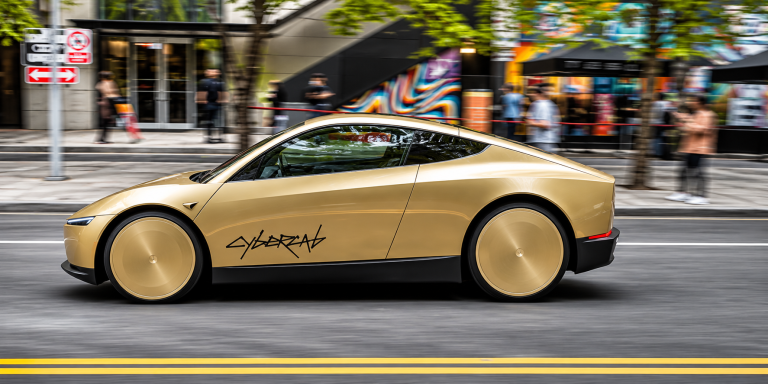
Tesla updated its Robotaxi emergency documents on November 20 with highway guidance and new Cybercab hardware details. The update also changes ownership wording as Tesla takes Cybercab orders from individual buyers.
Individual orders and ownership wording
The Model Y Robotaxi plan v1.6 dropped wording from v1.5 that described the entire Robotaxi fleet as Tesla-owned and operated. An instruction on retrieving registration and insurance documents applies only to Tesla-owned vehicles.
The Cybercab costs $29,990 (~AUD 44,946), with an autonomy subscription of $299 (~AUD 448) a month. First deliveries are expected in December.
Get the latest EV news first. Follow us on:

Highway guidance and operating areas
Under the plans, autonomous Cybercab and Model Y Robotaxi vehicles are designed for use on public roads where posted speed limits reach up to 85 mph, approximately 137 km per hour. This includes highways and interstates. The figure refers to the road’s posted limit, not the vehicles’ top speed or a promise to travel at that speed.
The vehicles are designed to adjust their speed to traffic flow. Although Tesla spent more than a year testing Robotaxis on highways in Austin, paying passengers have had little access to highway rides.
Only limited parts of Austin and Dallas currently have access to Tesla’s Cybercab rides. Tesla named Phoenix, Las Vegas and Jacksonville as its next Robotaxi markets. The operating-area appendices now reference Arizona or California rather than Arizona alone.
In the San Francisco Bay Area, every Tesla ride-hailing trip still has a safety driver because state regulators have not approved unsupervised rides. On the public roster maintained by California’s Department of Motor Vehicles, Tesla Robotaxi LLC appears under testing with a safety driver, not under driverless testing or deployment.
New connectivity and emergency hardware
To improve connectivity reliability, Cybercabs manufactured from November onward carry a Starlink unit within the trunk lid, which also houses an interior-facing trunk camera. The camera had already been photographed in Dallas. A darker covering for the satellite hardware was also visible in recent photos from Giga Texas.
Tesla also equipped Cybercabs built from November with an easier-to-reach second backup loop, positioned behind the camera mounted on the pillar separating the side windows. Rather than cutting the first-responder loop, first responders now have the option of disconnecting it using a connector.
Updated instructions for emergency crews
The revised First Responder Interaction Plans are Cybercab v1.3, replacing v1.2, and Model Y Robotaxi v1.6. Tesla also supplies police, firefighters and other first responders with resources that include Emergency Response Guides and Rescue Sheets.
Tesla can be asked by emergency crews to prevent Robotaxis from entering an incident area. The current design calls for vehicles already inside a first-responder geofence to exit the area if they can move. Operating restrictions for severe conditions, including flooding or icy roads, are also outlined in the guides.
Tesla offers in-person and virtual Robotaxi Interaction training for first responders, continuing training introduced as the service expands. First responders can contact RobotaxiFirstResponderSafety@tesla.com. Tesla Roadside Assistance provides roadside support for second responders.

Why it matters
For prospective owners, the purchase and subscription prices provide a starting point for assessing Cybercab ownership, while access to the Robotaxi network for personal vehicles remains a possible rollout. For passengers, the highway guidance describes a broader operating scope than the paid highway service widely available so far.
Key Specs
- Cybercab price: $29,990 (~AUD 44,946)
- Cybercab autonomy subscription: $299 (~AUD 448) a month
- Maximum posted road speed limit in operating guidance: 85 mph, approximately 137 km per hour
- Updated plan versions: Cybercab v1.3; Model Y Robotaxi v1.6
✎ Images and news sourced from: tesla.com, teslanorth.com, teslarobotaxi.com, notateslaapp.com, electrive.com, readmusk.com, wikimedia.org. Featured photo: Dllu, CC BY-SA 4.0, via Wikimedia Commons.
