
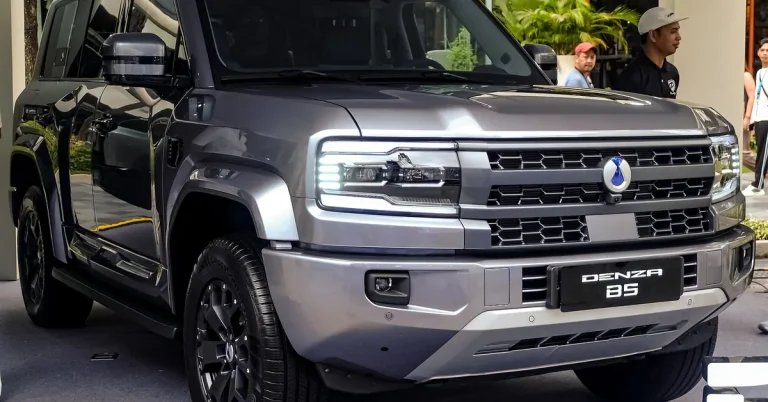
While balanced on two wheels, BYD’s Denza Bao 5 (B5) plug-in hybrid SUV pulled a Boeing 747-400 weighing 180 tonnes. The tow went far beyond the SUV’s standard 2,500 kg towing capacity.
Three runs with fewer wheels each time
Denza claimed two firsts for a production car: towing an aircraft on two wheels and moving a 747 using electric power alone.
The demonstration at Dunsfold Aerodrome in Surrey, UK, began with all four wheels on the ground, followed by a three-wheel run and finally the two-wheel tow. Across the three runs, the SUV covered a total towing distance of 1,600 metres, including stops.
Get the latest EV news first. Follow us on:
Although retired from active service in 2020, the aircraft still had its engines and fully furnished interior.
BYD UK senior technician Mark Gallifant drove the SUV. Gallifant had previously towed a fully loaded double-decker bus.
Torrential rain reduced traction, so the team waited for the runway to dry. The SUV was linked to the aircraft by a rigid tow bar via a custom towing attachment.
The team removed the SUV’s passenger seats to make room for ballast. For the final attempt, they raised the amount to 4,500 kg from the 2,000 kg used during the three-wheel run.
To offset the removal of the wheels, each axle received small stabilisers. The towed weight per wheel was 60 tons during the three-wheel run and 90 tons during the two-wheel run.
Production powertrain left unchanged
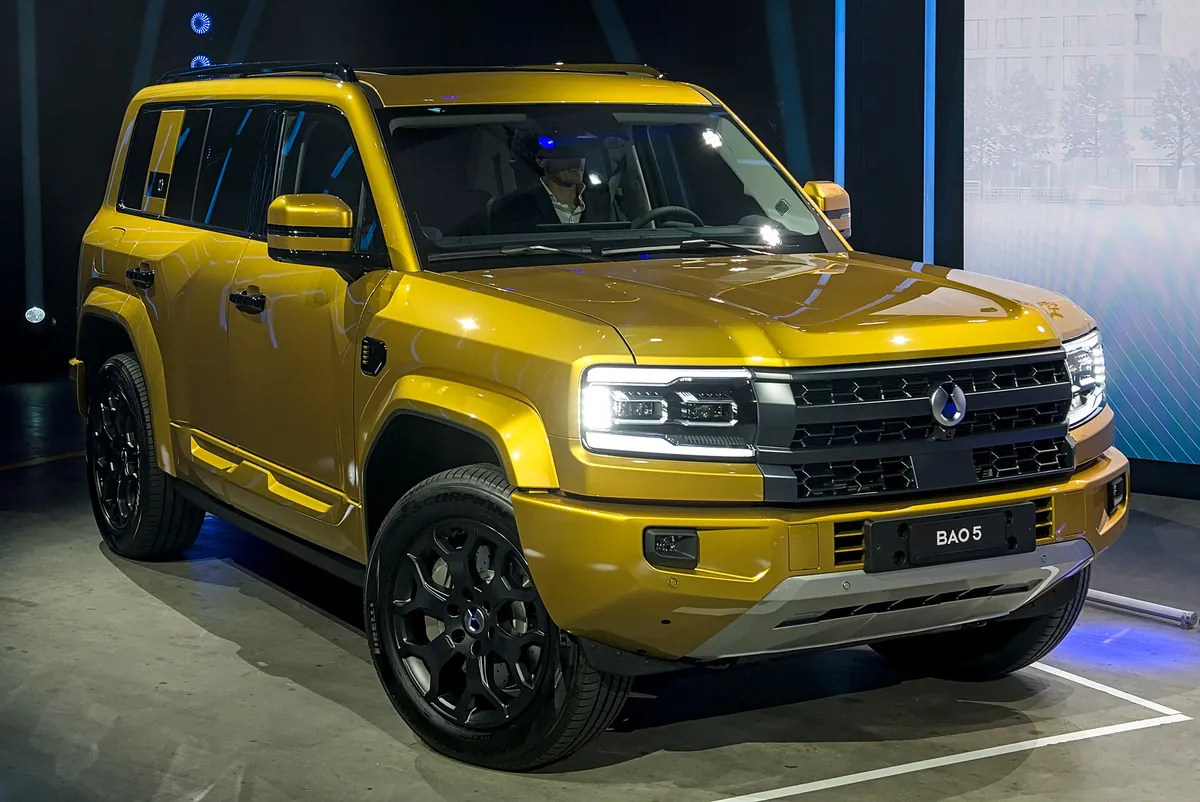
The demonstration vehicle was a standard production-spec Denza Bao 5 with its plug-in hybrid powertrain unchanged. Its drivetrain combined a turbocharged 1.5-litre petrol engine with three electric motors: a generator and two others that powered one axle apiece.
Total system output was 544 PS and 760 Nm. The front electric motor produced 272 PS and 360 Nm, while the rear electric motor delivered 388 PS and 400 Nm.
The petrol engine’s maximum output was 150 PS and 240 Nm, separate from the combined system output.
Because the front and rear axles lack a mechanical link, power cannot move from one axle to the other when wheels lose traction.
The SUV used BYD’s second-generation Blade Battery, a lithium iron phosphate pack with a capacity of 31.8 kWh. The battery was integrated into the vehicle through a cell-to-chassis design. Its electric-only range is 56 miles under the WLTP test cycle.
Suspension and structure supported the tow
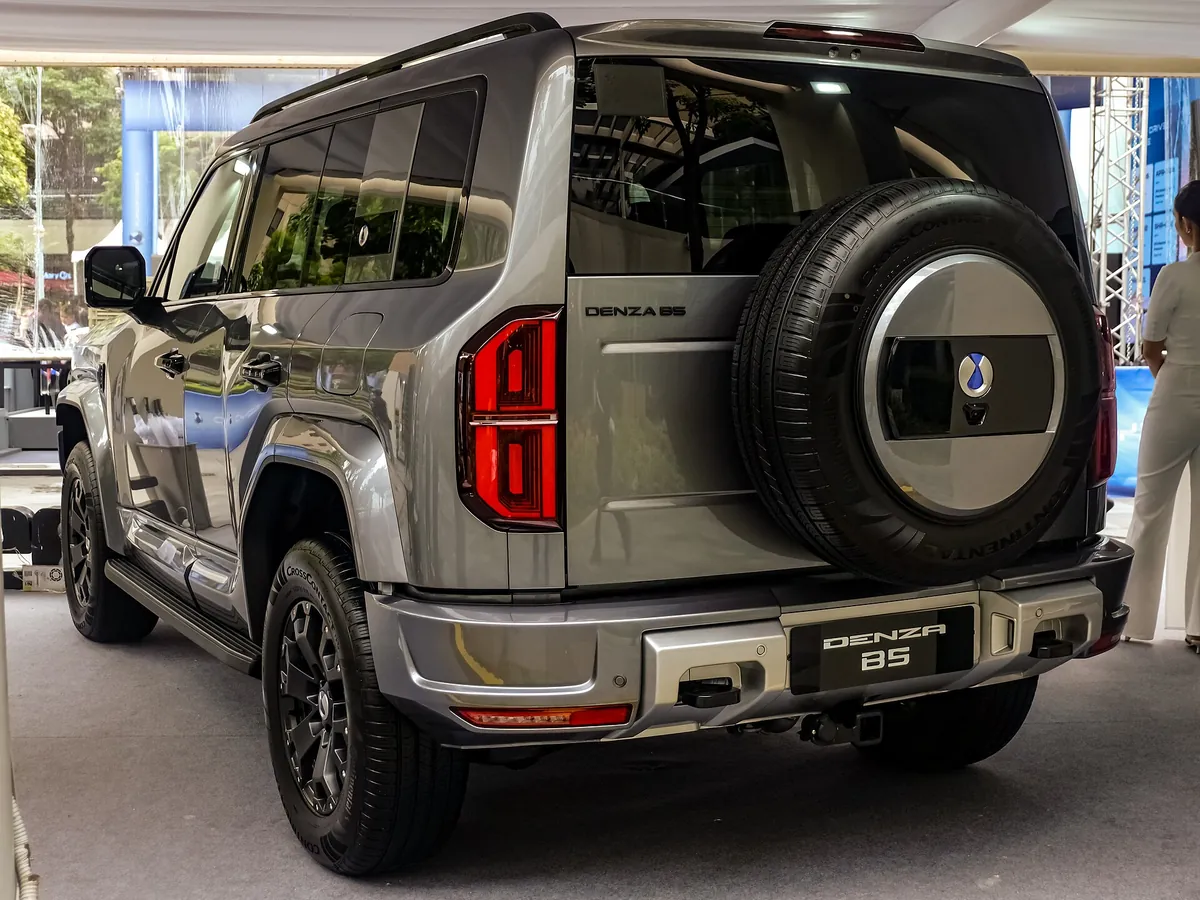
The B5 had double-wishbone suspension at the front and rear, paired with Denza’s intelligent body-control system. The system provided 140 mm (~5.5 inches) of ride-height adjustment, while the suspension had a lifting capacity of 9 tons.
High-strength steel accounted for 96% of the cell-to-chassis body structure.
Checks conducted after all three runs revealed that the powertrain, chassis and tyres showed no evidence of stress.
Why it matters
For buyers, the important distinction is between the B5’s standard towing capacity of 2,500 kg and the aircraft weight used in this specially prepared demonstration. The powertrain was unchanged, but the tow involved added ballast, stabilisers and a custom towing attachment.
Key Specs
- Aircraft weight: 180 tonnes
- Total towing distance across three runs, including stops: 1,600 metres
- Total system output: 544 PS / 760 Nm
- Battery capacity: 31.8 kWh
- Standard towing capacity: 2,500 kg
- Electric-only range: 56 miles (WLTP)
✎ Images and news sourced from: denzaukmedia.com, topgear.com, am-online.com, carnewschina.com, electrichybridvehicletechnology.com, itsdw.cn, volkswagen-newsroom.com, wikimedia.org. Featured photo: Ethan Llamas, CC BY-SA 4.0, via Wikimedia Commons.
