
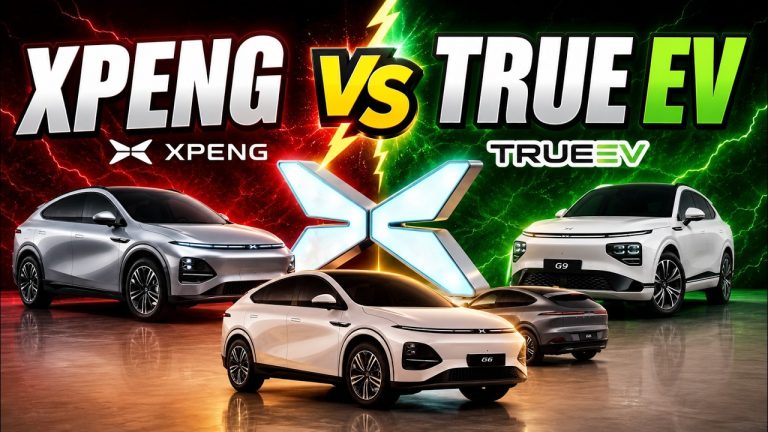
Chinese EV maker Xpeng and its former Australian distributor True EV are locked in a Federal Court battle that Sam Evans says tells you everything about how the China EV boom actually works on the ground, and that almost nobody is covering. True EV has accused Xpeng of unconscionable conduct. The allegations have not yet been tested, and the trial is set for October.
How True EV built Xpeng in Australia
Xpeng entered Australia in 2024 through True EV, which was appointed sole importer, distributor and retailer under a five-year deal signed in April 2024. That deal would not have expired until April 2029.
True EV launched the G6 in August 2024. It built a network of around 15 dealers plus dozens of service centres and smash repairers, invested millions of dollars, and delivered more than 2,000 cars by the end of 2025. Sam says that from a standing start, True EV put Xpeng on the map in Australia.
Get the latest EV news first. Follow us on:
The allegations
In March 2026, True EV filed against Xpeng in the Federal Court, alleging unconscionable conduct. According to allegations reported by The Australian and the Herald Sun, True EV claims Xpeng leaned on it to build the brand and then systematically undermined it. True EV claims Xpeng refused to supply new models unless Xpeng’s own Australian arm was allowed to sell directly alongside it. Sam says this would completely invalidate the original contract.
True EV also says Xpeng contacted its finance providers and encouraged them to pull funding. It says Xpeng approached dealers inside True EV’s own network to set up direct relationships, changed the approval rules for dealers and service centres midstream, and ordered True EV to delist partners. Sam says this squeezed the network from basically every angle. True EV says Xpeng then gave notice to end the five-year contract after only 18 months.
According to the reporting, Xpeng told the court its sales and service network would simply function better if its own local arm handled distribution. Xpeng has moved quickly and has begun its own factory-backed operation in Australia, promising what it called “a new era of trust and intelligence”.
Sam says he has been told that investigative journalism is under way behind the scenes into something else involving the deal, and that it is apparently expected to come to light within the next few weeks. He stresses that he cannot confirm the details because he does not know them.
Receiver appointed and sales slump
Weeks after True EV filed its case, a receiver was appointed over 197 of True EV’s cars. These were the old-model G6, which had been sent from China even though the new model was already out. Sam says he does not really understand why. True EV says it has not entered full administration.
Meanwhile, Xpeng registered just 24 vehicles in April, its worst month of the year, because at that time it did not have the vehicles to sell. Sam says the brand that was supposed to challenge Tesla and BYD in Australia is now a one-model operation with a frozen distributor and a completely uncertain future.
Disclosure and fairness
Sam discloses that Xpeng has blacklisted his channel because the company believes he has taken True EV’s side. He says he finds that disappointing.
He stresses that none of the allegations have been tested in court and there have been no findings against Xpeng. The trial is not until October, and Sam says Xpeng is entitled to put forward its case and he is sure it will.
A familiar pattern
Sam believes this fits a broader pattern. A local player takes the risk, builds the brand and network, and absorbs the early losses, which Sam says are massive. Once the brand is established, the manufacturer wants the whole thing back. He says BYD did a cleaner version of this with its distributor in 2025. The difference, he says, is that the BYD case ended in a deal while this one is ending in court.
Sam points to Great Wall Motors as an earlier Australian example. The brand first arrived in 2009 through an independent distributor. Sam says that at the time most people considered Chinese cars poor quality, and to be fair, they were not very good. He says it was a huge achievement to convince Australians to buy them at all. The distributor built Great Wall from scratch into the country’s best-selling Chinese brand, with 90 dealers.
Then the supply of new vehicles from Great Wall dried up. Stock stopped arriving completely, and sales collapsed through 2014. The two companies ended up in a legal dispute that was settled out of court about 18 months later. By then, 90 dealers had been left with nothing to sell, and more than 40,000 Great Wall owners were stranded without support. In 2016, Great Wall relaunched in Australia as its own factory-backed operation, taking direct control of the market its distributor had built.
What it means for owners and distributors
Sam, who owns an Xpeng himself, says owners face very real practical questions about warranties, parts, servicing and cash-back offers that some buyers say they are still owed. True EV says it remains committed to supporting customers, while Xpeng says it is building direct operations. Sam says owners are caught in the middle.
He says he will follow the case through to October and beyond and keep reporting the facts as honestly as he sees them, even if that means he gets sued as well. Sam believes the outcome will not just decide True EV’s fate. He says it will show every future distributor exactly what they are risking when they put millions of dollars of their own money into building a new brand in a new country.
