
Volkswagen plans to update major software functions every three months on its CEA-equipped vehicles in China. Wireless updates may add features and fix bugs after purchase.
A shared software base for five electric models
Volkswagen co-developed the CEA electronic architecture with Xpeng. Volkswagen Group China Technology Company and CARIAD China also worked on its development.
CEA combines central computing with controllers for different areas of the vehicle. It puts the cockpit, body controls, chassis, powertrain and driver assistance systems on a common software foundation, rather than requiring a separate architecture for each model.
Get the latest EV news first. Follow us on:
With this design, the number of electronic control units drops by around 30%, while continuous over-the-air updates remain supported. Updates may bring new features, improved functionality, bug fixes and connectivity improvements.
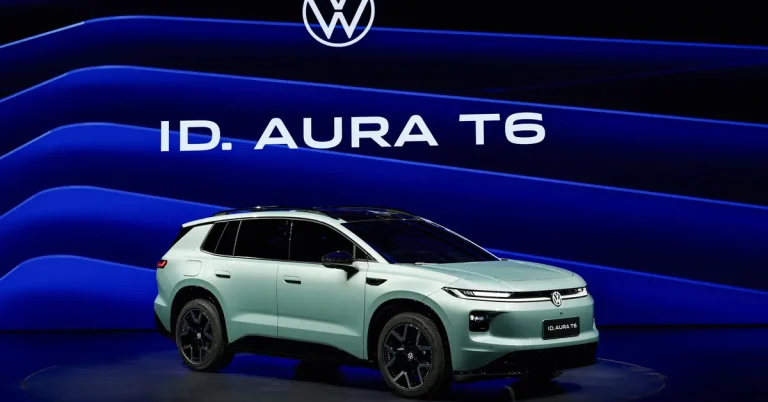
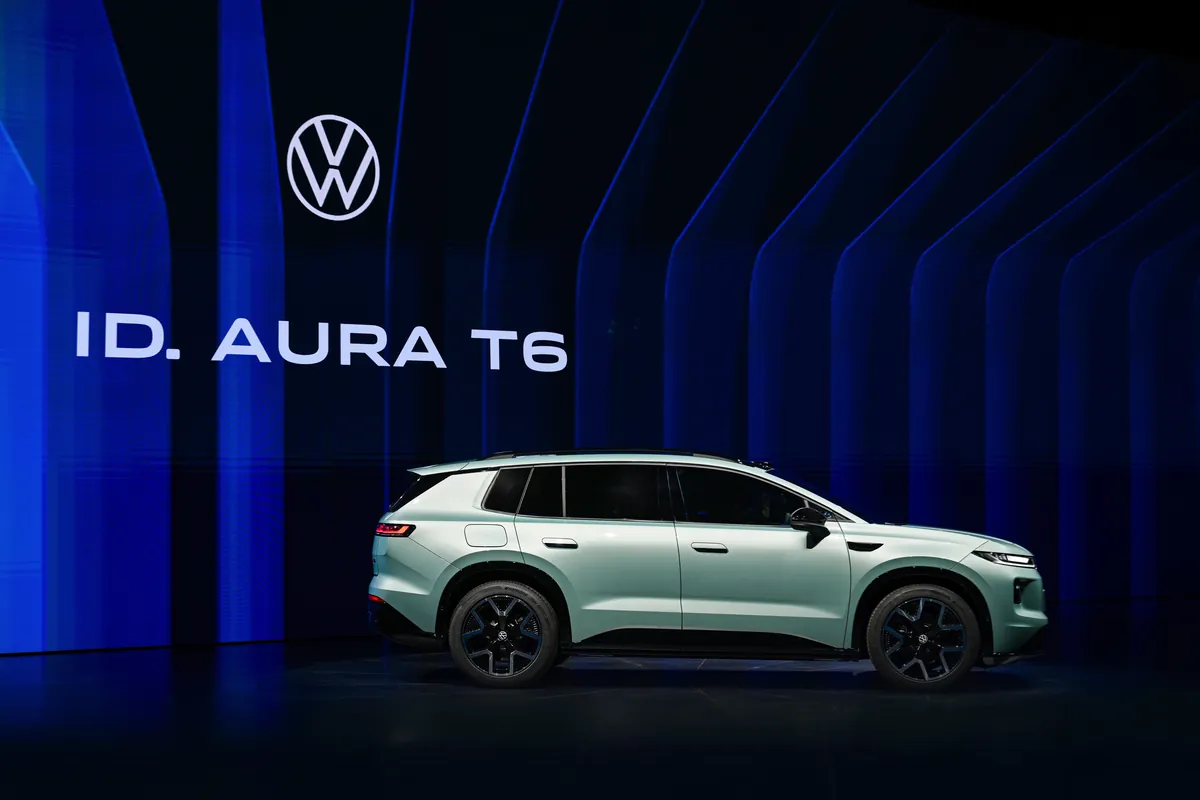
Production of the first CEA-equipped model, the ID. UNYX 07, began in January at Volkswagen Anhui. Five locally produced Volkswagen-brand battery-electric models use the architecture in China in 2026: ID.UNYX 06, ID.UNYX 07, ID. ERA 5X, ID. AURA T6 and ID. AURA L5.
Volkswagen purchased a 4.99% stake in Xpeng for $700M (~AUD 1.1B).
What owners need to install updates
Volkswagen’s over-the-air system delivers software directly to the car. For electric vehicles, the battery must have at least a 50% charge before an update. Installation may take up to three hours, and the vehicle cannot be driven during that time.
CEA software verification follows Volkswagen’s unified global safety and quality standards. Network security measures include encrypted data interfaces and multiple layers of identity authentication to prevent unauthorised access, data theft and remote control.
Volkswagen calculates that defeating CEA’s encryption through brute-force attempts would take more than ten years.
CEA 1.3 also has five layers of backup for door unlocking. These include the central computing platform, controllers for different vehicle zones and independent backup modules.
Architecture upgrades planned every two years
Alongside the quarterly software update schedule, Volkswagen plans a CEA architecture version upgrade every two years. The architecture can shorten vehicle development cycles by up to 30%.
CEA supports battery-electric vehicles, plug-in hybrids, range-extended electric vehicles and petrol models, from compact to full-size vehicles. Volkswagen plans to extend its use to plug-in hybrids, petrol vehicles and range-extended models in 2027.
The 2027 architecture plan includes combining central computing for the cockpit and driver assistance systems, while preparing for Level 3 automated driving. Volkswagen obtained a Level 3 autonomous-driving road-test licence in Hefei in October and began testing on public roads.
By 2029, Volkswagen plans for CEA 3.0 to support intelligent AI agents across all vehicle functions and the development of Level 4 autonomous driving.
Volkswagen deployed an intelligent AI agent across all CEA-equipped models from the third quarter of this year. Its functions include natural-language interaction, cockpit control, trip planning and entertainment coordination.
Why it matters
For buyers, the planned update schedule offers a regular way to get new software functions after purchase, rather than waiting for a replacement vehicle. Owners will need to plan installations around charging and times when they do not need the car.
Key Specs
- Electronic control unit reduction: Around 30%
- Potential development-cycle reduction: Up to 30%
- Minimum EV battery charge for an update: 50%
✎ Images and news sourced from: volkswagengroupchina.com.cn, smzdm.com, carnewschina.com, tidenews.com.cn, automotiveworld.com, xcar.com.cn, goauto.com.au, autoprove.it, vw.com, volkswagen-group.com.
