
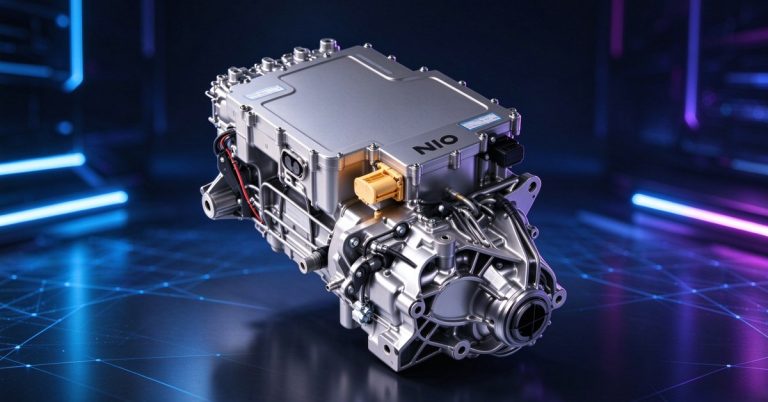
Nio’s latest 925V electric drive system has secured First Prize at the 2026 China Society of Automotive Engineers Science and Technology Progress Awards. The system stands out for its high power density and innovative ability to double as a 200 kW charger, marking a significant achievement in EV engineering.
Award-Winning High-Voltage Drive System
Announced on October 28, the award recognizes a collaborative project led by Nio, with contributions from Tongji University, Harbin University of Science and Technology, and Baoshan Iron & Steel. The 925V continuous-wave winding electric drive system impressed judges with its motor power density of 19.06 kW/kg and controller power density of 226.92 kW/L.
The system’s peak voltage-boosted charging power reaches 202.78 kW, allowing it to serve as both a drive unit and a high-power charger.
Engineering and Manufacturing Innovations
The project focused on mass-producing high-voltage-insulated continuous windings, integrating thermal management, and reusing drive hardware for voltage-boosted charging. The manufacturing process uses 12 flat copper wires, each five meters long, formed into 24 bends. This approach reduces the number of electrical joints compared to conventional hairpin windings.
Precision is critical: the insulation layer is controlled to 0.14 mm, and motor assembly tolerances are kept within 0.02 mm. These advances help maintain performance and reliability at high voltages.
Rigorous Testing and High-Voltage Endurance
The 925V system underwent 1,300 hours of continuous high-temperature operation without failure. Additional testing included over 500 hours at simulated altitudes of 5,500 meters, switching at up to 15,000 times per second, and three-axis random vibration at up to 5.5g.
The drive system was also exposed to temperatures from -40°C to +85°C for more than two months, ensuring durability in extreme environments.
Production and Model Integration
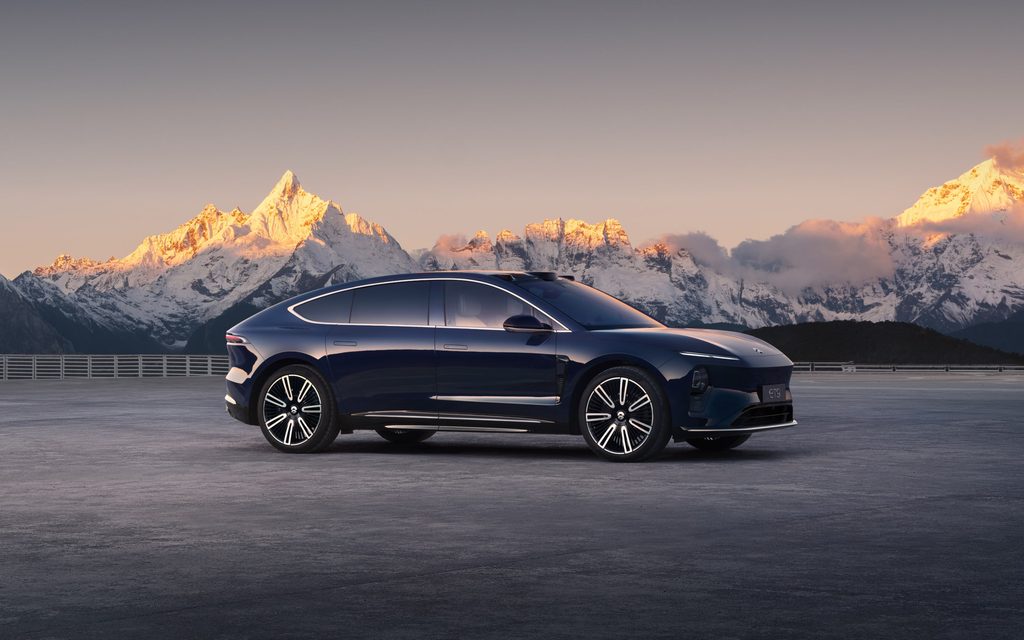
Nio began developing electric drive technology in 2015 and has since advanced through four generations. The continuous wave-winding system entered mass production in December 2024 and is now used in the Nio ET9, ES8, ES9, as well as the Onvo L90 and L80.
The project has resulted in 146 authorised patents and contributed to six Chinese national automotive standards.
Competitor Comparison
Nio’s 925V drive system competes with high-voltage architectures from other leading EV manufacturers, such as BYD and Li Auto, who are also pushing the boundaries of power density and charging speeds. However, Nio’s integration of voltage-boosted charging directly into the drive hardware distinguishes it from many rivals that rely on separate boost converters.
Historical Context
Nio’s momentum has accelerated in recent years, with 326,028 vehicles sold in 2025, representing a 46.9% year-on-year increase. The adoption of advanced drive systems like the 925V unit is a key factor in the company’s rapid growth and technological leadership.
Why this matters
The recognition of Nio’s 925V electric drive system highlights the rapid pace of innovation in China’s EV sector. High power density and integrated charging capabilities can improve vehicle efficiency, reduce weight, and simplify charging infrastructure.
These advancements not only benefit Nio’s own lineup but also set new benchmarks for the industry, influencing future EV development and standards.
What this means for buyers
For consumers, Nio’s engineering breakthroughs could translate to faster charging times, improved vehicle performance, and potentially lower costs as manufacturing scales. Buyers considering Nio or Onvo models equipped with the 925V system can expect cutting-edge technology that is recognized at the highest levels of the automotive industry.
As the technology is already in mass production and available in multiple models, prospective buyers can access these benefits now, rather than waiting for future updates.
Key Specs
- Motor Power Density: 19.06 kW/kg
- Controller Power Density: 226.92 kW/L
- Peak Voltage-Boosted Charging Power: 202.78 kW
- Insulation Layer Thickness: 0.14 mm (~0.0055 inches)
- Motor Assembly Tolerance: 0.02 mm (~0.0008 inches)
- Testing Duration (High Temp): 1,300 hours
- Testing Duration (High Altitude): 500 hours at 5,500 meters (~18,045 feet)
- Production Start: December 2024
Images sourced from: carnewschina.com, autonocion.com

