
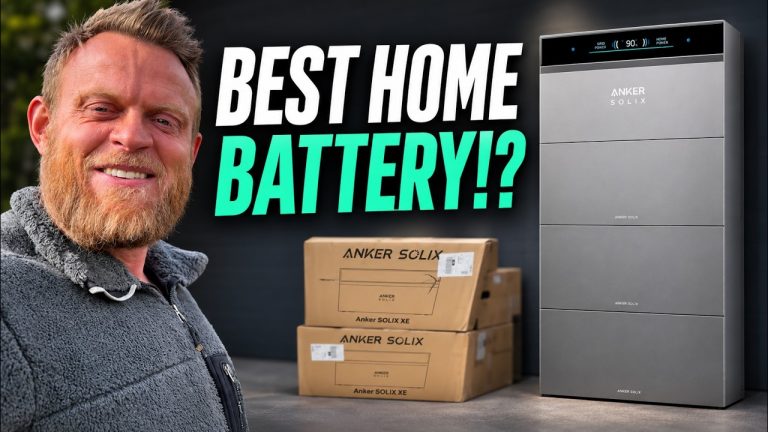
Anker has launched the SOLIX XE, a home battery system that promises 4,000 more cycles than previous models and a 13-year warranty, all at the same price point. This battery is designed for twice-daily charging, making it ideal for modern electricity plans and maximizing home energy savings. The XE uses lithium iron phosphate cells rated for 10,000 cycles, offering a significant upgrade in lifespan and value for homeowners.
How the Anker SOLIX XE Maximizes Daily Use
Most home batteries are designed to charge once per day, but the SOLIX XE is built to handle two full charge cycles every day. This is particularly useful with new electricity plans in Australia that offer three hours of free power around midday, such as Solar Sharer and the Midday Power Saver. The XE’s smart assistant can fill the battery during these free windows and then recharge again overnight with cheap off-peak power, ensuring the home is powered through both morning and evening peaks.
Battery Specs, Lifespan, and Warranty
The XE uses lithium iron phosphate cells, the same type found in large grid batteries, and is rated for 10,000 cycles. This is a major step up from the 6,000 cycles typical of previous models. With twice-daily cycling, the battery should last about 14 years; with once-daily use, up to 28 years. Importantly, reaching 10,000 cycles doesn’t mean the battery fails—it simply marks the point where some degradation is expected.
The standard warranty is 10 years, but joining a virtual power plant (VPP) that pays for feeding power to the grid extends the warranty to 13 years. This kind of warranty extension is rare in the industry and adds significant peace of mind for long-term owners.
System Capacity and Installation Advantages
The XE battery modules are 7 kWh each and can be stacked up to a total of 42 kWh. For most homes, four modules (28 kWh) is the sweet spot, as it maximizes available battery subsidies in Australia. The system features a unibody design where the inverter and battery are integrated, and installation is streamlined thanks to a wireless meter that doesn’t require extra cabling. Anker calls this a “flash install,” often completed in just a few hours instead of a full day.
The dual engine version includes a second inverter, boosting output to 10 kW—enough to run high-demand appliances like an EV charger and an oven simultaneously. For those with existing solar, an AC-coupled version is available to work with any inverter.
Innovative Backup and Safety Features
The XE introduces the PowerDock Mini, a compact automatic transfer switch (Mini ATS) that sits in the switchboard and provides whole-home backup. Unlike bulky and expensive gateway boxes, this device is small and costs about one fifth as much. When the grid goes down, the switch is so fast that lights don’t even flicker, and solar continues to operate during blackouts. The system is designed primarily for single-phase properties.
Comparing Value: XE vs. Previous Generations
Compared to the previous Anker X1, the XE offers 40% more capacity per module and 66% more cycle life. When these are multiplied, the XE delivers about 2.3 times the guaranteed performance over its lifespan. Despite a reduction in government rebates, the end cost to customers remains roughly the same due to lower manufacturing costs and increased competition. In practical terms, the XE is much better value—more energy, more cycles, and a longer warranty for the same outlay.
Anker estimates annual savings at around A$2,000 (~$1,375), with higher savings possible for homes with greater power usage or electric vehicles. The XE’s value is further enhanced by its higher energy density, allowing more storage in a smaller footprint.
What This Means for Homeowners and the Battery Market
The Anker SOLIX XE sets a new standard for home battery systems, combining longer lifespan, greater capacity, and smarter backup features without increasing the price. For buyers, this means a more future-proof investment and the ability to take full advantage of new electricity pricing models. For the industry, it shows how competition and technology improvements are driving better value and reliability, making now an excellent time to consider upgrading or installing a home battery system.

