
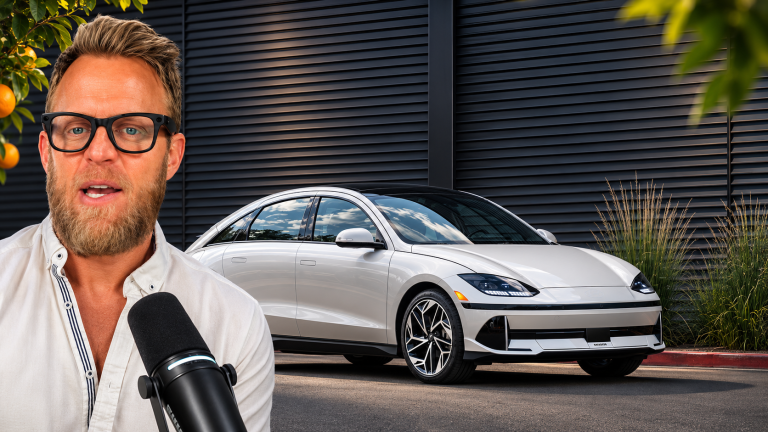
Ever wondered how much farther your electric vehicle can travel after the dashboard says you’re out of range? According to the AUTOBEST 2026 ECOBEST Challenge, most EVs still have a few extra miles left in the tank—even after hitting zero. The results reveal surprising differences between models, with some offering a comfortable buffer and others stopping almost immediately.
AUTOBEST 2026 ECOBEST Challenge: Testing EVs Past Empty
The AUTOBEST 2026 ECOBEST Challenge put 15 electric vehicles to the test near Milan, Italy, to see how far they could travel after their dashboards indicated zero range or 0% battery. Journalists drove each EV in a convoy along a route that included city streets, country roads, and highways. To ensure fairness, drivers swapped cars every 19 miles (30 km), and all vehicles were set to standard mode with climate control on and tires at recommended pressures. Temperatures during the test ranged from 68–77°F (20–25°C).
Once an EV’s display showed empty, drivers continued until the car could no longer move under its own power. The final stretch took place at Quattroruote’s Vairano proving ground, with a Zeekr 7GT support vehicle on hand to recharge stopped cars using its vehicle-to-load (V2L) function.
How Far Did Each EV Go After Zero?
All 15 EVs managed to keep going after their dashboards showed empty, averaging another 10 miles (16 km) before stopping. The Leapmotor B10 led the group, covering 19.9 miles (32 km) past empty, closely followed by the Tesla Model Y at 19.3 miles (31 km). At the other end of the spectrum, the Xpeng P7+ stopped after just 0.6 miles (1 km).
Interestingly, the Tesla Model 3 in a separate range test still showed 2 miles (3.2 km) of range when the state of charge dropped to 0%, and it continued for another 31 miles (50 km) after that point. These results highlight that the distance you can travel after your EV says it’s empty can vary significantly between models.
What Does ‘Empty’ Really Mean in an EV?
When an EV’s dashboard shows 0% battery or zero miles remaining, it doesn’t mean the battery is completely drained. Manufacturers build in a buffer to protect the battery from damage caused by deep discharge. The car will cut power to the motor before the battery is truly flat, leaving a small reserve that isn’t accessible to the driver.
The range estimate and state of charge can hit zero at different times, depending on how the car calculates remaining energy. This means you might still have a few miles left, but it’s not something drivers should rely on regularly.
Competitor Comparison
The AUTOBEST 2026 test included a range of models, with the Leapmotor B10 and Tesla Model Y offering the longest distances after showing empty. In contrast, the Xpeng P7+ provided almost no buffer. These differences could be important for buyers comparing EVs from brands like Leapmotor, Tesla, and Xpeng, especially for those who frequently drive close to their vehicle’s range limit.
Historical Context
The EV market saw 1.53 million vehicles sold in 2025, representing a 2.12% decrease year-over-year. Despite this slight decline, real-world range and usability remain key factors for consumers considering a switch to electric vehicles.
Why this matters
Understanding how far an EV can go after showing empty is crucial for drivers concerned about range anxiety. The AUTOBEST 2026 results demonstrate that while most EVs offer a small buffer, the amount varies widely between models. This information can help drivers plan trips more confidently and avoid being stranded.
As EV adoption grows, real-world data like this becomes increasingly valuable for consumers, especially as manufacturers continue to refine range estimates and battery management systems.
What this means for buyers
If you regularly drive long distances or often find yourself close to your EV’s range limit, consider models that offer a larger buffer after showing empty, such as the Leapmotor B10 or Tesla Model Y. However, it’s always best to avoid relying on the reserve and to plan charging stops conservatively.
Buyers should also be aware that range estimates and battery management strategies can differ significantly between brands, so real-world testing like the AUTOBEST Challenge provides valuable insights beyond official specifications.
Key Specs
- Number of EVs Tested: 15
- Average Distance After Empty: 10 miles (~16 km)
- Longest Distance After Empty: Leapmotor B10: 19.9 miles (~32 km)
- Tesla Model Y Distance After Empty: 19.3 miles (~31 km)
- Shortest Distance After Empty: Xpeng P7+: 0.6 miles (~1 km)
- Test Location: Near Milan, Italy; Vairano proving ground
- Support Vehicle: Zeekr 7GT with V2L function
Images sourced from: insideevs.com, driveauthority.com

