
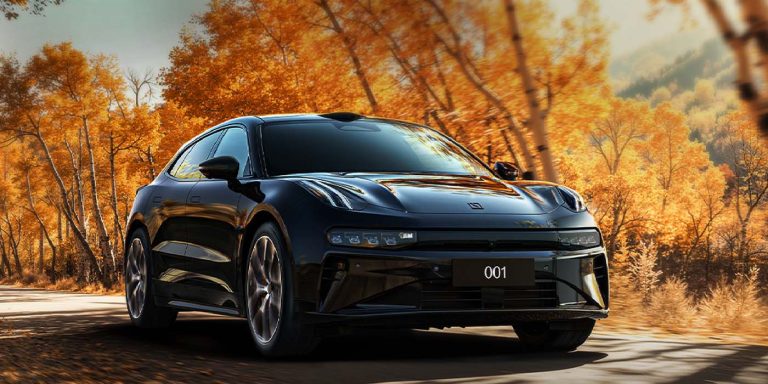
The Zeekr 001 has finally reached Europe, and despite being the older 400-volt version rather than the newer China-market refresh, it still comes across as a polished, well-built electric fastback with strong range, generous equipment, and premium road manners. With pricing that starts at €58,500 in Romania and rises to €68,000 for the reviewed car, the 001 positions itself as a serious alternative to far more expensive EVs, even if its driving position, software, and charging performance leave room for improvement.
Zeekr is still a young brand, but its first model already has years of real-world experience behind it. The 001, a large electric fastback developed under Geely, launched in China around five years ago and has only now started arriving in Europe.
That timing matters because the European version is not the latest spec. Buyers outside China get the older 400-volt 001 rather than the refreshed 800-volt model now sold at home, which means slower charging and less advanced hardware on paper.
Even so, the car makes a strong first impression after time on the road. It doesn’t feel like a discount imitation of a European luxury EV. Instead, it feels like a mature premium product that happens to come from China.
Key figures
- Starting price in Romania: €58,500
- As tested: €68,000
- Battery: 100 kWh total, 94 kWh usable
- Range: Up to 385 miles WLTP for the single-motor version; 363 miles WLTP for the dual-motor model
- Power: 536 hp and 506 lb-ft in dual-motor form; 272 hp in single-motor form
- 0-62 mph: 3.8 seconds for the dual-motor car; 7.2 seconds for the single-motor version
- Charging: CCS, up to 200 kW
- Claimed 10-80% charge time: 30 minutes
Looks and dimensions give it real presence
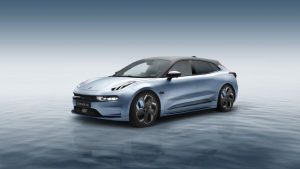
Although the 001 is built in China, its design language feels heavily shaped by Scandinavia. That is no surprise, since it was styled in Sweden, where Geely also owns Volvo and Polestar.
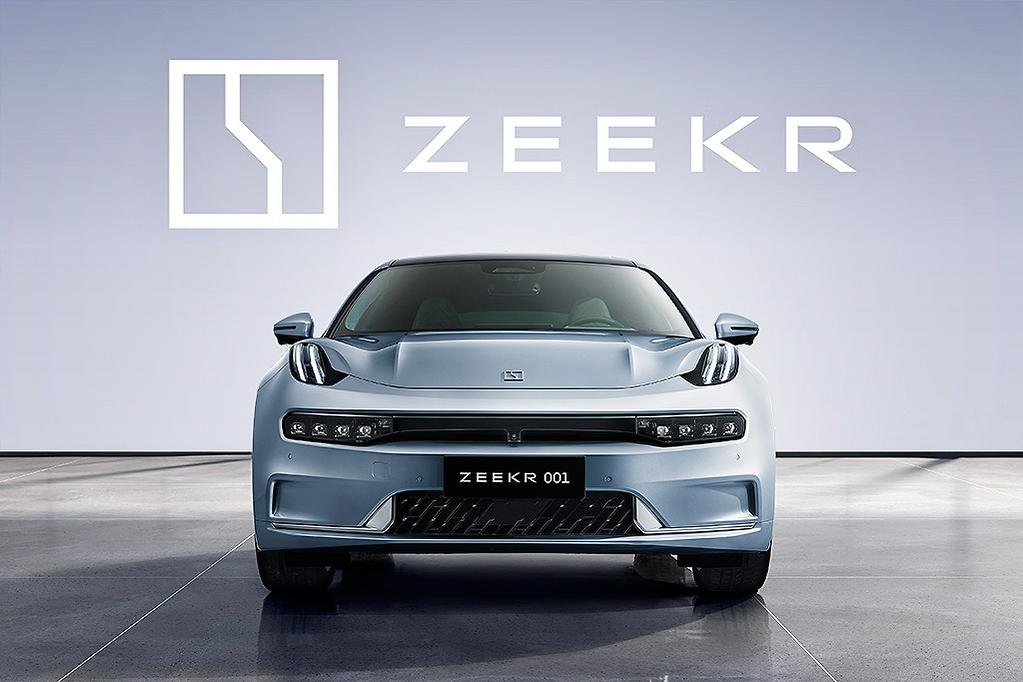
The front end uses slim LED daytime running light elements with the actual headlights tucked behind a dark panel below, giving the car a sharp and slightly aggressive face. In black, the car looks particularly dramatic.
In person, the 001 seems larger than photos suggest. It is only slightly wider than a Porsche Taycan Sport Turismo, but it is also significantly taller and has a longer wheelbase, which helps explain why the cabin feels roomier and why the rear seat is especially comfortable.
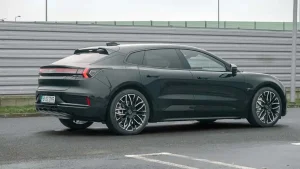
The rear is arguably the most successful angle. Its fastback roofline, full-width light bar, and detailed lighting animation help the car stand out without looking flashy in a cheap way.
The cabin feels properly premium
Inside, the 001 largely supports its premium positioning. The test car used a black-and-grey cabin with copper accents, and the overall effect was tasteful rather than overdone.
Zeekr uses a mix of leather and alternative materials, and they generally feel expensive enough to match the price. The only clear miss is the steering wheel controls, which rely on touch-sensitive pads that can be awkward to use. The facelifted China-market 001 now uses physical buttons instead, but that update has not yet reached Europe.
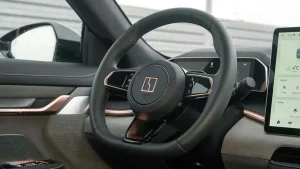
Driver ergonomics are also not ideal. Taller drivers may wish for more steering-wheel reach adjustment, and the seating position is higher than in low-slung performance EVs like the BMW i5 Touring M60 or Porsche Taycan Sport Turismo. It is still comfortable, but it feels more crossover-like than sports-car-like.
The 15-inch central display handles most functions and generally works well, with clean graphics and little lag. It is not perfect, though, and occasional pauses when moving between menus suggest the system could be quicker.
The rear seat is a highlight. The Privilege trim adds power-reclining backrests, heated rear seats, and a 7.7-inch touchscreen for climate, media, and ambient lighting controls, making the back of the cabin feel especially well equipped.
Performance is quick, but not theatrical
Zeekr offers the 001 in both single-motor and dual-motor versions. The dual-motor car reviewed here produces 536 hp and 506 lb-ft of torque from two 272 hp motors, while the single-motor version makes 272 hp and is slower to 62 mph but offers slightly more range.
The acceleration is strong, but the car does not rush forward aggressively when you floor the pedal in normal driving. Instead, power builds smoothly unless sport mode is selected. That makes the car feel calmer than its numbers suggest, though still very fast when you want it to be.
At just over 5,300 pounds, the 001 is heavy, and that weight is noticeable in the way it delivers its performance. It is not trying to deliver the kind of instant, neck-snapping shove some EVs are known for.
Ride quality is one of its best strengths
The suspension tuning is arguably the 001’s strongest dynamic feature. The tested car had adaptive air suspension with ride-height adjustment, and it did an excellent job of smoothing out broken pavement and rough roads.
Even on its standard 22-inch wheels, the car remained quiet and composed. At highway speeds, wind and road noise were impressively well contained.
Lowering and firming the suspension changes the car’s character substantially. In that setting, it becomes surprisingly capable on twisty roads and feels more agile than its size would suggest.
The steering is light and short on feedback, which is common in modern EVs, but the brake pedal calibration is excellent. The blend between regenerative braking and friction braking feels natural and confidence-inspiring, helping the car remain easy to place on the road.
Charging and efficiency are solid, but not class-leading
The European 001 uses a 400-volt electrical architecture and tops out at 200 kW on DC fast chargers. Zeekr says that should be enough for a 10-80% refill in around 30 minutes.
In testing, the car did not hit that peak. After preconditioning and plugging in at 24% state of charge, charging started at 110 kW, climbed to roughly 145 kW at around 40%, and then tapered below 70 kW by 75%.
That is acceptable, but it is not standout performance in a segment where faster charging is becoming more common. The newer 800-volt Zeekr models sold in China and some other markets show that the brand can do better.
Efficiency varied depending on use. In winter city driving, the car averaged 2.37 miles per kWh, which would translate to roughly 220 miles on a full battery. At a steady 80.7 mph on the highway, efficiency dropped to 2.15 miles per kWh, reducing practical winter range to about 190 miles.
Why this matters
The Zeekr 001 shows how far Chinese EV makers have come in a short time. This is not a cut-rate product with a few nice surprises; it is a genuinely premium-feeling vehicle that can stand near established European rivals on build quality, comfort, and design.
For European buyers, it also raises an important question: if a five-year-old Chinese EV can already feel this polished, what happens when faster-charging, newer platforms arrive in more markets?
That is the bigger story here. The 001 is not just interesting because it is new to Europe. It matters because it suggests the premium EV field is becoming more crowded, and legacy brands can no longer assume they own the high end by default.
Bottom line
The Zeekr 001 is not perfect. Its steering-wheel controls are awkward, its driving position could be better, and its European charging hardware lags newer Zeekr products.
But as a whole package, it is stylish, spacious, quick, comfortable, and richly equipped. At its Romanian pricing, it looks like strong value against EVs that cost far more.
More importantly, it proves that Zeekr is already capable of building cars that feel premium in the ways buyers notice most. Europe has only just started paying attention.
Why This Matters
The Zeekr 001 matters because it signals a broader shift in the EV market: Chinese brands are no longer competing only on price. They are now challenging established premium automakers on design, ride comfort, cabin quality, and overall refinement.
It also highlights a gap between what is available in China and what reaches Europe. The 001 sold in Europe is already an older version, yet it still compares well with much more expensive rivals. That suggests the next wave of Chinese EVs could raise the bar even further.
For buyers, the takeaway is simple: premium EV shopping is becoming more global, more competitive, and less predictable than before.
Key Specs
- Model: Zeekr 001
- Body style: Large electric fastback
- Platform voltage: 400V in Europe; refreshed 800V model sold in China
- Battery: 100 kWh total / 94 kWh usable NMC
- Drivetrain: Single-motor or dual-motor all-wheel drive
- Output: 272 hp single-motor; 536 hp dual-motor
- Torque: 506 lb-ft in dual-motor form
- 0-62 mph: 7.2 seconds single-motor; 3.8 seconds dual-motor
- WLTP range: Up to 385 miles single-motor; 363 miles dual-motor
- Charging: CCS, up to 200 kW
- 10-80% charge time: 30 minutes claimed
- Base price in Romania: €58,500
- Tested price: €68,000
- Top trim price: €70,500
- Wheel size on tested car: 22-inch
Source: InsideEVs

