
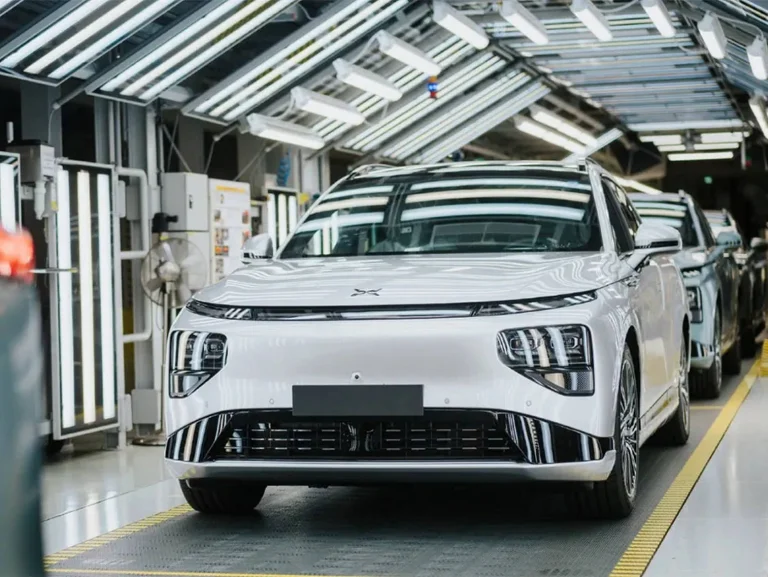
Global sales of battery-electric vehicles and plug-in hybrids increased 6% year over year in April to about 1.6 million units, according to Benchmark Mineral Intelligence. Europe drove most of the growth, while China and North America both continued to weaken year to date.

Global sales of battery-electric vehicles and plug-in hybrids kept rising in April, but the gains were uneven. Benchmark Mineral Intelligence says about 1.6 million plug-in vehicles were sold worldwide during the month, up 6% from a year earlier.
The headline number hides a split market. Europe posted strong growth, while China and North America both remained in decline on a year-to-date basis. In other words, the global plug-in market is still expanding, but the center of gravity is shifting.
Europe Delivers Most Of The Growth
Europe was the main driver of April’s increase. Plug-in sales across the region topped 400,000 units, rising 27% year over year even though they were down 24% from March.
Several major markets posted sharp gains. Italy nearly doubled its plug-in volume, France climbed 36%, and Germany rose 33% versus April 2025.
Benchmark’s data also suggests that policy and market timing have influenced recent demand. March saw a stronger pull-forward effect from subsidy expirations and higher fuel prices, while April remained solid despite the monthly dip.
Another factor is the growing presence of Chinese-branded models in Europe. The report says 22% of all plug-in cars sold in Europe this year were produced in China, even with tariffs in place.
North America Continues To Lose Ground
North America was a weaker story. April plug-in sales in the region were estimated at 120,000 units, down 28% from the same month last year and 9% lower than March.
Year to date, North American EV and PHEV sales are down 25%, while Mexico is down 50%. Through the first four months of 2026, the region recorded about 450,000 sales in total.
Canada could get a modest boost later this year from the Electric Vehicle Affordability Program, although the scale and timing of that impact are not yet clear from the source material.

China’s Domestic Market Slips, But Exports Surge
China, still the world’s largest plug-in market, also posted a softer result. April sales reached roughly 850,000 units, down 8% from a year earlier.
More broadly, Chinese domestic plug-in sales are down 17% year to date to around 2.8 million units. The report attributes much of that weakness to subsidy changes introduced earlier in the year, which hit smaller vehicle segments hardest.
At the same time, Chinese automakers are sending more vehicles overseas. Between January and April, exports of EVs and plug-in hybrids reached 1.4 million units, more than double the same period in 2025.
That means production has not slowed as sharply as domestic sales. Instead, more of the output is finding buyers outside China.
The Rest Of The World Is Expanding Fast
Markets outside the three largest regions are also adding momentum. Benchmark estimates that the rest of the world accounted for 240,000 plug-in sales in April, up 110% year over year.
Year to date, those markets have reached about 840,000 units, an 89% increase from the same period last year. While smaller in absolute terms, this category is becoming an increasingly important contributor to global growth.
What The Numbers Mean For The EV Market
April’s figures show that global plug-in demand has not stalled, but growth is no longer being led by every major market at once. Europe is carrying the load, China is adjusting to policy changes, and North America is still searching for a rebound.
That mix matters because the EV market is now entering a more mature phase. Incentives, tariffs, trade flows, and regional policy changes are shaping sales more than ever, which means global totals can rise even when some of the biggest markets slow down.
Why This Matters
This report matters because it shows how quickly the EV market is becoming regionally dependent. Global growth is still positive, but the gains are concentrated in Europe rather than being evenly shared across the world’s largest auto markets.
It also highlights a broader industry shift: Chinese manufacturers are increasingly offsetting weaker home demand by exporting more vehicles, while North America is struggling to maintain last year’s pace. For automakers, suppliers, and policymakers, that points to a market defined less by one global trend and more by several competing local ones.
Key Specs
- Global plug-in sales in April 2026: about 1.6 million units
- Global year-over-year change: +6%
- Global month-over-month change: -9%
- Europe April sales: just over 400,000 units
- Europe year-over-year change: +27%
- Italy: nearly doubled plug-in volume year over year
- France: +36% year over year
- Germany: +33% year over year
- North America April sales: about 120,000 units
- North America year-over-year change: -28%
- North America year-to-date: about 450,000 units, -25%
- China April sales: about 850,000 units
- China year-over-year change: -8%
- China year-to-date: about 2.8 million units, -17%
- Chinese EV/PHEV exports January-April 2026: 1.4 million units
- Rest of world April sales: 240,000 units, +110% year over year
- Rest of world year-to-date: about 840,000 units, +89%
- Share of Europe’s plug-in cars produced in China: 22% this year
Source: Carscoops

