
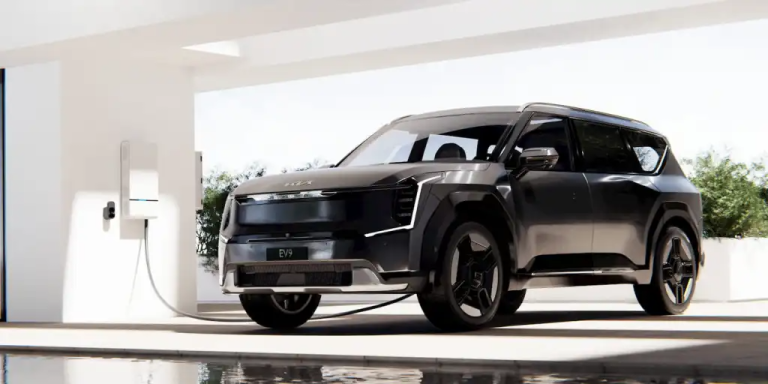
As electric vehicles become more common, many drivers are asking whether their EV can power their home during an outage or help manage energy costs. While the idea is appealing, only certain models currently support the necessary vehicle-to-home (V2H) or bidirectional charging technology. Here’s a look at which EVs offer this feature, what’s required to use it, and how much it costs.
How Vehicle-to-Home (V2H) Charging Works
Modern EVs are equipped with large batteries capable of storing enough energy to supply a home for days. However, not all EVs are designed to send electricity back to the house. Only vehicles with specific hardware and software—referred to as V2H or bidirectional charging—can safely provide backup power or help reduce energy bills by shifting usage to off-peak hours.
Enabling V2H typically requires additional equipment, such as special home chargers, inverters, and integration systems. The cost and complexity vary by manufacturer and model.
EVs That Support Vehicle-to-Home Charging
A handful of EVs currently offer V2H capability. The Ford F-150 Lightning, for example, can deliver up to 9.6 kW of power to a home when equipped with the Charge Station Pro home charger, Home Integration System, and 80A bi-directional charger. The hardware package costs about 5,000 USD (~7,000 AUD, ~4,300 EUR, ~3,700 GBP), plus installation.
Kia’s EV9 unlocked V2H functionality in March, allowing a fully charged vehicle to power a typical home for up to three days when paired with the Wallbox Quasar 2 charger and Power Recovery Unit. The Wallbox system starts at 6,400 USD (~9,000 AUD, ~5,500 EUR, ~4,800 GBP), not including installation.
General Motors has expanded V2H support to all current GM EVs via the GM Energy Home System. With the right setup, models like the 2024 Silverado EV First Edition RST can reportedly provide backup power for up to 21 days. The complete GM Energy Home System retails for 17,000 USD (~24,000 AUD, ~15,000 EUR, ~13,000 GBP), with a 1,700 USD (~2,400 AUD, ~1,500 EUR, ~1,300 GBP) discount available for early buyers.
Other models with V2H or related features include the Nissan LEAF (with full V2H in Japan and Europe, and vehicle-to-load in the US), Polestar 3 (offering V2H and blackout backup in California through dcbel’s Ara system), and the Renault 5 E-Tech in Europe, which can participate in grid services using the Mobilize Powerbox and V2G service.
Tesla’s Cybertruck can also power a home when paired with a Tesla Powerwall or a combination of a Universal Wall Connector, Powershare Gateway, and Backup Switch. This setup costs about 3,500 USD (~4,900 AUD, ~3,000 EUR, ~2,600 GBP), plus installation.
Even outside the automotive world, Canadian company Taiga is adding bidirectional charging to its electric watercraft, enabling them to power equipment at docks, supply energy to yachts, or provide off-grid power at remote locations.
What You Need to Enable V2H
Activating V2H is not as simple as plugging your EV into a standard outlet. Most systems require a compatible home charger, an inverter, a transfer switch, and sometimes a dedicated backup battery or gateway device. Installation costs can be significant and may require professional electrical work.
The specific requirements and costs depend on the vehicle and the chosen system. For example, Ford’s solution includes several components, while GM’s system is more fully integrated with options for solar and battery backup. Kia and Polestar rely on third-party hardware partners for their V2H solutions.
Why this matters
As extreme weather events and grid instability become more common, the ability to use an EV as a backup power source is increasingly valuable. V2H technology can provide peace of mind during outages and help households manage energy costs by shifting consumption to off-peak times.
With more automakers rolling out V2H-capable models and home energy systems, this feature is likely to become a key consideration for EV buyers. However, the technology remains limited to select vehicles and requires a significant investment in hardware and installation.
Key Specs
- Ford F-150 Lightning V2H Power Output: Up to 9.6 kW
- Kia EV9 V2H Duration: Up to 3 days (with Wallbox Quasar 2)
- GM Energy Home System Price: 17,000 USD (~24,000 AUD, ~15,000 EUR, ~13,000 GBP)
- Tesla Cybertruck Home Backup Option: 3,500 USD (~4,900 AUD, ~3,000 EUR, ~2,600 GBP) (plus installation)
- Nissan LEAF US V2L Output: Up to 1,500 watts
- Polestar 3 V2H Backup Duration: Up to 10 days (manufacturer estimate)
- Taiga Watercraft V2H Capability: Bidirectional charging for off-grid and marine use
Source
Images sourced from: electrek.co, ecoflow.com, greencars.com

