
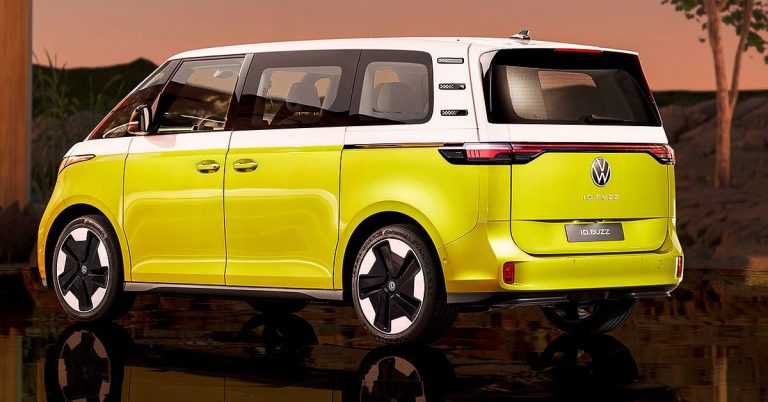
Volkswagen once explored adding a gas-powered range extender to its all-electric ID. Buzz van, but ultimately abandoned the idea due to platform limitations. The company is now focusing on a new multi-energy platform to streamline its future light commercial vehicle (LCV) lineup.
Why VW Ruled Out a Range-Extender ID. Buzz
According to Stefan Mecha, CEO of VW Commercial Vehicles, a combustion-engine variant of the ID. Buzz was seriously considered. However, the van’s short overhangs and dedicated electric vehicle (EV) platform left no space for a range extender. Mecha stated, “I would not be telling the truth if I said we have not looked at this. Is this a feasible exercise? Probably not… I think from this end, the ID. Buzz is an electric vehicle and it will stay an electric vehicle.”
The ID. Buzz is built on Volkswagen’s MEB architecture, which was designed exclusively for battery electric vehicles. Attempting to fit a combustion engine would have required a costly redesign, making the project unviable.

Sales Performance and Regional Availability
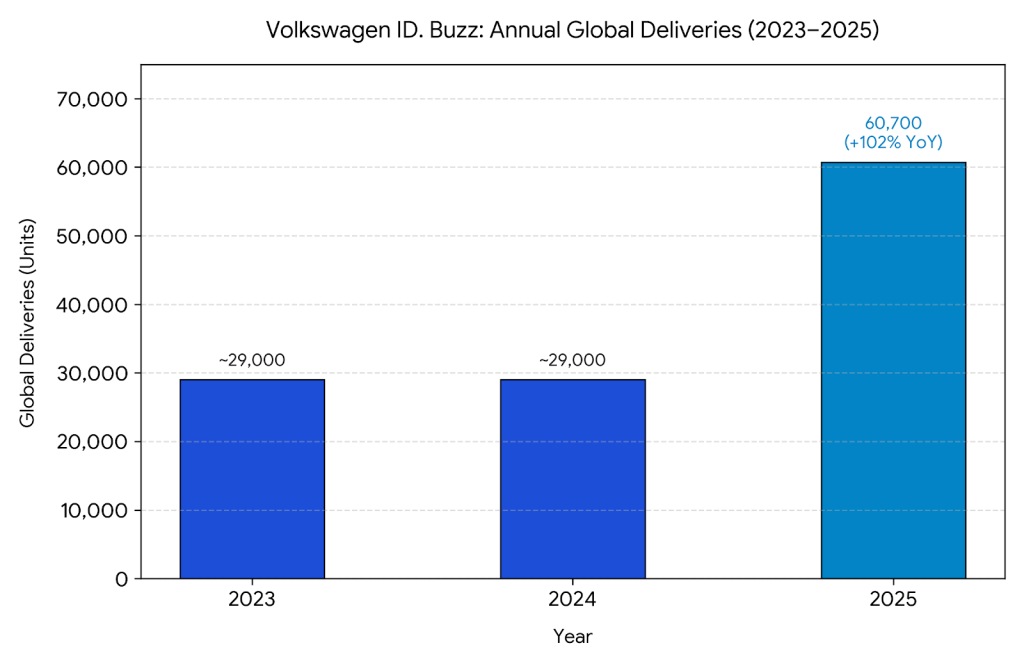
Volkswagen sold 60,700 ID. Buzz vans globally in 2025, doubling its 2024 sales. However, North America accounted for just 6,140 of those units. Due to slow sales and leftover inventory, VW skipped the 2026 model year for the ID. Buzz in North America. The van is expected to return to the US market in 2027 with minor updates and a new camping-friendly trim.
In Australia, Volkswagen sold 40,208 vehicles in 2023, but sales dropped by nearly 7,000 units in 2024, representing a 17% year-over-year decline. The company is looking to new product launches to boost its performance in 2026 and beyond.
Volkswagen’s New Space Platform Strategy
Volkswagen currently relies on four different platforms for its LCV range: the Caddy and Multivan T7 use the MQB platform, the ID. Buzz uses MEB, the Transporter T7 shares its underpinnings with the Ford Transit Custom, and the Crafter has its own bespoke chassis.
To address this complexity, VW plans to retool its Hanover plant and introduce a new common architecture called the Space platform. This platform will underpin the next-generation Caddy, Multivan, and Transporter, and supply components for the next Crafter. While originally conceived as an EV platform, the Space architecture is being adapted to accommodate hybrid powertrains as well.
Expanding the Electric Van Lineup
Ahead of the Space platform rollout, Volkswagen is expanding its electric LCV offerings. The lineup currently includes the ID. Buzz and the e-Transporter. VW is also developing a successor to the e-Crafter, which was previously available from 2018 to 2022. The new model is expected to offer improved range and usability.
Additionally, Volkswagen is considering a zero-emission version of the Caddy. The current generation of the Caddy, launched in 2020 and facelifted in mid-2026, is available with diesel and plug-in hybrid options.
Competitor Comparison
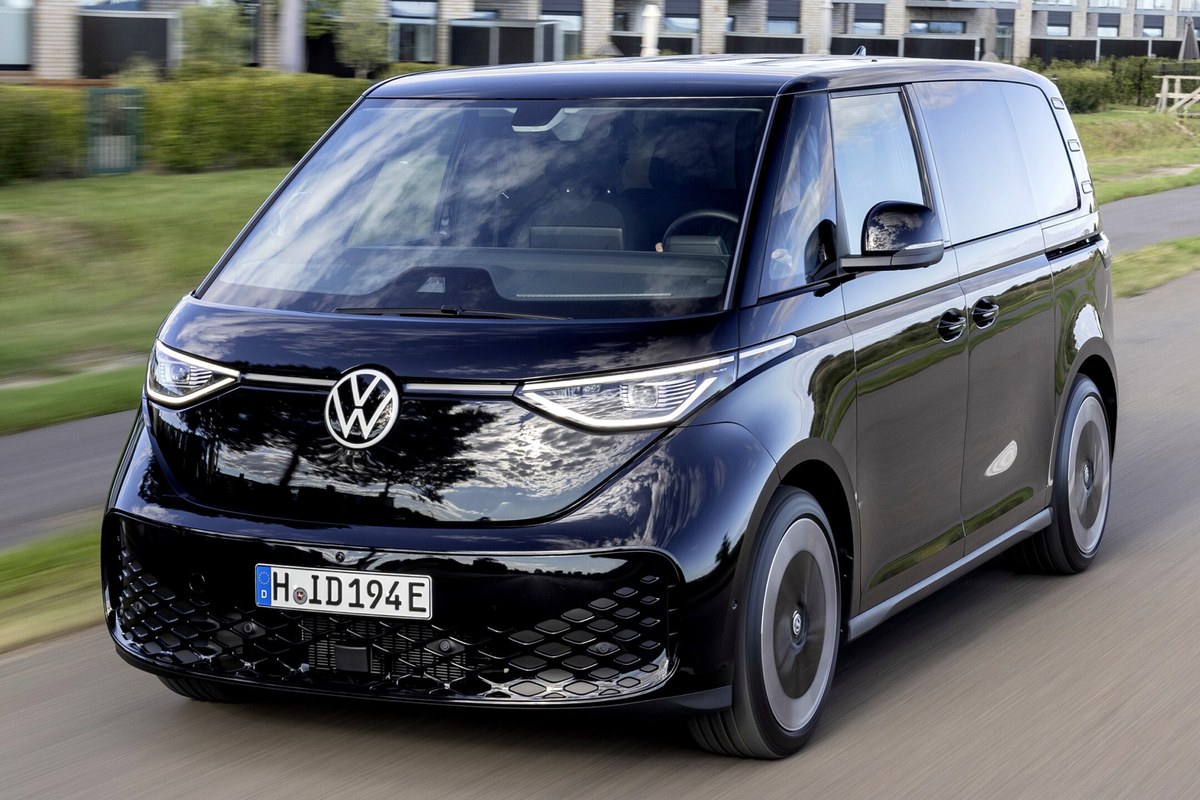
The Volkswagen ID. Buzz competes with several electric people movers and vans. The Mercedes-Benz EQV offers a premium electric van alternative, while the LDV eDeliver 9 targets the commercial van segment with a focus on practicality. The Kia EV9, though an SUV rather than a van, is often cross-shopped by buyers seeking a large electric family vehicle. Pricing and features vary, but all three models aim to capture the growing demand for electric people movers and commercial vans.
Why this matters
Volkswagen’s decision to keep the ID. Buzz fully electric highlights the challenges automakers face when adapting EV platforms for hybrid or range-extender solutions. The move to a unified Space platform is intended to reduce manufacturing complexity and costs, while also allowing for greater flexibility as market demand for electric and hybrid vans evolves.
With commercial buyers transitioning to electric vans more slowly than anticipated, VW must balance regulatory pressures with practical product offerings. The company’s strategy will influence its competitiveness in both established and emerging EV markets.
What this means for buyers
Buyers interested in the ID. Buzz should be aware that the model will remain fully electric, with no range-extender version planned. Those in North America can expect the van to return in 2027 with updates, while Australian buyers may see new models as Volkswagen seeks to recover from recent sales declines.
Shoppers comparing electric vans should also consider alternatives like the Mercedes-Benz EQV, LDV eDeliver 9, and Kia EV9, each offering different strengths in range, features, and price.
Key Specs
- 2025 Global ID. Buzz Sales: 60,700 units
- 2025 North America ID. Buzz Sales: 6,140 units
- ID. Buzz Platform: MEB (EV-only)
- Future Platform: Space (multi-energy, EV and hybrid)
- Current Caddy Powertrains: Diesel, Plug-in Hybrid
- Australian VW Sales 2023: 40,208 vehicles
- Australian VW Sales 2024: Down ~7,000 units (-17% YoY)
Source
Images sourced from: arenaev.com, carscoops.com, caranddriver.com, volkswagen-group.com

