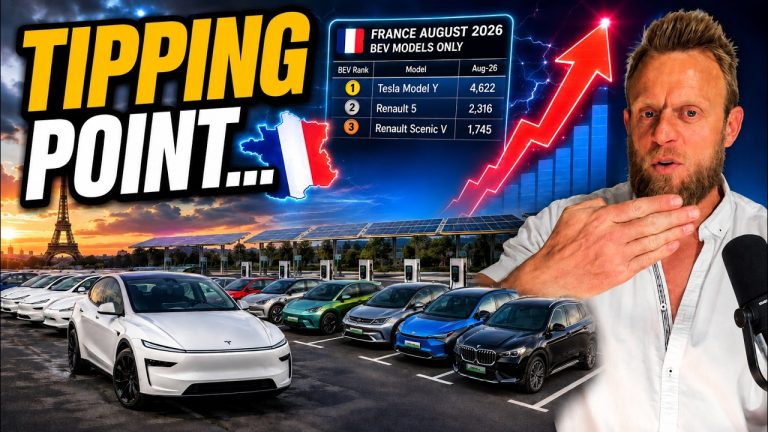
France has recently reached a significant milestone in its electric vehicle (EV) market, with electric vehicles accounting for nearly 40% of new car sales in August 2026. This figure represents a remarkable doubling of the EV market share compared to the same month in the previous year, highlighting one of the most substantial shifts in Europe’s transition to electric mobility to date.
This explosive growth in the EV sector can be attributed to several factors, including the increasing popularity of electric vehicles among consumers, a marked decline in the demand for petrol and diesel vehicles, and heightened competition from both established and new players in the automotive market. Notably, major manufacturers like Tesla, BYD, Renault, Peugeot, Citroën, and Volkswagen are all playing critical roles in shaping the evolving landscape of electric mobility in Europe.
Driving Forces Behind France’s EV Surge
The surge in electric vehicle sales in France is largely driven by the growing consumer acceptance of EV technology. As battery technologies improve and charging infrastructure expands, more drivers are considering electric vehicles as viable alternatives to traditional petrol and diesel cars. Additionally, government initiatives, including incentives for EV purchases and stricter emissions regulations, have further encouraged consumers to make the switch.
August 2026 marked a pivotal moment, not only for France but for the entire European EV market. The doubling of the market share indicates a rapid acceleration toward electrification, which is essential for meeting the European Union’s ambitious climate goals. These goals include reducing greenhouse gas emissions and promoting sustainable transportation solutions in urban areas.
Declining Demand for Petrol and Diesel
As electric vehicles gain traction, the demand for petrol and diesel vehicles has begun to see a notable decline. Many consumers are now opting for electric models, driven by factors such as lower operating costs, decreasing prices of EVs, and the environmental benefits associated with electric driving. This shift is reflected in the automotive sales figures, which show a clear trend away from fossil fuel-powered cars.
Competitive Landscape: Tesla and European Manufacturers
Tesla remains a dominant player in the electric vehicle market, consistently pushing boundaries with its innovative technology and extensive range of models. However, European manufacturers are stepping up to the challenge, with companies like BYD, Renault, Peugeot, and Citroën launching competitive electric models that cater to a variety of consumer needs. Volkswagen is also ramping up its EV offerings, aiming to capture a larger share of the rapidly growing market.
The competitive dynamics are shifting, with traditional automakers investing heavily in EV technology, research, and development to keep pace with consumer demand and sustainability goals. This competition is not only fostering innovation but also driving down prices, making electric vehicles more accessible to a broader audience.
Implications for the Future of EVs in Europe
The doubling of France’s EV share is expected to have far-reaching implications for the future of electric vehicles across Europe. As more countries witness similar trends, the overall European automotive landscape may undergo significant transformations. Increased EV adoption could lead to enhanced charging infrastructure, further investment in renewable energy sources, and a substantial reduction in carbon emissions from the transportation sector.
In conclusion, France’s achievement of nearly 40% EV market share in new car sales marks an important milestone in the global shift toward electric mobility. With ongoing advancements in technology, shifting consumer preferences, and competitive market dynamics, the future of electric vehicles looks promising, not just in France, but throughout Europe as a whole.
Watch the full video on YouTube: France Crossed the EV Tipping Point – France's EV Share Doubled in a Year!