
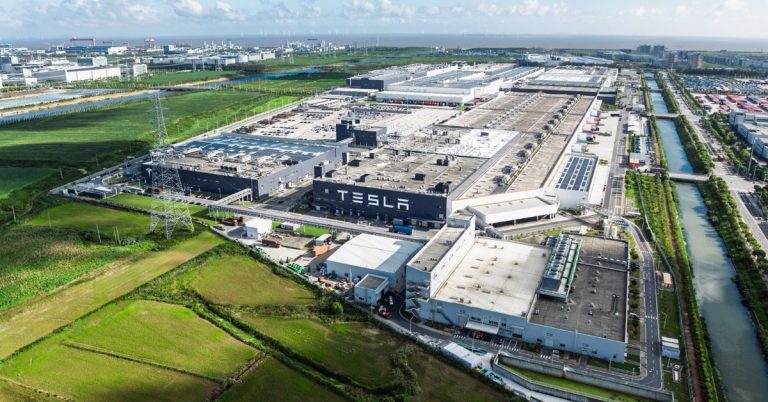
Tesla’s Gigafactory in Shanghai has increased its parts localization rate to 98%, further strengthening its integration with China’s automotive supply chain. The milestone was announced during the ninth China International Import Expo, highlighting the plant’s growing importance in Tesla’s global operations.
Localization Milestone at Gigafactory Shanghai
Tesla revealed that its Shanghai Gigafactory now sources 98% of its parts locally, up from the previously stated figure of over 95%. This achievement was disclosed at the ninth China International Import Expo (CIIE) in Shanghai.
The factory has established partnerships with more than 400 local tier-1 suppliers in China. Of these, over 60 have joined Tesla’s global supply chain, extending the influence of Chinese suppliers beyond the domestic market.
Collaboration with Chinese Partners
Tesla’s cooperation with local suppliers goes beyond sourcing parts. For example, comfort features such as the armrest and leg supports on the seats of the Model Y L were co-developed with Chinese partners to better suit local preferences.
The Model Y L, initially launched in China, has since been introduced to markets in Japan, South Korea, Australia, and the United States.
Production Capacity and Factory Operations
Gigafactory Shanghai began construction in January 2019 and started production later that year. It is recognized as China’s first wholly foreign-owned vehicle manufacturing project.
The facility has an annual production capacity of about 1 million vehicles, primarily manufacturing the Model 3 and Model Y. Approximately 93.3% of its 730,000 square meters of floor area is dedicated to production workshops, with no executive-only amenities.
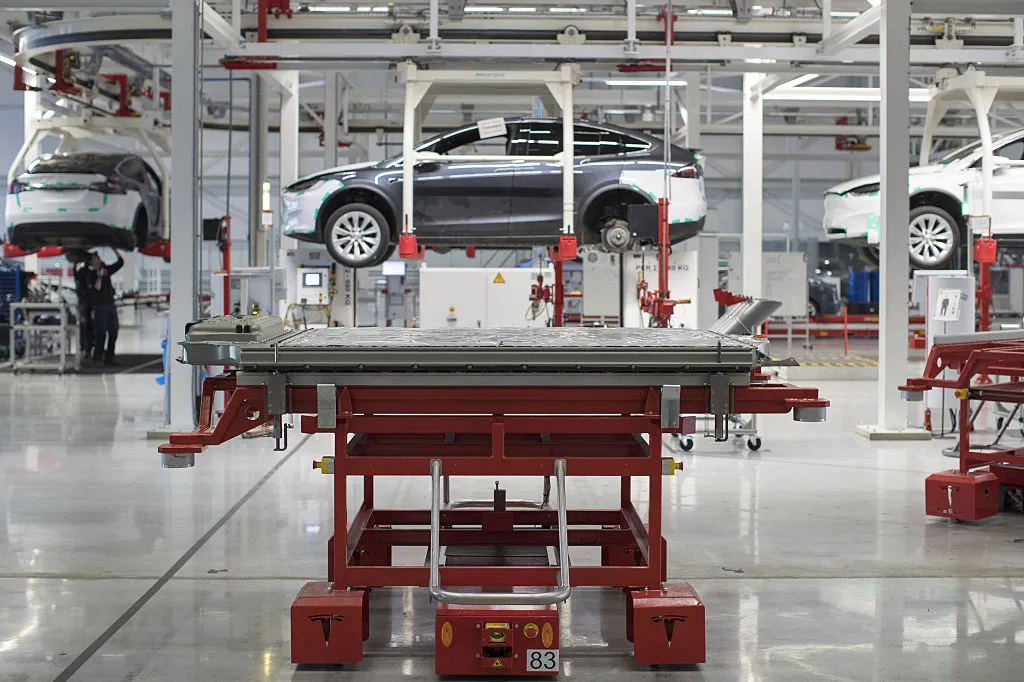
The factory maintains a pace of rolling out one vehicle every 30-plus seconds and keeps its industrial waste utilization rate above 94%.
Recent Highlights and Sales Performance
At this year’s CIIE, Tesla showcased the newly launched Model Y Performance, an exploded-parts display of the Model Y, a humanoid robot, and the Cybercab—a driverless electric vehicle without a steering wheel or pedals.
As of the third quarter of 2026, Tesla’s global vehicle deliveries had surpassed 10 million units. In October, Tesla China’s wholesale sales reached 67,829 vehicles, marking a 10.30% increase year-on-year but a 28.88% decrease month-on-month. For the first 10 months of 2026, Gigafactory Shanghai’s cumulative wholesale sales, including domestic and export figures, totaled 810,889 vehicles, up 21.42% year-on-year.
Why this matters
Tesla’s increased localization at its Shanghai plant demonstrates the company’s deepening ties with China’s automotive industry and supply chain. The integration of local suppliers not only supports the domestic economy but also strengthens Tesla’s global manufacturing capabilities.
The plant’s high production efficiency and expanding supplier network position it as a key player in Tesla’s worldwide operations, contributing to the company’s ability to deliver vehicles at scale.
What this means for buyers
Buyers can expect continued innovation in Tesla’s vehicle features, especially those tailored to regional preferences, as a result of close collaboration with local suppliers. The high localization rate may also support stable production and availability of popular models like the Model Y and Model 3 in both domestic and international markets.
Key Specs
- Parts Localization Rate: 98%
- Number of Local Tier-1 Suppliers: 400+
- Suppliers in Global Supply Chain: 60+
- Annual Production Capacity: 1 million vehicles
- Factory Floor Area: 730,000 m² (~7,858,000 sq ft)
- Production Workshop Usage: 93.3% of floor area
- Production Pace: One vehicle every 30+ seconds
- Industrial Waste Utilization Rate: Above 94%
Images sourced from: cnevpost.com, electrek.co

