
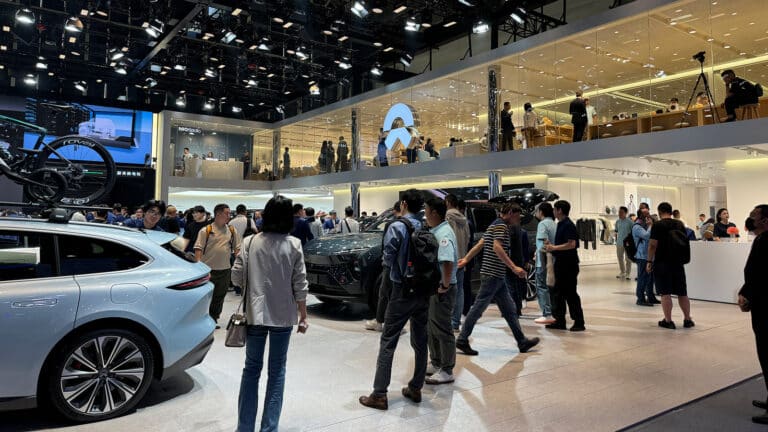
The 2026 Beijing International Auto Show will run from April 24 to May 3 across two adjacent venues, covering 380,000 square meters and featuring 1,451 vehicles, 181 world premieres, and 71 concept cars. The show underscores China’s role as the world’s largest auto market and highlights the industry’s shift toward electrification, smart driving, and new vehicle architectures.
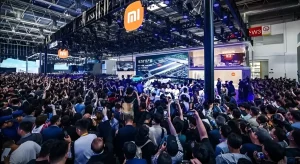
The 2026 Beijing International Auto Show is set to return on April 24 with a scale that reinforces its status as one of the most important events in the global auto calendar. According to the newly released floor plan, the show will cover 380,000 square meters, which organisers and industry reports say makes it the largest auto exhibition in the world.
This year’s event will run for 10 days, ending on May 3. For the first time, the show will use a dual-venue layout, bringing together the China International Exhibition Centre (Shunyi Hall) and the Capital International Exhibition Centre, two adjacent sites that create a north-south span of about 1.3 kilometres.
What visitors can expect
The schedule is split into three phases. Media days will take place on April 24 and 25, followed by professional visitor days on April 26 and 27. Public admission begins on April 28 and continues through May 3, with visiting hours set from 10:00 to 18:00 for both trade and public audiences.
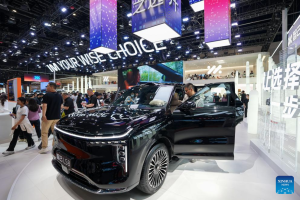
Official figures show that the exhibition will host 1,451 vehicles in total. Among them are 181 world premieres and 71 concept cars, a lineup that suggests automakers see the Beijing event as a major platform for launching new products and technologies.
The show will use 17 exhibition halls, including 13 dedicated to complete vehicles. That allocation reflects the growing size of both finished-car displays and the supporting technology ecosystem around them.
Who is attending
The exhibitor list includes a wide mix of international and Chinese brands. Global automakers such as BMW, Mercedes-Benz, Audi, Volkswagen, Toyota, and Ford are expected to appear alongside major domestic names including FAW Hongqi, Dongfeng Motor, Changan Automobile, Geely, and Great Wall Motor.
Technology-led and new-energy brands are also expected to play a major role. Huawei-backed Harmony Intelligent Mobility, Nio, Xpeng, Li Auto, Xiaomi, and Leapmotor are among the companies likely to focus on battery-electric vehicles, extended-range models, and hydrogen-related powertrains.
BYD and its sub-brands draw attention
BYD and its related brands, including Denza, Yangwang, and Fangchengbao, are expected to bring a broad product and technology showcase. Reported possibilities include Dynasty-series models such as the Tang, Han, and Qin Max, as well as Ocean-series vehicles like the Seal 08 and Sealion 08.
Other models under discussion include Fangchengbao’s Ti 7 EV and a coupe-style F-series model, Yangwang’s U8L four-seat variant, and Denza’s Z9S plus a possible X-series sports car.
A show focused on the industry transition
Beyond the vehicle displays, the event will include participants from 21 countries and regions across supply chain and technology sectors. The main themes are expected to centre on electrification, intelligent driving systems, and digital vehicle architectures, all of which are shaping the next phase of automotive competition.
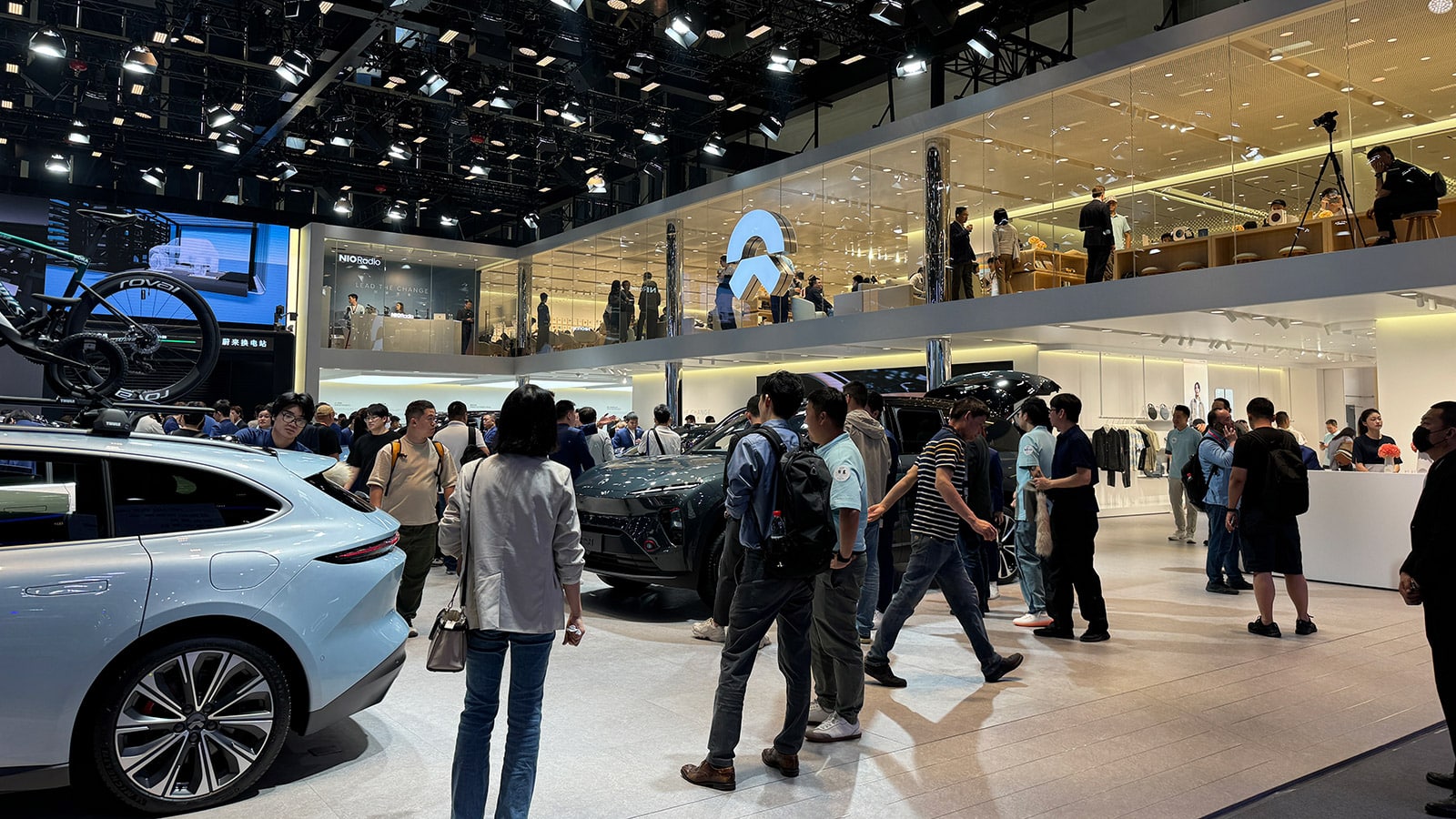
More than 200 press conferences are planned, giving executives, researchers, policymakers, and international media a platform to discuss product launches and industry direction. That level of activity reflects how the Beijing show functions as both a sales stage and a policy-and-technology forum.
Why the new floor plan matters
The newly released layout shows that the Capital International Exhibition Centre will take the larger share of space, while the Shunyi venue remains home to many of the major OEM booths. Some brands and technology groups are expected to occupy especially large or standalone stands, suggesting a stronger emphasis on visibility and brand messaging.
The move away from the older Jing’an Zhuang exhibition area marks a structural change in how the show organises suppliers and component displays. In practical terms, it signals a more modern, more spread-out event format that mirrors the growing complexity of the Chinese auto industry.
China’s market backdrop
The scale of the show also reflects the size of China’s car market. In 2025, vehicle production and sales both exceeded 34 million units, extending China’s run as the world’s largest auto market to 17 consecutive years.
New energy vehicles made up more than half of domestic new-car sales, while exports surpassed 7 million units, including 2.615 million NEVs. Those numbers explain why both legacy automakers and newer EV brands see Beijing as a crucial place to compete for attention.
Recent domestic retail data from China EV DataTracker also shows a mixed market. BYD remains the top seller with 303,150 units, though its year-on-year performance fell 52.9%, while Geely Auto recorded 234,291 units and SAIC-VW 205,251 units.
Several brands showed growth, including Geely Galaxy, Dongfeng Nissan, Li Auto, Xiaomi Auto, and Aito. By contrast, Tesla China and some premium joint ventures posted declines, highlighting the pressure on older business models as electrified and tech-focused brands continue to gain ground.
China’s two major auto shows alternate every year, with Beijing and Shanghai taking turns as the country’s main international auto exhibition. The 2026 Beijing edition is therefore not just another trade fair, but a key snapshot of where the industry is heading.
Why This Matters
The Beijing Auto Show is one of the clearest indicators of how fast China’s auto industry is evolving. A record-scale floor plan, a heavy emphasis on electric and intelligent vehicles, and a strong mix of domestic and foreign brands show that the competition is no longer just about hardware.
For readers, the event matters because it often previews the models, technologies, and market strategies that will shape sales in China and, increasingly, beyond it. The 2026 edition is especially important because it arrives at a time when NEVs are mainstream, legacy joint ventures are under pressure, and Chinese brands are expanding their global ambitions.
Key Specs
- Event: 2026 Beijing International Auto Show
- Dates: April 24 to May 3, 2026
- Media days: April 24–25
- Professional visitor days: April 26–27
- Public days: April 28–May 3
- Daily visiting hours: 10:00–18:00
- Total exhibition area: 380,000 square meters
- Venues: China International Exhibition Centre (Shunyi Hall) and Capital International Exhibition Centre
- Total vehicles: 1,451
- World premieres: 181
- Concept cars: 71
- Exhibition halls: 17 total, including 13 for complete vehicles
- Participating countries and regions: 21
- Press conferences: More than 200
Source: CarNewsChina

