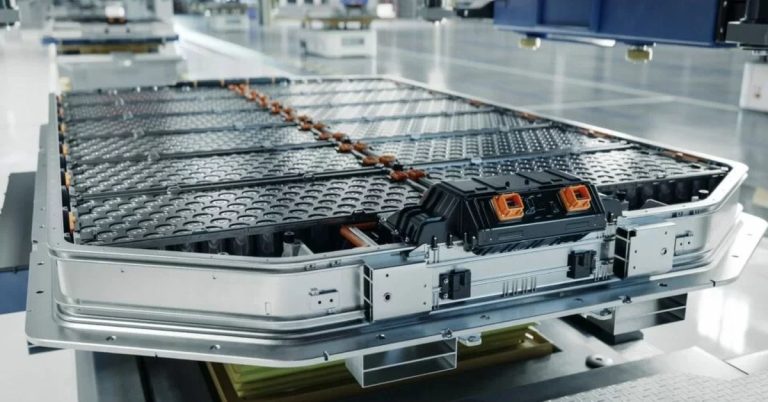
China is leading efforts to formalise international standards for solid-state batteries in electric vehicles, while domestic pilot production lines continue to scale up. Recent policy changes and technical developments highlight the growing distinction between all-solid-state and semi-solid battery technologies.
China Leads Push for International Solid-State Battery Standards
On August 21, the International Electrotechnical Commission (IEC) approved a China-led proposal to develop a global standard for solid-state traction batteries used in electric vehicles. The proposal, titled ‘Secondary lithium-ion cells for the propulsion of electric road vehicles – Application guide, test items, and conditions for solid-state batteries,’ aims to set common testing and application parameters.
The IEC working group includes participation from China, France, Japan, and South Korea. The drafting cycle is expected to take 24 to 36 months, marking the start of an international standards process rather than a completed standard.
Defining All-Solid-State Batteries: The 0.5% Rule
China’s domestic standardisation efforts introduced a 0.5% mass-loss threshold for all-solid-state battery classification in a public-comment draft released in December 2025. The proposed international methodology adopts the same threshold.
Under this method, a battery cell is dried in a 120°C vacuum chamber for six hours. If the cell loses more than 0.5% of its mass due to volatile organic evaporation, it does not qualify as all-solid-state. This distinction is important because some batteries marketed as solid-state, such as the WeLion battery used by Nio and the QingTao-supplied battery in the IM L6, use semi-solid designs that include both solid and liquid electrolytes.
New Tax Policies for Battery Technologies
China introduced new battery consumption-tax rules effective September 1, 2026. Lithium-ion battery products are now subject to a 2% consumption tax, which will increase to 4% from September 1, 2027.
Solid-state batteries, sodium-ion batteries, and fuel cells are exempt from this tax through December 31, 2028. The policy does not specify how individual semi-solid products will be classified for tax purposes.
Progress at Domestic Pilot Lines
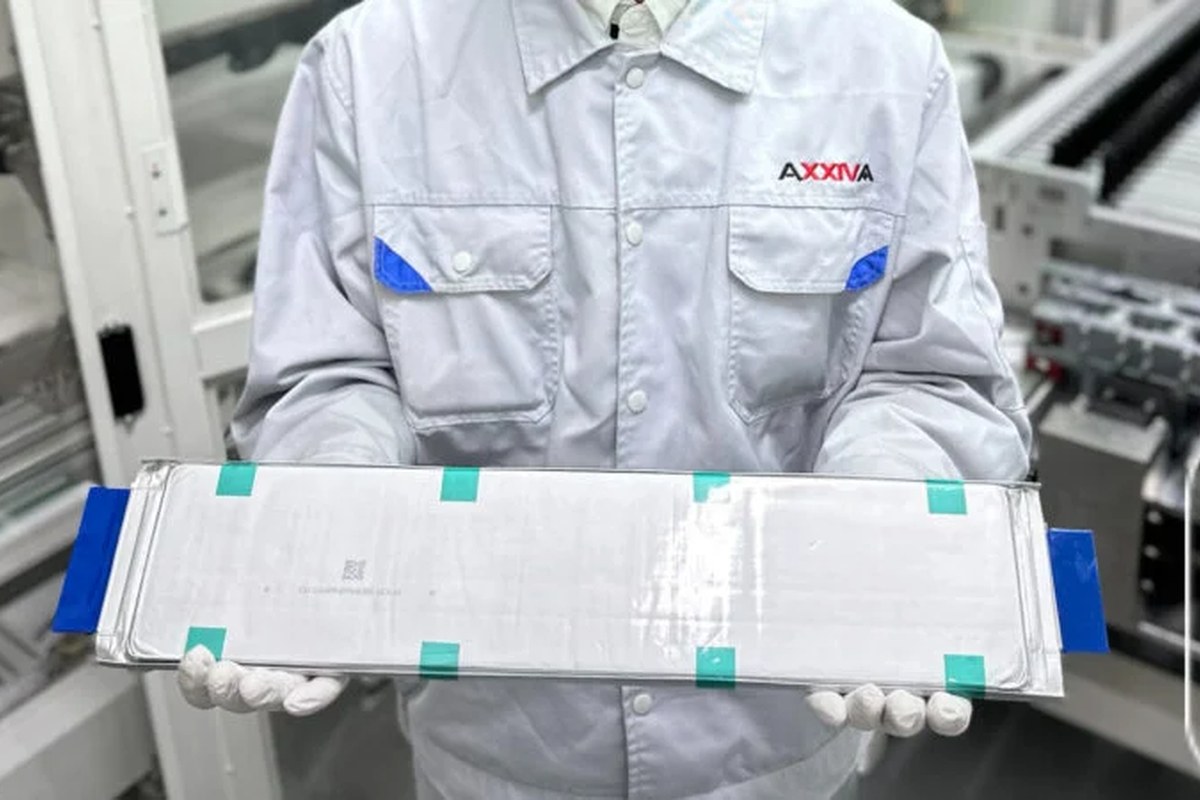
Sunwoda Electronic Co., Ltd. announced that its dedicated solid-state sample production line became operational in August, with an annual design capacity of 0.2 GWh. The company is targeting a 400 Wh/kg energy density for its first-generation polymer-based solid-state chemistry, with vehicle trials planned for late 2026 and 2027.
EVE Energy confirmed the production of a 60 Ah prototype from its Longquan solid-state battery series, designed to operate under stack pressures of up to 5 MPa. Reported cell capacities from suppliers now include 20 Ah, 40 Ah, and 60 Ah, indicating progress toward automotive-scale applications.
Cell-Level Safety and Cost Challenges
Recent cell-level abuse tests have shown promising safety results. Gaoneng Digital reported that a 20 Ah solid-state cell exhibited no thermal runaway or open flame after being punctured at full charge. Greater Bay Technology reported that a 40 Ah cell maintained continuous 12V output during nail-penetration testing at 100% state of charge.
However, cost remains a significant challenge. Industry data from Shanghai Metals Market assessed Li₆PS₅Cl (LPSC), a sulfide solid electrolyte, at $638 (~AUD 893) per kilogram in August—over 80 times the price of conventional liquid electrolytes, which range from $4 (~AUD 6) to $7 (~AUD 10) per kilogram.
Industry Timelines and International Developments
Toyota and Idemitsu Kosan in Japan are targeting commercialisation of all-solid-state batteries for battery-electric vehicles in 2027–28. In China, broader commercial deployment of solid-state batteries is expected to occur around 2030 or later, according to industry reports.
Current developments reflect progress in standards-setting, policy, and pilot production, rather than large-scale manufacturing of all-solid-state EV batteries.
Why this matters
China’s leadership in setting international standards for solid-state EV batteries could shape global definitions, testing protocols, and regulatory frameworks. The distinction between all-solid-state and semi-solid batteries is becoming increasingly important as new models and technologies reach the market.
Tax exemptions for solid-state, sodium-ion, and fuel cell batteries may incentivise further research and pilot production, but high material costs and technical challenges remain barriers to widespread adoption.
What this means for buyers
Buyers interested in the latest battery technologies should be aware that most solid-state battery vehicles are still in pilot or early production phases. The evolving standards and tax policies may influence future vehicle offerings and pricing, but large-scale adoption is likely several years away.
Monitoring developments in battery classification and safety standards will be important for consumers considering next-generation EVs as these technologies mature.
Key Specs
- IEC Standard Drafting Cycle: 24–36 months from August 21, 2026
- All-Solid-State Mass-Loss Threshold: 0.5% after 6 hours at 120°C
- Lithium-Ion Battery Consumption Tax: 2% from September 1, 2026; 4% from September 1, 2027
- Solid-State Battery Tax Exemption: Through December 31, 2028
- Sunwoda Solid-State Line Capacity: 0.2 GWh annually
- Sunwoda Target Energy Density: 400 Wh/kg (development target)
- EVE Energy Solid-State Cell Capacity: 60 Ah prototype
- Li₆PS₅Cl (LPSC) Electrolyte Price: $638 (~AUD 893) per kilogram
Source
Images sourced from: carnewschina.com