
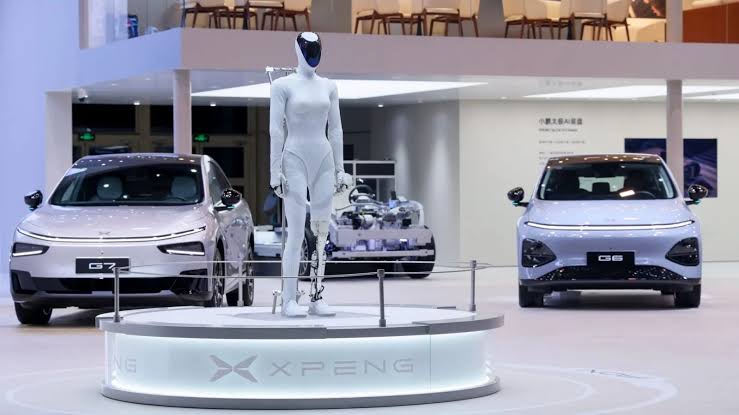
Xpeng has introduced GroundingPI, a new embodied perception foundation model developed in collaboration with leading universities. The model achieved the highest score in a comprehensive evaluation across 34 public perception benchmarks, outperforming OpenAI’s GPT-6 Astra.
GroundingPI: Technical Highlights
GroundingPI is built on a perception-first approach and features a parameter scale of about 4 billion. Developed with research teams from Peking University and the University of Hong Kong, the model is designed to address the adaptation gap faced by general-purpose large models when applied to physical scenarios like autonomous driving and robotics.
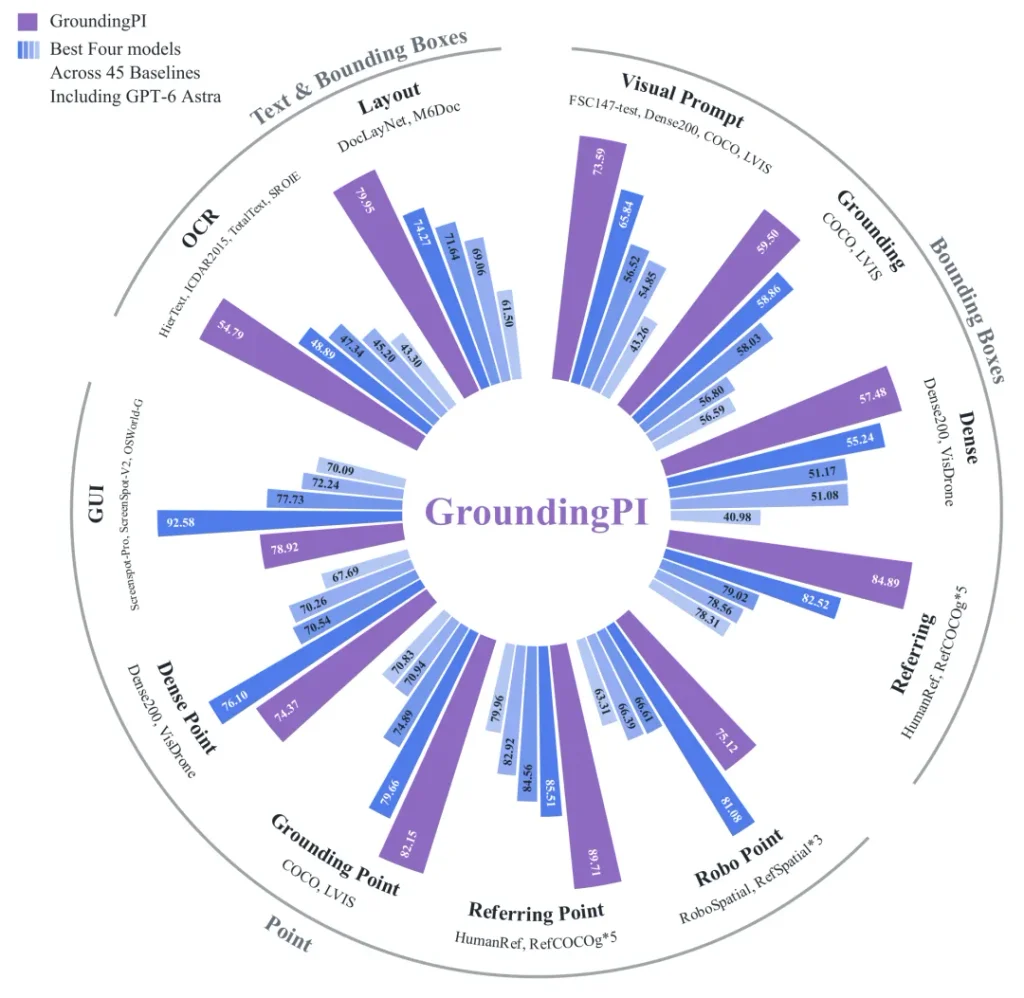
The model covers 11 capability categories, including general detection, text recognition, and robot spatial localization. Notably, GroundingPI does not use robot data with joint action labels during training, instead relying entirely on pure perception data.
Benchmark Performance and Open Sourcing
In a direct comparison across 34 public perception benchmarks, GroundingPI achieved a score of 73.68, surpassing the 71.54 scored by OpenAI’s GPT-6 Astra, which was released in September 2026. The benchmarks were weighted equally across 11 capability categories.
Xpeng has open-sourced the code and model weights for GroundingPI, making it accessible for further research and development.
Efficiency and Scenario Generalization
GroundingPI demonstrated the ability to reduce the cost of manually collecting robot demonstration data. Systems using GroundingPI as a visual foundation can achieve higher execution success rates with only 50% of the demonstration data compared to models that require 75%.
The model also maintains stable performance in high-density simulation scenarios, such as bulk material sorting and bin counting, even when faced with changes in materials, object categories, and backgrounds. This supports reuse across different workstations.
Competitor Comparison
GroundingPI’s main competitor in this space is OpenAI’s GPT-6 Astra, which scored lower in the same perception benchmarks. While GPT-6 Astra is a general-purpose model, GroundingPI is specifically optimized for physical intelligence tasks relevant to robotics and autonomous driving.
Regional Availability
GroundingPI is currently at the scientific prototype stage and has been open-sourced, making it available to researchers and developers globally. Xpeng’s focus on physical AI is part of its broader strategy to enhance its smart driving systems and robotics initiatives.
Historical Context
Xpeng reported global sales of 429,445 vehicles in 2025, marking a 126% year-over-year increase. The company’s ongoing investment in AI and robotics reflects its ambition to remain at the forefront of smart mobility technology.
Why this matters
The launch of GroundingPI signals a significant step forward for Xpeng in the field of embodied AI, particularly for applications in autonomous driving and robotics. By outperforming a leading model like GPT-6 Astra in perception tasks, Xpeng demonstrates its capability to develop specialized AI solutions tailored for real-world environments.
Open-sourcing the model also encourages broader adoption and collaboration, potentially accelerating advancements in physical intelligence across the industry.
What this means for buyers
For consumers and industry stakeholders, Xpeng’s advancements in AI could translate into smarter, safer, and more efficient autonomous driving features in future vehicles. Buyers interested in cutting-edge technology should watch for upcoming Xpeng models that may incorporate GroundingPI-based systems.
As the technology matures, it may also influence the broader robotics and smart mobility sectors, offering new capabilities and improved performance.
Key Specs
- Parameter Scale: 4 billion
- Perception Benchmarks Covered: 34
- Score on Perception Benchmarks: 73.68 (GroundingPI), 71.54 (GPT-6 Astra)
- Capability Categories: 11 (including general detection, text recognition, robot spatial localization)
- Training Data: Pure perception data, no action labels
- Open Sourcing: Code and model weights available
- Development Partners: Peking University, University of Hong Kong
Images sourced from: evkx.net

