Canada has expanded its import quota for Chinese electric and hybrid vehicles, allowing up to 33,397 additional units to enter the country in the current period. This move follows a slower-than-expected uptake in the first half of the year, and sets the stage for a broader range of Chinese EVs to reach Canadian buyers.
Canada Expands Chinese EV Import Quota
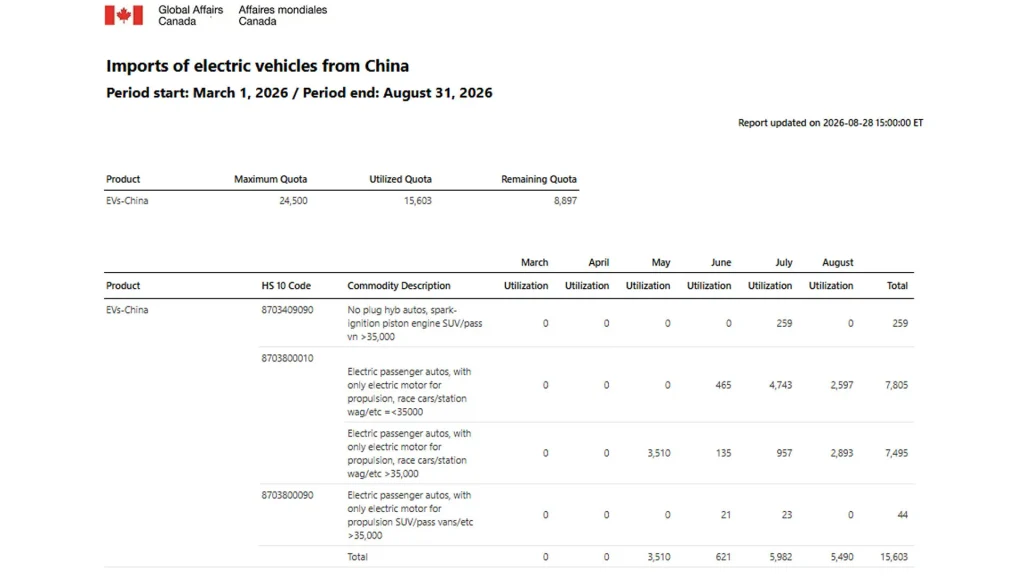
Between March 1 and August 31, 2026, Canada imported 15,603 hybrid and electric vehicles from China. This figure was well below the initial quota of 24,500 vehicles for the first period, leaving 8,897 slots unused.
With the first period now closed, a new import window opened on September 1, 2026. The second period allows for an additional 24,500 Chinese vehicles, plus the unused volume from the first period, bringing the total to 33,397 vehicles eligible for import at a most-favored-nation tariff rate of 6.1%.
Early Beneficiaries and Market Entrants
Tesla, Lincoln, Lotus, and Polestar have been among the first to benefit from the new policy. Tesla currently imports the Chinese-made Model 3 Premium, which starts at $28,429 (~AUD 39,777) in Canada.
Lincoln began importing the Nautilus Hybrid in August, contributing to 259 hybrid sales attributed to this model. While these established brands have led initial imports, traditional Chinese automakers are preparing to enter the market. Vehicles from BYD, Chery, and Geely are undergoing certification and have been seen testing in Canada.
Competitor Comparison
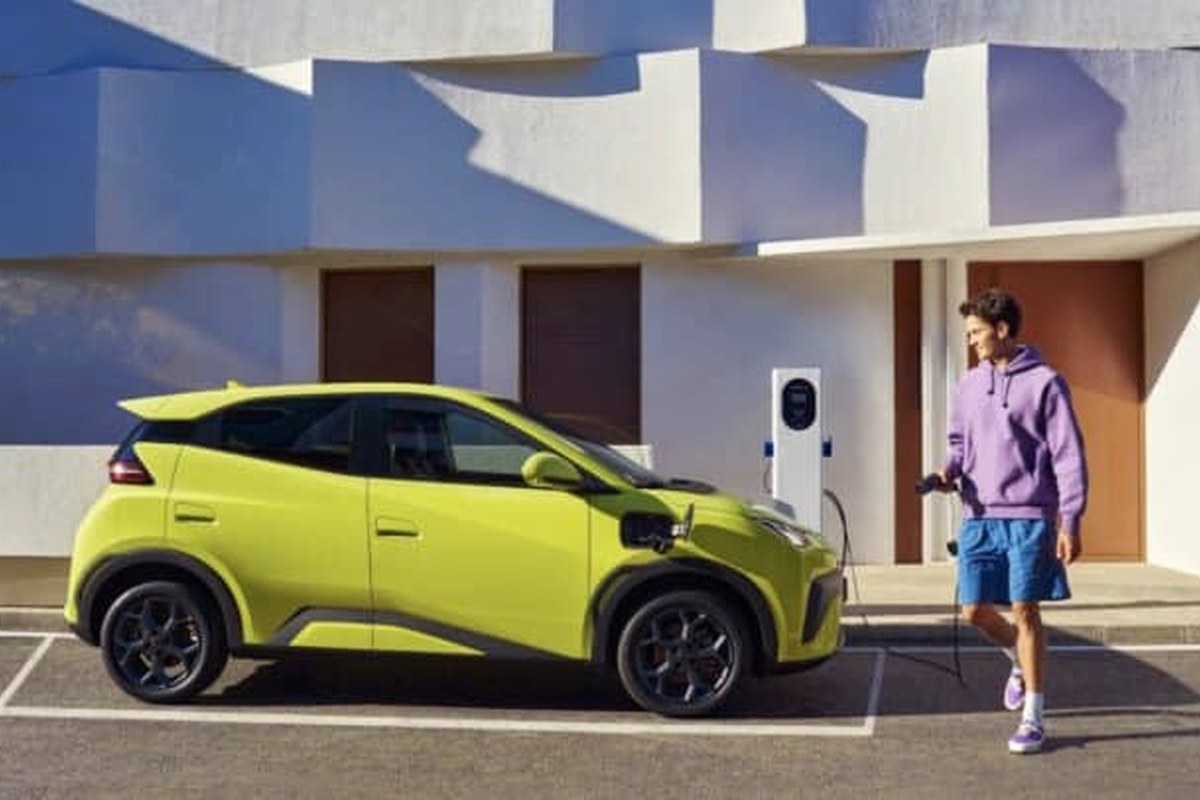
Several Chinese EVs are positioned to compete directly in the Canadian market. The BYD Seagull is expected to be one of the most affordable options, with a price of $15,838 (~AUD 22,160). The Zeekr 7X, a midsize SUV targeting the same segment as the Tesla Model Y, is anticipated to be priced between $39,595 (~AUD 55,400) and $46,794 (~AUD 65,472). Geely’s Galaxy lineup aims to attract buyers looking for budget-friendly electric vehicles.
Historical Context and Regional Availability
In 2025, Canada recorded 1.9 million vehicle sales, a figure slightly higher than the total vehicles sold in California that year. The current policy is expected to accelerate the arrival of multiple Chinese EV models in Canada, with several launches anticipated in late 2026.
The import quota operates on a first-come, first-served basis, creating an incentive for automakers to bring vehicles to market quickly. The Canadian government has stated it will monitor the process to ensure equitable access to the reduced tariff rates.
Why this matters
The expanded quota for Chinese EV imports marks a significant shift in the Canadian automotive landscape. With more than 33,000 additional vehicles eligible for import, Canadian consumers will soon have access to a wider range of electric and hybrid models, including more affordable options.
This policy could intensify competition among automakers and potentially drive down prices, making EVs more accessible to a broader segment of buyers.
What this means for buyers
Canadian buyers can expect an increasing variety of Chinese EVs and hybrids in showrooms starting in late 2026. Those considering a new electric vehicle may want to monitor upcoming releases from BYD, Chery, Geely, and other brands, as more models become available under the expanded quota.
With the first-come, first-served system, early adopters may have the best chance to secure vehicles at lower tariff rates before quotas fill up.
Related coverage from The Electric Viking
For more on Chinese EVs entering global markets, see BYD Seagull: The $22,000 EV Arriving in Canada and Zeekr 7X Targets Tesla Model Y in Canada.
Key Specs
- Imported Chinese vehicles (Mar 1–Aug 31, 2026): 15,603
- First period import quota: 24,500
- Second period import quota: 24,500 (+8,897 unused from first period)
- Total vehicles eligible for import (current period): 33,397
- Tariff rate: 6.1% (most-favored-nation)
- Tesla Model 3 Premium starting price: $28,429 (~AUD 39,777)
- Lincoln Nautilus Hybrid imports (Aug 2026): 259 units
Source
Images sourced from: cieauto.com, evxl.co