
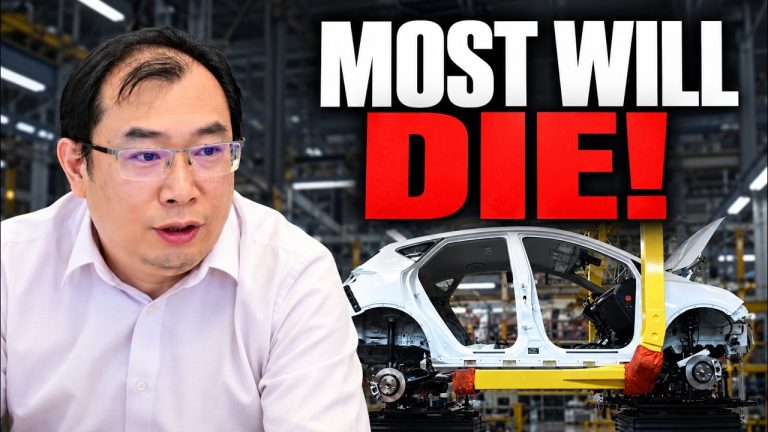
Chery’s overseas chief, Zhang Guobing, has stated that about 90% of Chinese carmakers are losing money, citing his review of rivals’ financial reports. This admission comes as China faces significant industry overcapacity and rising costs, with Chery itself reporting a profit of A$1.9 billion (~$1.34 billion) in the first half of the year—nearly 70% of which comes from markets outside China.
Most Chinese Carmakers Are Unprofitable
Zhang Guobing told journalists that more than 90% of Chinese car manufacturers are operating at a loss. He emphasized that there are simply too many companies in the market and predicted that many will not survive. This view echoes similar comments from Xpeng’s CEO, who also acknowledged the financial struggles facing most of the industry.

Chery’s Aggressive Expansion Strategy
Chery is introducing six new brands to Australia within a year, including Leapmotor, Freelander, iCar, Jatua, Xpeng, and Luxeed. Despite the influx of new badges, Zhang’s comments suggest that Chery is betting on being one of the few survivors as the market consolidates. The company’s strategy is to outlast the competition by leveraging its profitability and global reach.
Industry Overcapacity and Shrinking Margins
China built around 35 million cars last year but has factory capacity for 55 million, leaving 20 million units of unused capacity. With domestic car sales down, companies are slashing prices to maintain their market share. As a result, the industry’s profit margin dropped to just over 3% earlier this year, a figure some analysts believe may be inflated by accounting practices.
Rising Development Costs Challenge Automakers
Zhang noted that developing a new car is now significantly more expensive, driven by the need for advanced software, batteries, and chips. These factors make it harder for smaller or less profitable brands to survive, increasing the likelihood of mergers, acquisitions, or closures.
Chery’s Financial Strength and Overseas Growth
Chery reported a profit of A$1.9 billion (~$1.34 billion) in the first half of this year and is on track for nearly A$4 billion (~$2.81 billion) in annual profit. Nearly 70% of its revenue now comes from outside China, up from 46% a year ago, with strong sales in Australia, the UK, and Europe. This international success has set Chery apart from many of its domestic competitors.
What This Means for the Market
According to consultancy Alex Partners, only three out of thirty Chinese companies focused on EVs and plug-in hybrids made a profit last year, and only seven are expected to break even by 2030. Sam Evans points out that the brands with real profits and sales volume—such as BYD, Chery, and Geely—are likely to become even stronger as weaker brands disappear. He also notes that concerns about survival are not limited to Chinese companies, raising questions about the future of brands like Mazda, Mitsubishi, and Nissan. The ongoing shakeout may ultimately benefit buyers by making strong brands more competitive and possibly lowering prices.

