
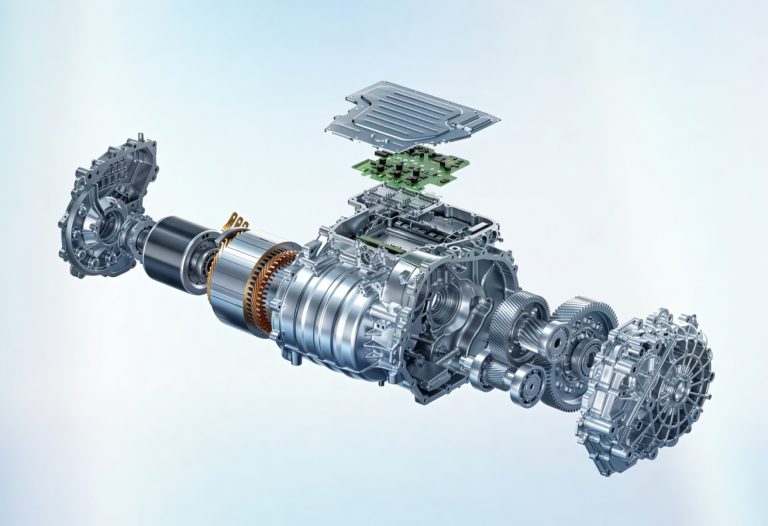
GAC Group’s Quark Electric Drive 2.0 has been awarded First Prize at the 2026 China Society of Automotive Engineers Science and Technology Awards. The technology stands out for its CAERI-certified peak motor efficiency of 99.03% and advanced use of amorphous alloy and carbon-fibre materials.
Award-Winning Electric Drive Technology
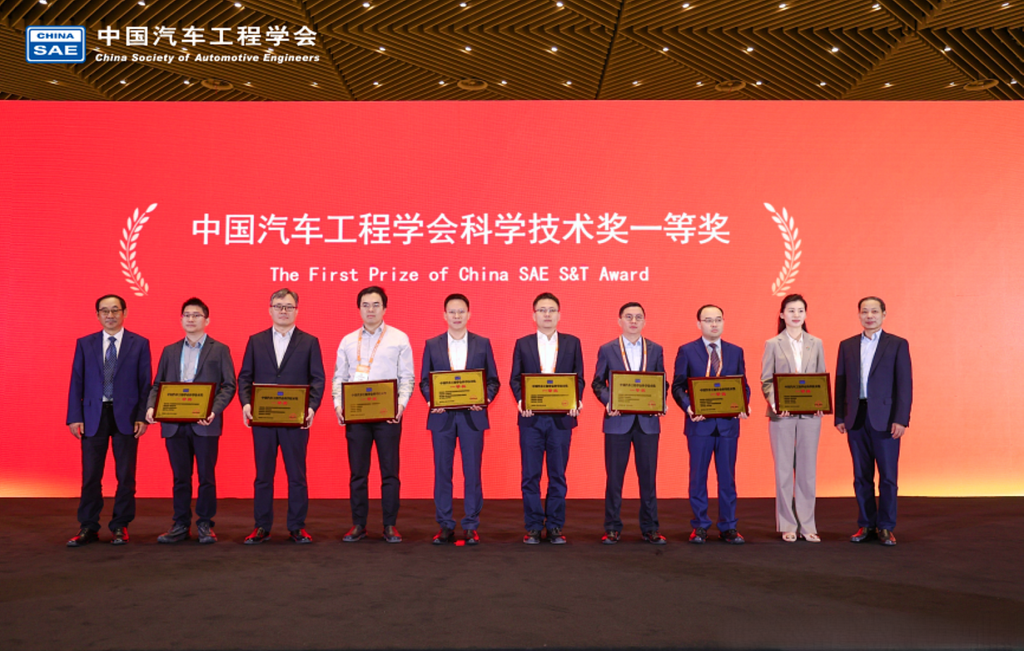
GAC Group’s Quark Electric Drive 2.0 was recognised with First Prize at the 2026 China-SAE Science and Technology Awards in Suzhou on October 28. The award highlights the project’s achievements in high-efficiency and high-power-density electric drives for new energy vehicles. Nio’s 925V continuous-wave winding system also received First Prize at the event.
The Quark 2.0 system features an amorphous alloy stator and a carbon-fibre rotor sleeve, achieving a CAERI-certified peak motor efficiency of 99.03%. Under CLTC operating conditions, the drive maintains an efficiency of 94.184%.
Technical Innovations and Manufacturing
The Quark 2.0 replaces traditional silicon-steel stator laminations with amorphous soft-magnetic alloy ribbons just 25 microns (0.025 mm) thick. This design reduces magnetic losses, with GAC reporting stator core iron loss of 5.7 W/kg—about 50% lower than ultra-thin silicon steel. The stator achieves a saturation magnetic induction of 1.68 T.
The rotor is reinforced with a 1 mm carbon-fibre composite sleeve, enabling rotational speeds up to 30,000 rpm. Plasma surface activation of the metallic rotor core increases interfacial bonding strength by over 40%. The composite resin used is rated for 180°C and has a tensile strength above 90 MPa, maintaining an oil-immersion swelling rate below 1.5%. Automated winding ensures carbon-filament tension variation stays within ±5% across layers.
Production and Market Application
Manufacturing of the Quark 2.0 is handled by GAC subsidiary RuiPai Powertrain Technology in Guangzhou, with an automated production line capable of producing 100,000 units annually. The technology has already entered batch production for Hyptec and Aion models, including the upcoming 2027 Aion i60.
Compared to an earlier milestone in August 2024, when RuiPai Powertrain reported 98.5% efficiency and 13 kW/kg power density, the latest figures represent a significant step forward in both efficiency and power density.
Competitor Comparison
The Quark 2.0’s recognition comes alongside Nio’s 925V continuous-wave winding system, which also received First Prize at the 2026 China-SAE awards. Both technologies reflect the rapid pace of innovation among leading Chinese automakers in electric drive systems.
Historical Context
GAC’s global sales reached 1,721,489 vehicles in 2025, marking a 29% year-on-year increase. The company’s ongoing investment in advanced electric drive technology is a key factor in its growth and competitiveness in the new energy vehicle sector.
Why this matters
The Quark 2.0’s high efficiency and power density can help reduce vehicle energy consumption and extend driving range without increasing battery size. These advancements support the broader adoption of electric vehicles by improving performance and lowering operating costs.
Recognition at the China-SAE Science and Technology Awards underscores the importance of domestic innovation in the global EV industry, positioning GAC as a leader in electric drive technology.
What this means for buyers
For consumers, GAC’s advancements in electric drive technology could translate to more efficient and longer-range EVs in the near future. Buyers considering models from GAC’s Hyptec and Aion brands, including the upcoming 2027 Aion i60, may benefit directly from these engineering improvements.
Those interested in cutting-edge EV technology should watch for further announcements from GAC as the company continues to scale production and integrate these innovations into its vehicle lineup.
Key Specs
- Peak Motor Efficiency: 99.03% (CAERI-certified)
- CLTC Operating Efficiency: 94.184%
- Power Density: 17.29 kW/kg
- Maximum Rotational Speed: 30,000 rpm
- Stator Material: Amorphous alloy, 25-micron ribbons
- Stator Core Iron Loss: 5.7 W/kg
- Rotor Sleeve: 1 mm carbon-fibre composite
- Annual Production Capacity: 100,000 units

