
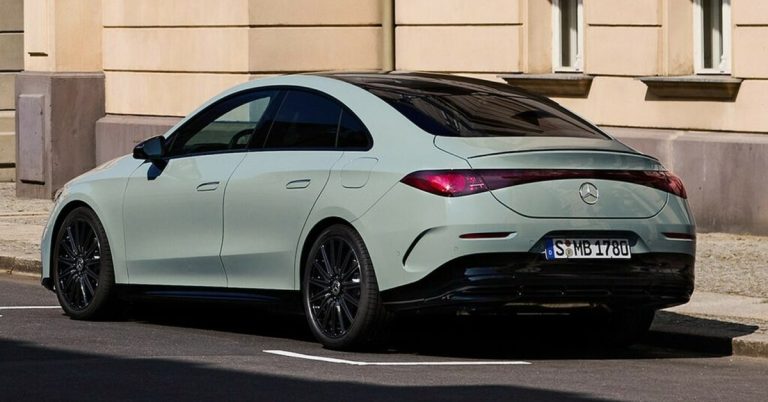
Battery-electric vehicles (BEVs) have reached a new milestone in Germany, accounting for 37% of new car registrations in October 2026. According to data from the Kraftfahrt-Bundesamt (KBA), this marks the second consecutive month that fully electric cars have outsold gasoline and diesel vehicles combined. The rapid growth in BEV adoption is reshaping the German automotive landscape.
Record Growth for BEVs in October
In October 2026, Germany registered 94,086 BEVs, a significant increase of 79.5% compared to 52,425 units a year earlier. The overall new car market grew only slightly, with total registrations rising 1.7% to 254,492 units. This means the surge in BEV sales came largely at the expense of combustion vehicles.
Gasoline car registrations dropped 40.5% to 38,516 units, representing a 15.1% market share, while diesel registrations fell 21.6% to 23,882 units, or 9.4% of the market. Combined, pure combustion cars accounted for just 24.5% of new registrations, 12.5 percentage points less than BEVs alone.
Plug-in Hybrids and Emissions Trends
Plug-in hybrid registrations slipped 7.9% to 28,499 units, making up 11.2% of the market. Overall, plug-in vehicles—both BEVs and plug-in hybrids—represented about 48% of all new cars sold in Germany last month.
The shift toward electrification has also led to a notable reduction in emissions. The average CO2 emissions of new cars in October 2026 dropped 21.1% year-over-year to 79.4 g/km.
Year-to-Date Performance and Market Forecasts
BEV market share has climbed steadily throughout 2026, reaching 28.4% in June, 32.4% in August, 34.5% in September, and now 37% in October. From January to October, Germany registered 698,230 BEVs, up 60.7% year-over-year. This represents about 28.2% of the 2,476,290 new cars registered so far in 2026, compared to roughly 19% for the full year 2025.
The VDA, Germany’s auto industry association, had forecast around 693,000 BEV registrations for all of 2026. That figure was surpassed in October, and the current pace suggests the year could end with even higher totals.
Impact of New EV Incentives
Germany’s new EV incentive program, which applies retroactively to cars registered since January 1, 2026, has played a major role in boosting BEV sales. The incentive provides €3,000 for a new BEV, whether bought or leased, and up to €6,000 for lower-income households with children. Households with taxable income above €80,000 (€90,000 with children) are not eligible.
The program is aimed at private buyers, and the data reflects this: private registrations rose 20.6% in October, while commercial registrations fell 8.2%. Private buyers now account for 40.7% of the market.
Brand Performance and Market Leaders
Tesla’s registrations in Germany fluctuate with its delivery cycles. In September 2026, Tesla registered 12,552 cars, making the Model Y the best-selling car in the country. In October, Tesla registered 2,932 cars, up 290.9% from a small base, for a 1.2% market share. Year-to-date, Tesla registrations are up 206.1% to 47,742 units.
BYD is slightly ahead of Tesla for the year, with 47,961 registrations, up 216.1%. In October, BYD registered 5,173 cars, a 54.3% increase, though most of its sales are plug-in hybrids. Other Chinese brands are also growing rapidly: Leapmotor registered 3,661 cars in October (up 288.6%), Xpeng was up 284.4% to 1,380 units, and SAIC’s MG rose 48.5% to 4,140 units.
Volkswagen Group remains strong at the top of the EV charts. Through September, the Skoda Elroq was the best-selling EV in Germany with 30,845 units, followed by the Tesla Model Y (29,464) and the VW ID.3 (24,352).
Challenges for German Automakers
Despite the EV boom, German automakers are facing a difficult year. In October, VW brand registrations in Germany fell 4%, Audi dropped 8.4%, Porsche lost 5.7%, and Opel crashed 24.1%. BMW’s registrations were flat (+0.1%), while Mercedes was up 8.5%. VW remains the largest brand in Germany with an 18.2% share, but is down 5.6% for the year.
Volkswagen Group recently reported a €5.9 billion operating loss for the third quarter of 2026, its largest since Dieselgate. The loss was attributed to a writedown of its Porsche stake, weak sales in China, and thin EV margins. The group has approved plans to cut 100,000 jobs and close several German plants. Mercedes also reduced its 2026 car margin guidance to 2-3%, mainly due to challenges in China.
Why this matters
Germany’s rapid shift to electric vehicles demonstrates the impact of targeted incentives and consumer demand for affordable BEVs. With BEVs now outselling combustion cars, the country is setting a benchmark for electrification in a major automotive market.
However, the transition is also highlighting challenges for traditional automakers, who are struggling to keep pace with demand and face financial pressures. The evolving market dynamics are likely to influence both policy and industry strategies moving forward.
What this means for buyers
For German car buyers, the current environment offers strong incentives for choosing a BEV, especially for private households that meet the income criteria. With a growing selection of models and significant government support, now may be an opportune time to consider an electric vehicle.
Buyers should be aware that demand for popular models is high, with some vehicles already sold out. Staying informed about eligibility for incentives and available inventory will help consumers make the most of the current market conditions.
Key Specs
- BEV Market Share (October 2026): 37%
- BEVs Registered (October 2026): 94,086
- Year-over-Year BEV Growth (October 2026): 79.5%
- Total New Car Registrations (October 2026): 254,492
- Gasoline Car Share (October 2026): 15.1%
- Diesel Car Share (October 2026): 9.4%
- Plug-in Hybrid Share (October 2026): 11.2%
- Average CO2 Emissions (October 2026): 79.4 g/km
Images sourced from: carscoops.com, global-angle.com, france24.com

