
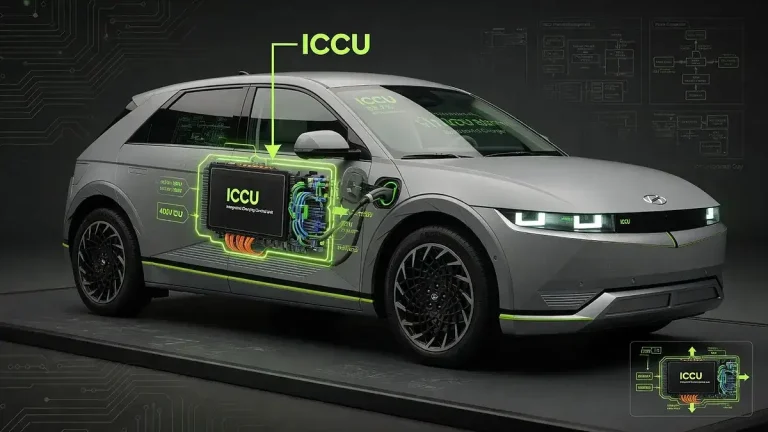
Hyundai is extending warranty coverage for the Integrated Charging Control Unit, or ICCU, in affected U.S. electric vehicles to 15 years or 180,000 miles. The move responds to repeated failure reports from owners of Hyundai’s E-GMP-based EVs, but many drivers say the company still needs to solve the root cause, not just cover repairs for longer.
Hyundai is expanding warranty coverage for a part that has frustrated many owners of its electric vehicles: the Integrated Charging Control Unit, or ICCU. In the U.S., the company will now cover the component for 15 years or 180,000 miles, whichever comes first.
The change is a major increase from the previous 5-year, 80,000-mile coverage. But for many owners and shoppers, the move is being viewed less as a full solution and more as a sign that the problem remains significant.
What the ICCU does
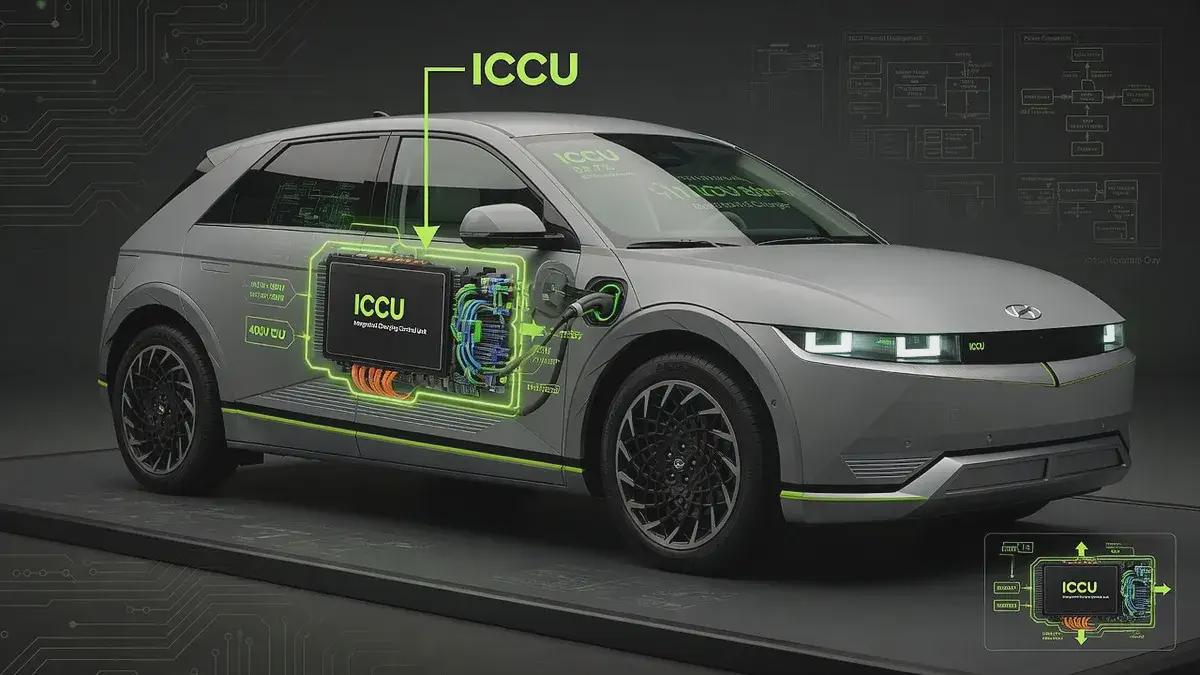
The ICCU is a central piece of the charging and power-management system in Hyundai’s E-GMP electric vehicles. It handles onboard charging, DC fast charging, AC charging, 12-volt battery support, DC-to-DC conversion, and vehicle-to-load functions.
In practical terms, it helps manage how power moves through the vehicle and to external devices. That makes it an important part of the EV’s operation, and also one of the most critical components when it fails.
Why Hyundai is acting now
Owners of Hyundai EVs built on the E-GMP platform have reported ICCU failures for years, including complaints shared online, with consumer publications, and even through government channels. Symptoms cited by Hyundai include warning lights, reduced power, and charging limits.
Hyundai says the warranty extension is based on ongoing monitoring of ICCU performance in certain electric models. The company says affected U.S. customers can receive the coverage at no cost and should visit a dealer if they experience related problems.
Customers can also check their vehicle status by entering the VIN on Hyundai’s campaign site, HyundaiUSA.com/campaignhome.
What Hyundai said
In a statement, Hyundai Motor America said it remains focused on safety, quality, and long-term reliability. The automaker said the extended coverage is meant to address ICCU issues in affected vehicles and support owners dealing with the problem.
The company’s message is clear: it is acknowledging the issue, and it is trying to restore trust while more permanent solutions are developed. Whether that is enough for owners is another question.
Kia may follow, but has not yet matched Hyundai’s move
Kia, Hyundai’s sister brand, has not yet announced the same warranty extension at the time of writing. However, a Kia spokesperson told Electrek that the company would be informing EV6 owners and dealers about a similar program in the coming days.
Owners say the issue is bigger than warranty length
Many owners are not celebrating the extension. Some describe it as the bare minimum, arguing that the real fix should be to eliminate the ICCU defect rather than simply cover replacements for a longer period.
Reports from drivers include multiple ICCU replacements and lengthy waits for parts, sometimes longer than a month. Some prospective buyers also say the failures made them avoid Hyundai and Kia EVs altogether.
One common concern is that a long warranty does not necessarily remove the inconvenience, downtime, or uncertainty that comes with a repeated component failure.
How this compares with other EV issues
Hyundai is not the only automaker dealing with high-profile power-conversion problems. Tesla vehicles have also faced scrutiny over Power Conversion System failures in the Model 3 and Model Y, and those issues have affected charging and vehicle usability.
More recently, Tesla’s Cybertruck drew attention for PCS-related failures that can disable AC charging. In response, Tesla has reportedly offered affected owners free Supercharging while repairs are pending. Hyundai’s ICCU problem, however, has been discussed as a longer-running issue with multiple recalls that have not fully resolved owner complaints.
Why the warranty extension matters
For current Hyundai EV owners, the expanded coverage is a meaningful financial backstop. If an ICCU fails outside the original warranty window, the repair could be costly, and the new policy reduces that risk.
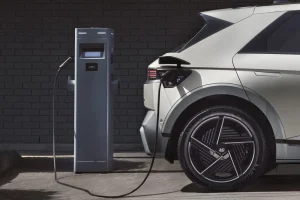
At the same time, the extension is also an admission that the problem is serious enough to require unusually long coverage. For used-EV shoppers especially, that can cut both ways: it offers protection, but it can also signal a reliability concern that may affect resale value and buyer confidence.
Hyundai has bought itself time, but not necessarily forgiveness. The bigger question is whether the company can solve the underlying ICCU issue before it does lasting damage to its EV reputation.
Why This Matters
This matters because warranty changes often reveal how automakers are handling reliability problems behind the scenes. A 15-year, 180,000-mile extension is unusually long for a high-voltage EV component, which tells buyers the ICCU issue is not being treated as routine wear and tear.
For owners, the extension may mean lower repair risk, but it does not eliminate downtime, dealer visits, or uncertainty. For shoppers, especially in the used EV market, it is a reminder to look closely at model-specific problem histories, not just range and charging specs.
More broadly, the case shows how quickly a single component can influence confidence in an entire EV lineup. In a market where trust matters as much as technology, reliability fixes may be just as important as new features.
Key Specs
- Component: Integrated Charging Control Unit (ICCU)
- New Hyundai warranty coverage: 15 years or 180,000 miles, whichever comes first
- Previous Hyundai warranty coverage: 5 years or 80,000 miles
- Cost to customers: No cost for the extended coverage
- Affected region mentioned: U.S. vehicles
- Symptoms listed by Hyundai: Warning lights, reduced power, charging limitations
- Related functions: Onboard charging, DC fast charging, AC charging, 12-volt battery support, DC-to-DC conversion, vehicle-to-load
Source: InsideEVs

