
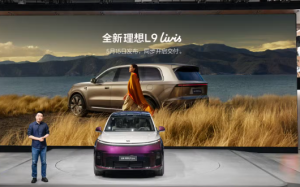
Li Auto’s Hong Kong-listed shares fell as much as 13% after the company launched an updated Li L9 flagship SUV. The refreshed model adds new hardware, longer range and revised pricing, but analysts remain divided on whether it can meaningfully revive sales.

Li Auto’s shares in Hong Kong fell sharply after the company introduced an updated version of its Li L9 flagship SUV, signaling that investors were not persuaded the refresh would quickly restore momentum for the brand’s sales.
The stock dropped as much as 13% to HK$65.75 in intraday trading, making it one of the company’s steepest declines in recent months. The move came just days after Li Auto officially unveiled the new model on May 15.
Updated pricing aims to sharpen the L9’s appeal
The refreshed lineup includes a higher-end Li L9 Livis variant with a starting price of 509,800 yuan, or about $74,862 at the reported exchange rate. That final price is 50,000 yuan below the pre-sale level, suggesting Li Auto is using pricing to make the flagship more competitive.
The upgraded Ultra version starts at 459,800 yuan. Li Auto appears to be targeting buyers in the premium large-SUV segment, where competition has intensified and brand differentiation has become more difficult.
Analysts split on whether the refresh can lift demand
Citi took a cautious stance, saying the updated L9 does not amount to a major breakthrough. The bank said the model’s value proposition is broadly in line with comparable vehicles and kept a “Neutral” rating on Li Auto.
Citi estimates monthly sales of around 1,000 units for the L9 Livis and 4,000 units for the Ultra version. That forecast implies the new model may help stabilize sales, but not necessarily deliver a dramatic turnaround.
Morgan Stanley was more optimistic, arguing that the revised L9 could be important for Li Auto’s efforts to regain sales momentum. The bank expects monthly sales of the new L9 to exceed last year’s average, though it also warned that the six-seat SUV market is highly competitive and leaves little margin for operational mistakes.
What is new on the Li L9
Li Auto says the L9 Livis comes with two in-house smart driving chips, giving the vehicle stronger computing power for demanding road conditions. The SUV also uses the company’s third-generation range extender and a 72.7 kWh battery pack.
Combined range is rated at up to 1,650 kilometers on a full charge and a full tank. Those figures remain central to Li Auto’s pitch, especially for buyers who want long-distance usability without frequent charging stops.
Why the L9 matters for Li Auto
The Li L9 was first launched in 2022 and was once among the most expensive domestic models in China. But as rivals expanded their offerings, deliveries of the SUV fell by nearly half year on year last year, underscoring the pressure on Li Auto’s premium line.
To broaden its reach, Li Auto plans to launch an international version of the L9 in the third quarter of 2026, with the first shipments expected to go to markets including Central Asia and the Middle East. The company is likely hoping overseas sales can add a new growth channel if domestic demand remains uneven.
Exchange rate used: $1 = 6.8099 yuan.
Why This Matters
The market reaction to the updated L9 shows how hard it has become for automakers to rely on a mid-cycle refresh to revive demand. Investors are watching not just the product’s specifications, but whether it can materially improve deliveries in a crowded premium SUV market.
For Li Auto, the L9 is strategically important because it sits at the top of the brand’s lineup and helps define its image in the large family-SUV segment. If the update fails to lift sales, it could signal broader pressure on the company’s growth story at a time when competition in China’s EV and extended-range market remains intense.
Key Specs
Key specifications and details
- Model: Li Auto Li L9 Livis / updated Li L9
- Launch date: May 15, 2026
- Hong Kong stock move: Down as much as 13% to HK$65.75
- Livis starting price: 509,800 yuan (about $74,862)
- Price vs. pre-sales: 50,000 yuan lower
- Ultra version starting price: 459,800 yuan
- Battery pack: 72.7 kWh
- Range: Up to 1,650 km combined
- Powertrain: Third-generation range extender
- Driver assistance hardware: Two in-house smart driving chips
- Planned overseas launch: Q3 2026
- Initial overseas regions: Central Asia and the Middle East
Source: CNEVposts

