
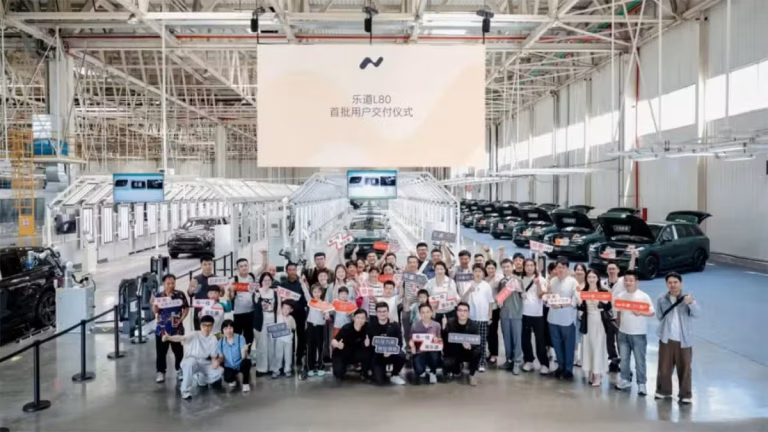
Nio sub-brand Onvo has started deliveries of its new L80 large five-seat electric SUV in China, beginning with a ceremony at Nio’s Hefei factory and simultaneous handovers in 15 other cities. The model starts at 242,800 yuan with the battery included, or 156,800 yuan under battery-as-a-service pricing, and is positioned as a spacious family EV backed by Nio’s battery swap network.

Onvo, the Nio Inc. sub-brand, has begun customer deliveries of its new L80 electric SUV in China, one day after the model’s official market launch. The first handovers took place at Nio’s F1 factory in Hefei, Anhui province, while deliveries also started at the same time in 15 other cities, including Beijing, Hangzhou, and Chengdu.
The rollout marks another fast step in Onvo’s product push as it looks to build on the attention generated during launch. The company said more than 1,000 L80 display and test-drive vehicles have already reached showrooms across China, giving prospective buyers broader access to the new model.
Pricing and model positioning
The L80 is a large five-seat electric SUV aimed at family buyers who want generous cargo space and strong value. Onvo says it offers the largest loading space in the Chinese five-seat SUV segment, though that claim should be treated as a manufacturer statement unless independently verified.

The model starts at 242,800 yuan, or about $35,650, with the battery included. That is 1.22% lower than its earlier pre-sales price. Buyers who choose the BaaS, or battery-as-a-service, plan can lower the entry price to 156,800 yuan, but they will pay a recurring battery rental fee.
Three trims, different hardware packages
Onvo is offering the L80 in three trim levels to cover different budgets and technology needs. The base Pro version uses Nvidia’s Orin X smart driving chip, while the higher-spec Max+ and Ultra+ versions add LiDAR and Nio’s in-house 5-nanometer Shenji NX9031 chip.
Those upper trims also come with Nio World Model assisted driving, which is intended to improve automated driving capability and overall driver assistance performance. The hardware split suggests Onvo is trying to keep the entry model affordable while still offering more advanced options for customers who want stronger smart-driving features.
Battery swapping remains a key selling point
Charging speed is only part of the sales pitch for the L80. Onvo is also leaning heavily on Nio’s battery swap network, which allows drivers to replace a depleted battery with a charged one in minutes instead of waiting to recharge.
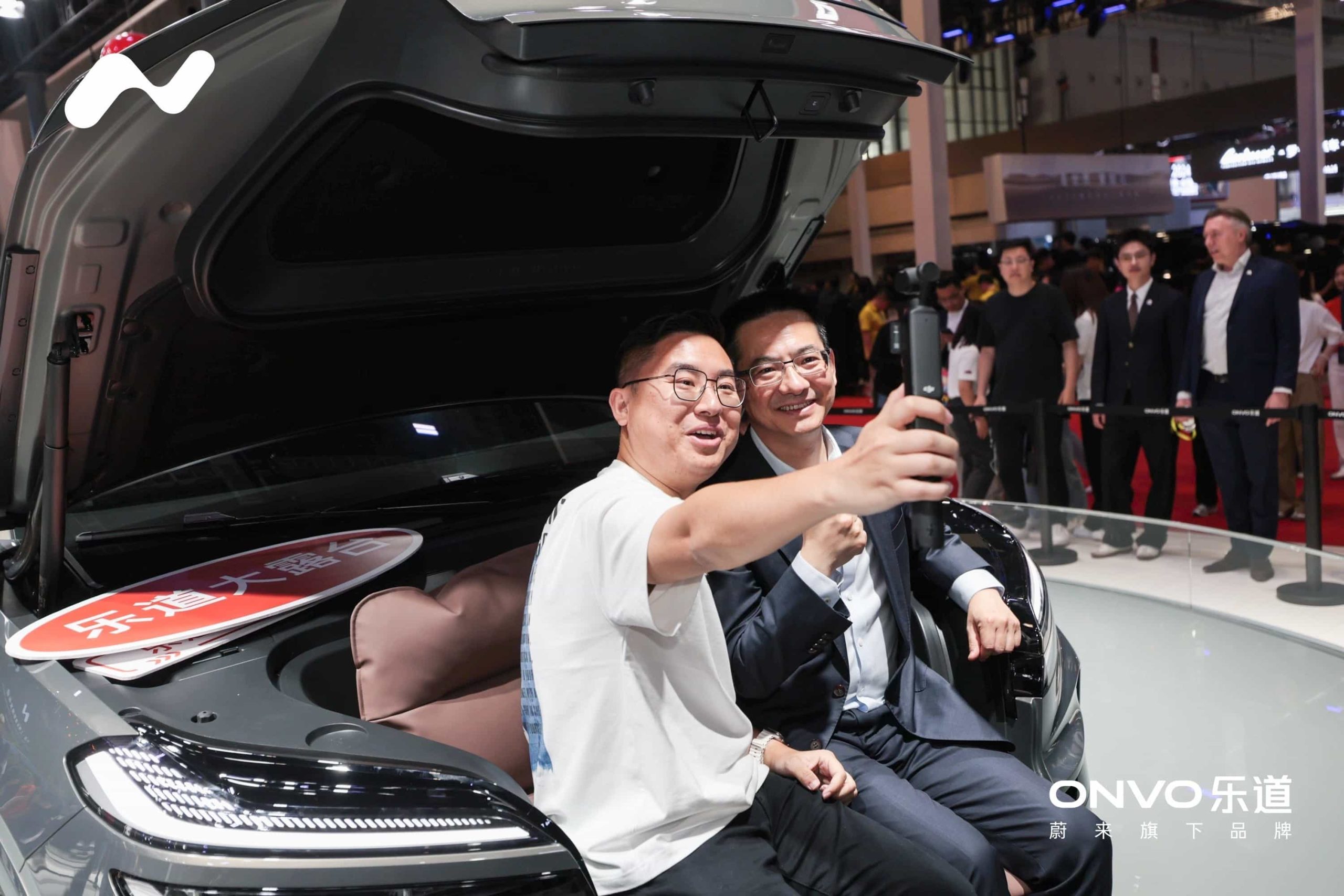
As of May 15, Nio had built 3,847 battery swap stations in China, and 2,496 of them were available to Onvo vehicles. The brand says it plans to expand the number of stations accessible to Onvo models to more than 3,300 by year-end.
Part of a broader launch campaign
Onvo has been accelerating its line-up updates and launches in quick succession. The updated L90 arrived in the market last month, and the refreshed L60 five-seat SUV is scheduled to begin pre-sales later this month at the Shenzhen auto show.
That pace fits Nio’s wider strategy of using multiple launches to maintain momentum in a highly competitive Chinese EV market. For buyers, the L80’s debut adds another family-oriented EV option with a mix of large-space packaging, battery swap access, and multiple technology tiers.
For Nio, the key question is whether that combination can convert showroom interest into sustained deliveries. The company has recently said it expects second-quarter pressure and is counting on new models such as the ES9 and Onvo L80 to support growth.
Why This Matters
The L80’s delivery start matters because it shows how quickly Chinese EV brands are turning launches into real-world sales. In a crowded market, speed from announcement to delivery can help a company capture attention, showroom traffic, and early orders before rivals respond.

It also highlights the continuing role of battery swapping in Nio’s ecosystem strategy. If Onvo can use that network to make family EV ownership easier on long-distance trips, it could strengthen the brand’s case against rivals that rely mainly on fast charging.
Finally, the L80 adds another data point for Nio’s broader growth plan. With the company facing pressure in the second quarter, the performance of new models like the L80 will help show whether its product cadence can translate into durable demand.
Key Specs
Key specifications and launch details
- Model: Onvo L80
- Brand: Onvo, a sub-brand of Nio Inc.
- Vehicle type: Large five-seat electric SUV
- Delivery start: May 16, 2026
- Launch timing: Began deliveries one day after official market launch
- Initial delivery locations: Hefei factory ceremony plus 15 cities, including Beijing, Hangzhou, and Chengdu
- Showroom vehicles: More than 1,000 display and test-drive units across China
- Starting price: 242,800 yuan including battery
- Starting price with BaaS: 156,800 yuan, plus monthly battery rental fee
- Price change vs. pre-sales: Down 1.22%
- Trims: Pro, Max+, Ultra+
- Base trim chip: Nvidia Orin X
- Higher trims: LiDAR, Nio Shenji NX9031 chip, Nio World Model assisted driving
- Nio battery swap stations in China: 3,847 as of May 15
- Battery swap stations accessible to Onvo: 2,496
- Planned accessible stations by year-end: Over 3,300
Source: CNEVposts

