
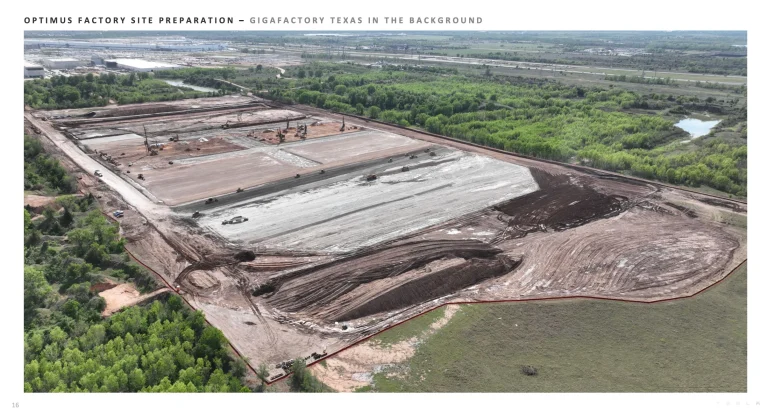
Tesla’s ambitious ‘Project Crystal Sun‘ solar cell factory has cleared a major hurdle in Texas, with Fort Bend County commissioners unanimously approving a suite of tax incentives for the proposed $10.1 billion facility. The project, if built, would become one of the world’s largest integrated solar manufacturing sites and create nearly 10,000 permanent jobs by 2033.
Fort Bend County Approves Incentives for Project Crystal Sun
On Thursday, Fort Bend County commissioners voted 4 to 0 in favor of four incentive agreements supporting Tesla’s proposed solar cell factory near Needville, Texas. The approved measures include a property tax abatement within Reinvestment Zone No. 34, a Chapter 381 economic development agreement, a foreign trade zone non-objection with payments in lieu of certain taxes, and a separate payment in lieu of taxes ‘true up’ agreement.
The factory, internally called ‘Project Crystal Sun,’ would span approximately 3,000 acres and is designed to handle the entire solar cell supply chain—from raw material processing to finished modules. Tesla’s application under the state’s JETI Act details a split investment of $1.5 billion in real property and $8.6 billion in equipment, with commercial operations targeted for the first quarter of 2029.
Project Scope and Local Impact
Project Crystal Sun is expected to generate 9,712 permanent jobs by 2033. The plant will cover every stage of solar cell production, including ingot and wafer manufacturing, cell testing, and module assembly. The site’s approval follows the creation of the reinvestment zone in August and a unanimous 7 to 0 vote by Lamar CISD trustees in September to advance a JETI agreement, which would tax Tesla’s qualifying property at 50 percent of its value for maintenance and operations from 2029 through 2038.
Elon Musk previously set a target for Tesla to ‘work toward getting 100 GW a year of solar cell production, integrating across the entire supply chain from raw material all the way to finished solar panels.’ In March, reports indicated Tesla was negotiating a $2.9B (~AUD 4.1B) purchase of Chinese solar manufacturing equipment for the Texas facility.
Tesla’s Broader Energy and Manufacturing Push
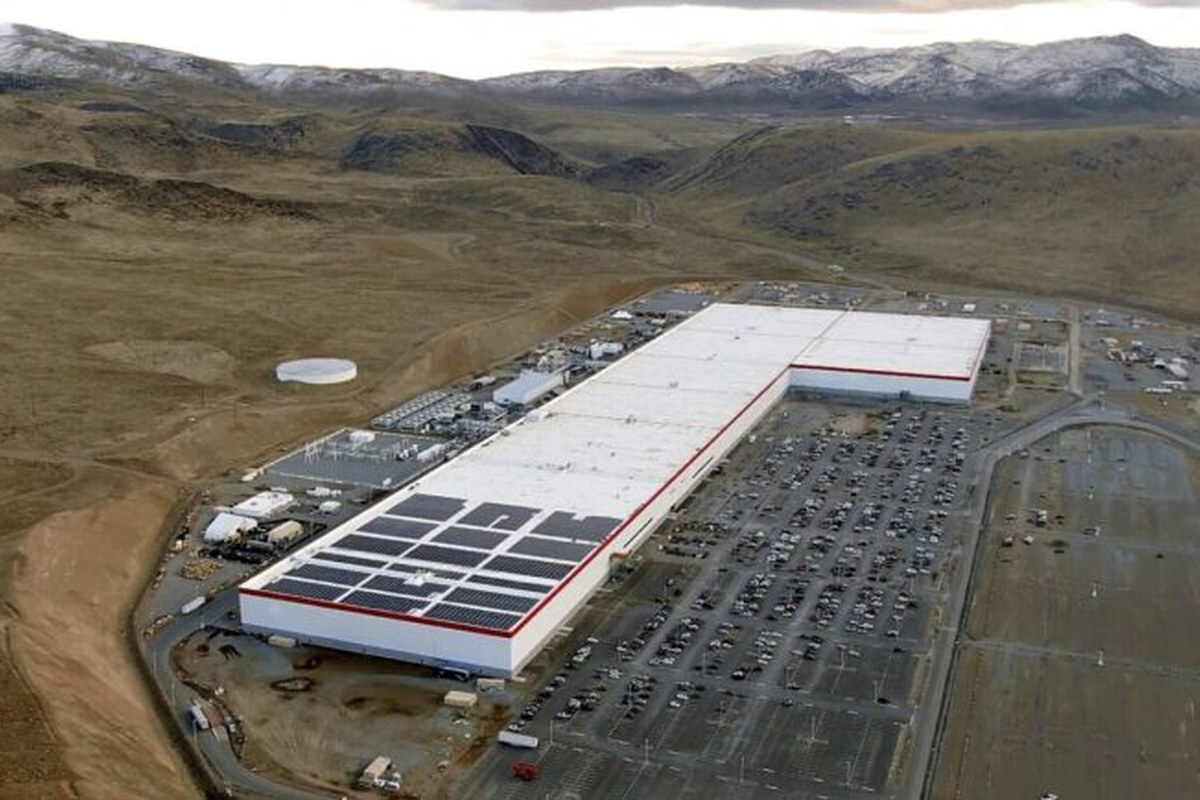
The Houston area already hosts Tesla’s Megafactory in Brookshire, where Megapack 3 production has commenced. Tesla stated on its Q3 2026 call that Megapack supply for 2027 is nearly sold out, and Elon Musk wrote on X that the company is ‘increasing production of Megapacks as much as possible,’ reflecting rising demand from data centers and utilities.
Tesla also continues to expand its AI infrastructure, planning to reach 400 MW of SI training compute by the end of 2026 to support both vehicle and human-level AI development. Musk noted, ‘We plan to reach 400 MW of SI training compute by the end of the year, supporting the development of both vehicle and human-level AI.’
Full Self-Driving Adoption Hits Record High
Tesla’s Full Self-Driving (Supervised) software saw a record attach rate in the third quarter of 2026, with 75 percent of new vehicle deliveries in North America including an FSD subscription—up from 55 percent in the previous quarter. The company reported, ‘FSD (Supervised)⁴ attach rate continued to grow, reaching over 75% of new vehicle deliveries in North America – our most mature market – a nearly twenty percentage point sequential increase.’
Active FSD subscriptions climbed to 1.75 million, a 67 percent year-over-year increase, with more than half of paid customers now on the monthly subscription, priced at $99 (~AUD 141) per month in the U.S. Tesla discontinued the one-time purchase option for FSD in most markets earlier in 2026.
Q3 2026 Financial Results and Operational Highlights
Tesla reported total revenues of $28B (~AUD 39.9B) for the third quarter of 2026, with a Non-GAAP EPS of $0 (~AUD 1), an operating margin of 2.6%, and operating income of $718M (~AUD 1B). Free cash flow reached $1.5B (~AUD 2.2B).
The company delivered 486,532 vehicles in Q3 2026, marking its largest passenger-vehicle backlog in four years. Battery supply continued to constrain volume, but demand remained robust, supported by the growing adoption of FSD.
Why this matters
Tesla’s Project Crystal Sun represents a significant step toward large-scale solar manufacturing in the United States, with the potential to reshape the domestic renewable energy supply chain. The project’s scale and integration could help reduce reliance on imported solar components and create thousands of jobs in Texas.
The record adoption of Full Self-Driving subscriptions and strong financial performance highlight Tesla’s ability to leverage software and energy products as key growth drivers, even as vehicle deliveries face supply constraints.
What this means for buyers
For consumers, the rapid growth in FSD adoption means future Tesla vehicles are increasingly equipped with advanced driver-assist features, with most buyers opting for the subscription model. The expansion of Tesla’s energy business may also lead to broader availability and potentially lower costs for solar and storage solutions in the coming years.
Buyers considering a Tesla should be aware of the evolving software landscape and the company’s continued investment in both vehicle and energy technologies.
Key Specs
- Project Investment: $10.1B (~AUD 14.4B)
- Facility Size: 3,000 acres
- Permanent Jobs by 2033: 9,712
- Commercial Operations Target: Q1 2029
- FSD Attach Rate (Q3 2026, North America): 75%
- Active FSD Subscriptions: 1.75 million
- Tesla Q3 2026 Revenues: $28B (~AUD 39.9B)
- Tesla Q3 2026 Vehicle Deliveries: 486,532
Images sourced from: teslarati.com, teslanorth.com, startupselfie.net

