
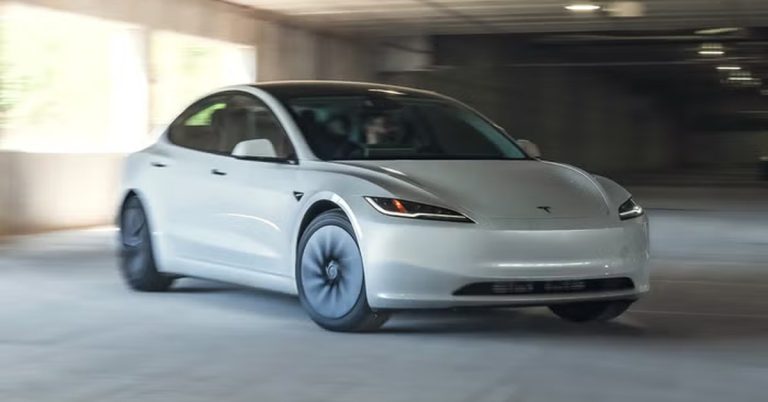
Tesla has released its Q3 2026 financial results, revealing a mix of rebounding margins and ongoing profit challenges. Alongside these updates, the company announced further delays to key products, while the broader EV industry showcased significant advances in charging technology.
Tesla’s Q3 2026 Financial Performance
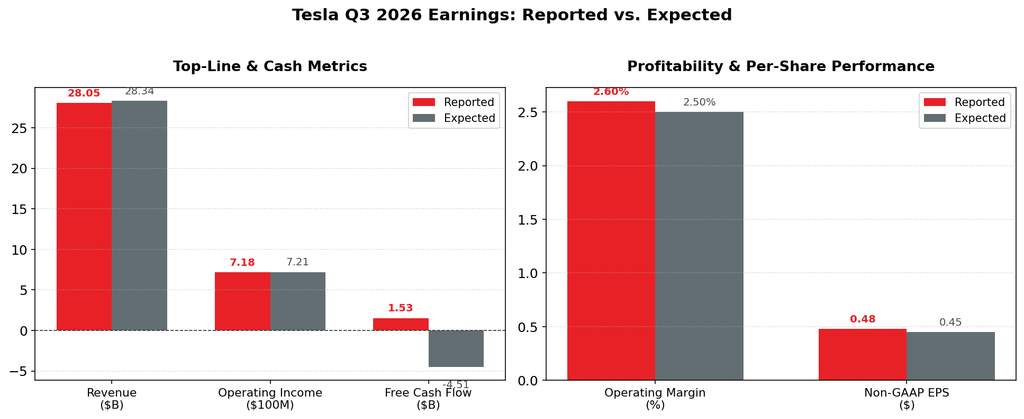
Tesla reported its Q3 2026 financial results, showing that while margins have improved, overall profit continues to decline. The company attributed its flat sales to ongoing battery supply issues, even as it continues to lower vehicle prices.
Tesla’s energy division saw a 16% drop in revenue during the quarter. The company also issued refunds to customers in response to tariffs, further impacting its financial performance.
Product and Technology Delays
Tesla has postponed the launch of unsupervised Full Self Driving (FSD) to Q2 2027. When released, this feature will be available only within designated Robotaxi zones.
The company also delayed deliveries of its humanoid robot, Optimus, to late 2027, citing ongoing challenges with the robot’s hand functionality.
Additionally, Tesla quietly reduced its 2026 capital expenditure guidance to $20B (~AUD 28.5B).

EV Charging Innovations from Industry Leaders
While Tesla faces delays, other automakers and suppliers are making notable progress in EV charging technology. Porsche has begun production of its wireless charging system, marking a significant step forward in user convenience.
BMW demonstrated the iX5 achieving charging speeds of up to 460 kW during its first public fast-charging event. Meanwhile, Fortescue is utilizing KUKA welding robots to handle 6 MW charging cables, highlighting advancements aimed at supporting heavy-duty and commercial EVs.
Why this matters
Tesla’s ongoing delays in delivering key technologies like unsupervised FSD and Optimus highlight the challenges of scaling advanced features in the EV sector. At the same time, rapid innovation in charging infrastructure by other manufacturers is reshaping the landscape for both consumers and commercial operators.
These developments underscore the importance of both reliable product delivery and continued investment in charging solutions as the EV market evolves.
What this means for buyers
Buyers considering a Tesla should be aware that major features such as unsupervised Full Self Driving remain delayed and will be limited in scope when they arrive. Those prioritizing advanced charging capabilities may find new options from brands like Porsche and BMW increasingly compelling.
As the EV market continues to shift, staying informed about both product timelines and charging infrastructure developments will be key for making the best purchasing decisions.
Key Specs
- Q3 2026 Margins: Rebounded
- Q3 2026 Profit: Still fell
- Battery Supply Impact: Flat sales blamed on supply issues
- Vehicle Pricing: Prices continue to fall
- Energy Revenue Change: Dropped 16%
- Unsupervised FSD Availability: Pushed to Q2 2027, Robotaxi zones only
- Optimus Delivery Timeline: Delayed to late 2027
- 2026 Capex Guidance: $20B (~AUD 28.5B)
Images sourced from: caranddriver.com, autoguide.com, pixabay.com

