
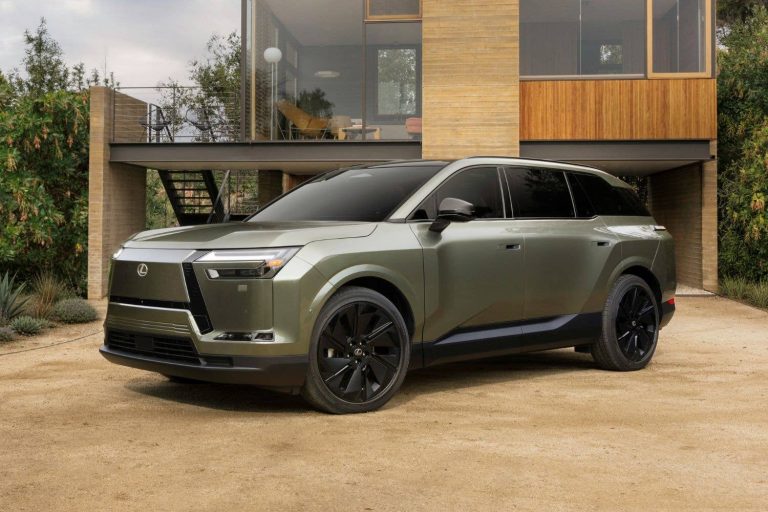
Lexus has unveiled the TZ, a new fully electric three-row SUV with six seats, standard all-wheel drive and a claimed 300-mile EPA range. Positioned above the RZ, it shares its basic architecture with the Toyota bZ Highlander but adds Lexus-specific styling, a more luxurious cabin and a stronger dual-motor setup.
Lexus has introduced the TZ, a new fully electric SUV aimed at buyers who want three-row practicality without moving away from the brand’s luxury positioning. The six-seat model sits above the RZ in Lexus’ EV range and shares its underlying architecture with the Toyota bZ Highlander, but it has been heavily reworked to feel more upscale.
The TZ is designed as a global model, with North American vehicles set to be built in Kentucky and other markets supplied from Japan. Lexus says the SUV will reach U.S. dealers by the end of 2026, while Europe, Japan, China and other regions should follow in early 2027.
Longer body, familiar proportions
Dimensionally, the TZ is slightly larger than its Toyota counterpart. It measures 5,100 mm (200.8 inches) long, which is 50 mm (2 inches) more than the bZ Highlander, while both SUVs share the same 3,050 mm (120.1-inch) wheelbase.
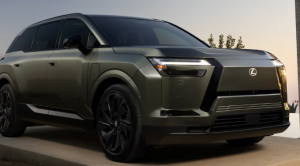
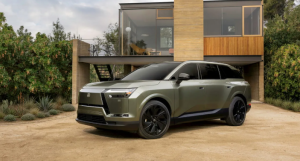
The exterior design takes a more aggressive route than the Toyota. Lexus fitted a closed-off spindle-style grille, stacked LED headlights and a squared-off hood that echoes the look of the GX. Standard 22-inch wheels give the SUV a more planted stance, while 20-inch wheels will also be offered for buyers prioritizing comfort and efficiency.
At the rear, the TZ features a large roof spoiler, full-width LED lighting and vertical L-shaped turn signals. Semi-flush door handles and some body structure appear to be shared with the Toyota, but the overall shape is cleaner and more premium-looking.
A quieter, more luxurious interior
Lexus is positioning the TZ as a “relaxing lounge experience” for all three rows. The cabin has seating for six and extensive sound insulation, with the company claiming it will be the quietest SUV in its lineup, including the flagship LX.
The front and second rows get ventilation and power leg rests, while the third row is said to offer sofa-like cushioning. The second and third rows can fold flat with a one-touch function to expand cargo capacity, and there is also a removable rear console and additional storage throughout the cabin.
Technology follows the same luxury brief. A large central touchscreen and digital instrument cluster anchor the dashboard, while Lexus has replaced the Toyota’s visible switch strip with hidden touch-sensitive controls embedded into the trim. A textured volume controller is also part of the setup.
Other equipment includes a panoramic roof, soft-close doors, adjustable ambient lighting and a 21-speaker Mark Levinson audio system. Lexus also says the cabin uses sustainable materials such as forged bamboo trim and bio-based UltraSuede upholstery.
EV powertrain and performance
The TZ is built on a reinforced TNGA platform and will be sold only as an electric vehicle. Power comes from a dual-motor AWD system producing 402 hp (300 kW / 408 PS) and up to 369 lb-ft (500 Nm) of torque.
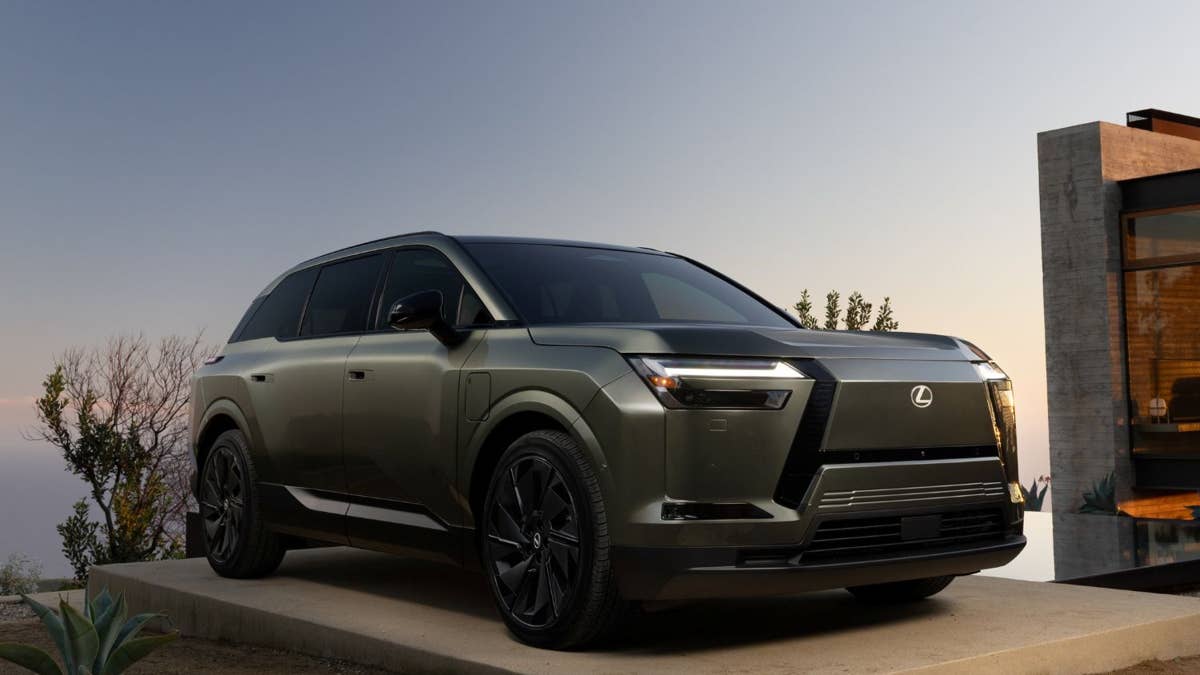
Lexus says the SUV can accelerate from 0-62 mph (0-100 km/h) in 5.4 seconds. It also has a towing capacity of 3,500 lbs (1,588 kg), which is a useful figure for a three-row family vehicle.
The driver can select among five drive modes: Normal, Sport, Eco, Range and Rear Comfort. Dynamic Rear Steering is available, and regenerative braking can be adjusted through five levels.
Battery, range and charging
Buyers will be able to choose between two battery packs: 76.96 kWh and 95.82 kWh. Lexus says the larger pack is good for up to 300 miles of EPA range, which is about 20 miles less than the maximum claimed for the Toyota bZ Highlander.
For other markets, Lexus quotes 530 km (329 miles) under WLTP, 620 km (385 miles) under WLTC and 640 km (398 miles) under CLTC testing. Charging tops out at 150 kW DC, and Lexus says a 10-80% charge takes 35 minutes.
North American versions will use a NACS charging port, giving access to Tesla Superchargers. Global-market models will use CCS2 instead.
Why the TZ matters
The TZ fills a gap in Lexus’ electric lineup by offering a true three-row option, something many premium EV buyers have been waiting for. It also signals that Lexus is willing to push further into family-focused electric vehicles rather than limiting its EV strategy to smaller crossovers.
Just as important, the TZ shows how Toyota and Lexus are separating their shared EV hardware into distinct products. Toyota gets the more mainstream version, while Lexus uses the same base to deliver more power, more equipment and a more luxurious cabin.
Pricing and trim details will be announced later this year.
Why This Matters
The TZ is significant because it gives Lexus a genuine three-row EV at a time when luxury buyers are increasingly looking for electric alternatives to large gasoline SUVs. For families, that means a new option that combines seating flexibility, long-distance range and premium features in one package.
It also matters because Lexus is moving beyond smaller EVs and into a segment where range, charging speed and cabin refinement are all critical. If the TZ lands near its claimed figures, it could become one of the more compelling premium electric SUVs for buyers who need space without sacrificing brand cachet.
Key Specs
- Model: Lexus TZ
- Body style: Three-row, six-seat electric SUV
- Position in lineup: Above Lexus RZ
- Length: 5,100 mm (200.8 in)
- Wheelbase: 3,050 mm (120.1 in)
- Powertrain: Dual-motor AWD
- Output: 402 hp (300 kW / 408 PS)
- Torque: Up to 369 lb-ft (500 Nm)
- 0-62 mph (0-100 km/h): 5.4 seconds
- Towing capacity: 3,500 lbs (1,588 kg)
- Battery options: 76.96 kWh; 95.82 kWh
- EPA range: Up to 300 miles (483 km)
- WLTP range: 530 km (329 miles)
- WLTC range: 620 km (385 miles)
- CLTC range: 640 km (398 miles)
- Fast charging: Up to 150 kW DC
- 10-80% charge time: 35 minutes
- Charging port: NACS in North America, CCS2 globally
- Wheels: 22-inch standard, 20-inch optional
- Production: Kentucky (North America), Miyata, Japan (Europe/Asia)
- Launch timing: North America late 2026; other markets early 2027
Source: Carscoops

