
As electric vehicle adoption accelerates, utilities are facing mounting pressure to keep up with surging electricity demand. Grid software startup Texture has secured new funding to help operators better manage these challenges and prevent local outages.
Texture Secures Series A Funding to Expand Grid Management Platform
Texture, a grid software startup, has raised 12,500,000 USD (~17,501,000 AUD, ~10,765,000 EUR, ~9,314,000 GBP) in a Series A funding round co-led by VoLo Earth Ventures and Equal Ventures, with additional participation from Lerer Hippeau and Abstract Ventures. This brings the company’s total funding to approximately 23,000,000 USD (~32,202,000 AUD, ~19,807,000 EUR, ~17,138,000 GBP). The new capital will support hiring and further development of Texture’s platform, which aims to give utilities a unified, real-time view of their grid operations.
Addressing Grid Stress from EV Charging and Distributed Energy
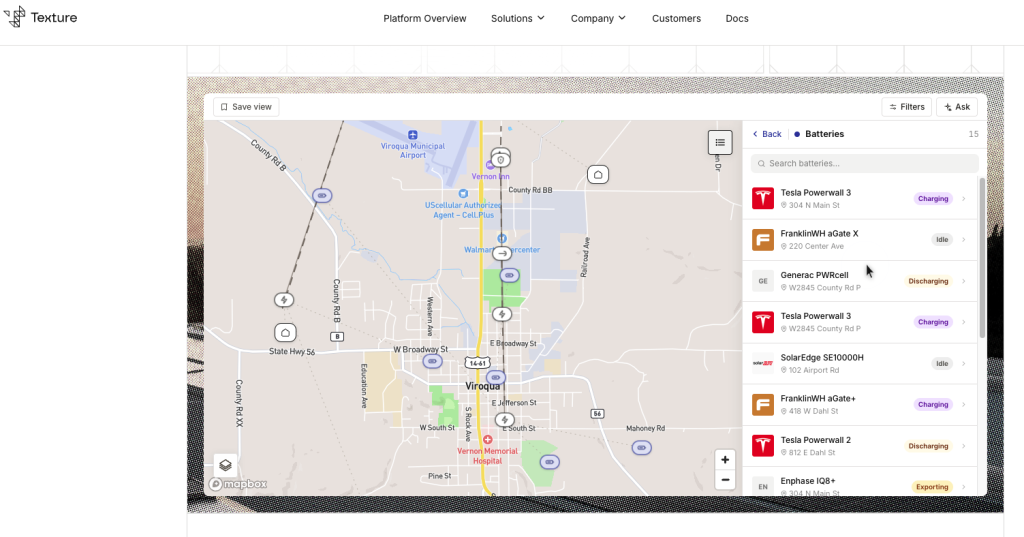
Utilities are increasingly challenged by the need to manage not just traditional electricity demand, but also spikes from EV charging, large-scale renewables, rooftop solar, batteries, and even AI data centers. Texture’s platform integrates data from a wide range of sources—including batteries, EVs and chargers, solar systems, SCADA, advanced metering infrastructure, and smart thermostats—into a single interface. This allows operators to monitor grid conditions in real time and respond quickly to issues.
Texture says its software can be deployed on top of existing utility infrastructure, eliminating the need for costly software replacements or large engineering teams. Utilities can reportedly get the system running within days, a significant improvement over the multi-year rollouts typical of legacy grid management tools.

Focus on Utility Cooperatives and Real-World Deployments
Texture is initially targeting utility cooperatives, which serve about 42 million Americans, many in rural areas. These co-ops face the same modernization challenges as larger utilities but often have smaller budgets and fewer staff. Texture’s platform is designed to be accessible and scalable for these organizations.
The company’s software can detect sudden increases in electricity demand at the meter level and trace the impact on transformers and feeders, helping operators intervene before equipment failures occur. This is especially relevant as transformer prices have nearly doubled since 2019 and lead times for large units can now exceed two years, according to Wood Mackenzie.
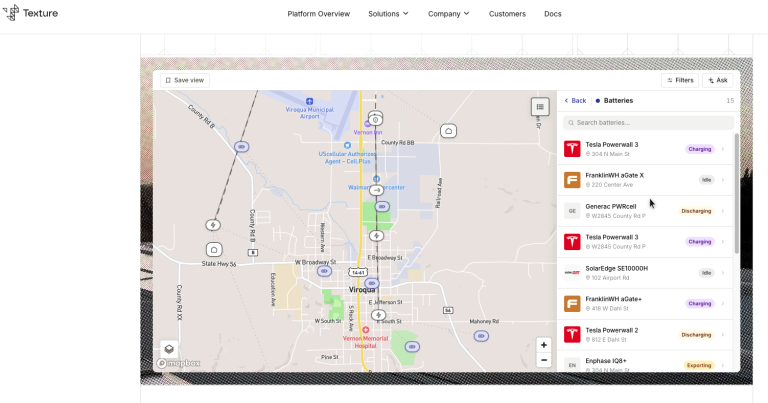
Vermont Electric Cooperative is already using Texture to monitor its grid and manage hundreds of batteries. In Ann Arbor, Michigan, the Sustainable Energy Utility launched a community battery program using FranklinWH systems across 100 homes, enabled by Texture’s integrations.
Expanding Reach Through Industry Partnerships
Texture has built direct integrations with over 50 OEMs and energy companies, including Tesla, FranklinWH, Honeywell, Ecobee, SolarEdge, Leap Energy, and WattTime. The company recently announced a partnership with the National Rural Telecommunications Cooperative (NRTC), whose network includes 850 utility co-ops across the US.
Through this partnership, NRTC members will gain access to distributed energy resource management (DERMS) software powered by Texture, enabling real-time coordination of batteries, smart thermostats, and other distributed resources. Texture notes that many virtual power plant and demand response platforms still lack access to real-time meter data, making accurate grid management more challenging.
Why this matters
The rapid growth of electric vehicles and distributed energy resources is putting unprecedented strain on local electricity grids. Without effective management tools, utilities risk equipment failures, outages, and costly upgrades. Texture’s approach—integrating real-time data from a wide range of devices and systems—could help utilities respond more quickly and efficiently to these new demands.
By focusing on utility cooperatives and enabling faster, more affordable deployment, Texture’s platform could play a key role in supporting the transition to cleaner energy and widespread EV adoption, especially in rural and underserved areas.
Key Specs
- Series A Funding Raised: 12,500,000 USD (~17,501,000 AUD, ~10,765,000 EUR, ~9,314,000 GBP)
- Total Funding to Date: 23,000,000 USD (~32,202,000 AUD, ~19,807,000 EUR, ~17,138,000 GBP)
- Target Customers: Utility cooperatives (serving ~42 million Americans)
- NRTC Network Size: 850 utility co-ops across the US
- Transformer Price Increase Since 2019: Up to 95%
- Lead Time for Large Transformers: Over two years (as of 2026)
Source
Images sourced from: unsplash.com, freepik.com, dreamstime.com

